
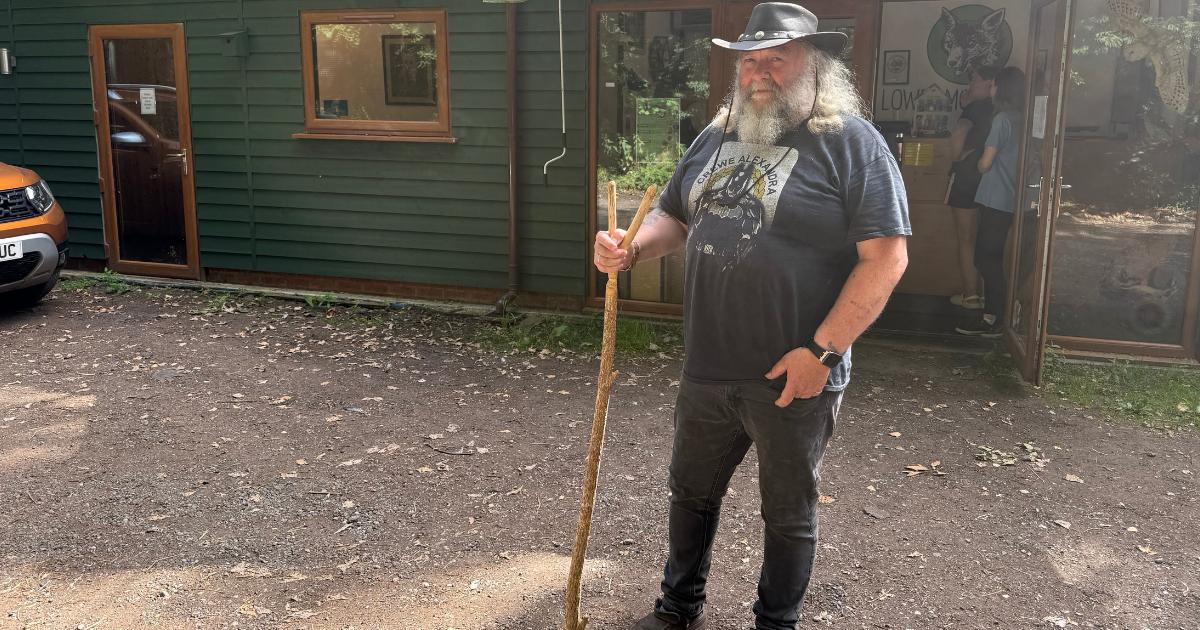
Known affectionately as “the man in the woods”, Ray estimates he has taught around 60,000 children during his nearly 40 years at the reserve.
Alongside more than 30 volunteers, the wildlife hospital now cares for around 3,000 injured and orphaned animals every year.
The hospital cares for a variety of animals (Image: NQ)
But when Ray first arrived in the late 1980s, he never imagined any of it.
“I don’t have any qualifications in natural history,” he said.
“I just learned stuff.”
Before discovering Lower Moss Wood, Ray had spent 16 years working at Crewe Locomotive Works.
Lower Moss Wood is tucked away in the beautiful Cheshire countryside (Image: NQ)
Realising he didn’t want to spend the rest of his life there, he set his sights on chasing his real passion.
“I just wanted to work outdoors,” he said.
He threw himself into his new role, arriving two hours before he was due to start and staying long after his shift had finished.
“I did all the hours I could because I just loved it,” he said.
“The guy running the place was so impressed that within six weeks, I was teaching kids.
“I found it so easy – it just came naturally.”
The centre cares for around 3,000 injured and orphaned animals every year (Image: NQ)
Ray says curiosity has always been his greatest teacher.
“If I see something I don’t know, I do know it by the end of the day,” he said.
“I’ll tell the next 10 people – who aren’t interested – but it sticks in my mind.”
That self-taught approach eventually led him to become an authority on the wildlife around him, from birds and mammals to dragonflies and native plants.
He has even lectured veterinary students and university audiences despite having no formal qualifications.
Ray is incredibly knowledgeable when it comes to nature (Image: Lower Moss Wood Nature Reserve)
The moment that changed everything, however, arrived with a phone call.
Someone had found a fox cub.
He successfully raised the cub, Povey, who became a familiar sight around the reserve for more than 12 years.
Povey later fostered 37 orphaned fox cubs.
“At the time, I was just a man in the woods with a fox,” Ray says.
“Then, before you know it, I was a man in the woods with a fox and a hedgehog.
“It just kept going.”
Word spread quickly.
Nino the boobook owl is a permanent resident at Lower Moss Wood (Image: Lower Moss Wood Nature Reserve)
More injured wildlife arrived, then more still.
A local vet offered support, and what began with one fox cub gradually evolved into the wildlife hospital that now receives dozens of admissions a day during the busiest months.
Although Ray is stepping back, the work continues.
Nature reserve and wildlife hospital assistant Mia Ogden says summer can bring more than 30 admissions every day, with hedgehogs, bats, swallows, house martins, and orphaned ducklings among the most common patients.
Mia Ogden with Thistle (Image: NQ)
Some youngsters, including baby hedgehogs and ducklings, require feeding every two hours around the clock, while specialist bat rehabilitation facilities help prepare rescued bats for release back into the wild.
The reserve is also home to education birds, including Thistle, a barn owl, and Nino, a boobook owl, who are being trained to visit schools, hospices, and care homes.
For Ray, education has always been as important as rehabilitation.
He jokes that while children attend an “informative nature walk,” adults receive a lesson called ‘Well, I never knew that’.
“They don’t know anything,” he said.
“It’s unbelievable how people have just forgotten nature.
“They like it, they think it’s beautiful, but they don’t know anything about it.”
After decades spent walking the woodland trails, Ray is preparing for retirement and a move to the Cumbrian coast.
He is also looking forward to spending more time making music – Ray’s other lifelong passion.
Ray is leaving the centre following nearly four decades of hard work (Image: Lower Moss Wood Nature Reserve)
Health issues helped make the decision, but he leaves knowing Lower Moss Wood is in safe hands.
Looking back, he remains proud not of awards or titles, but of the generations he has inspired to look a little closer at the natural world.
“You make your own path in life,” he said. “University isn’t the only answer.
“If you’ve got a dream, you’ve got to follow it.”