
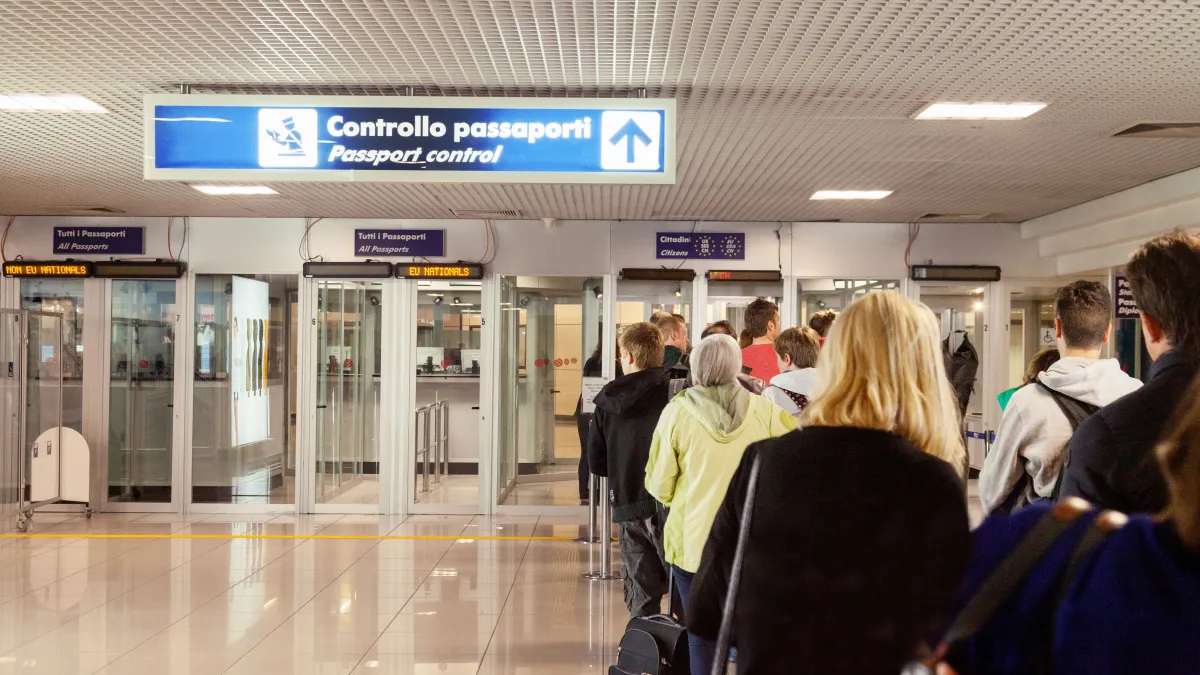
The head of one of Europe’s largest airports has blamed the design of the new border check system for long delays and supported calls to turn it off indefinitely until problems are fixed.
Marco Troncone, chief executive of Aeroporti di Roma, which operates Rome Fiumicino airport, said processing times at the border had doubled since the system was fully rolled out in April.
“We managed to optimise the process on our end bringing this to 90 seconds [down from two minutes] but it is still too high. This is of course not compatible with 50,000-60,000 passengers every day,” Troncone said.
Rome Fiumicino has spent €12 million (£10 million) preparing for the new entry/exit system (EES) but it was still creating long queues, he added. “The problem is related to the way this process has been designed. It’s not a matter of implementation.”
Airlines operating from the UK have named airports including Lanzarote, Tenerife South, Malaga, Porto, Lisbon, Amsterdam, Krakow, Paris CDG, Rome, Palma, Malta, Menorca, Milan Linate and Malpensa, Naples and Budapest as being the worst for queues this summer.
Troncone added: “The issue lies in the architecture of the process itself. The current EES workflow introduces additional steps that inevitably increase processing times and, at peak traffic, those extra seconds quickly translate into significant queues.”
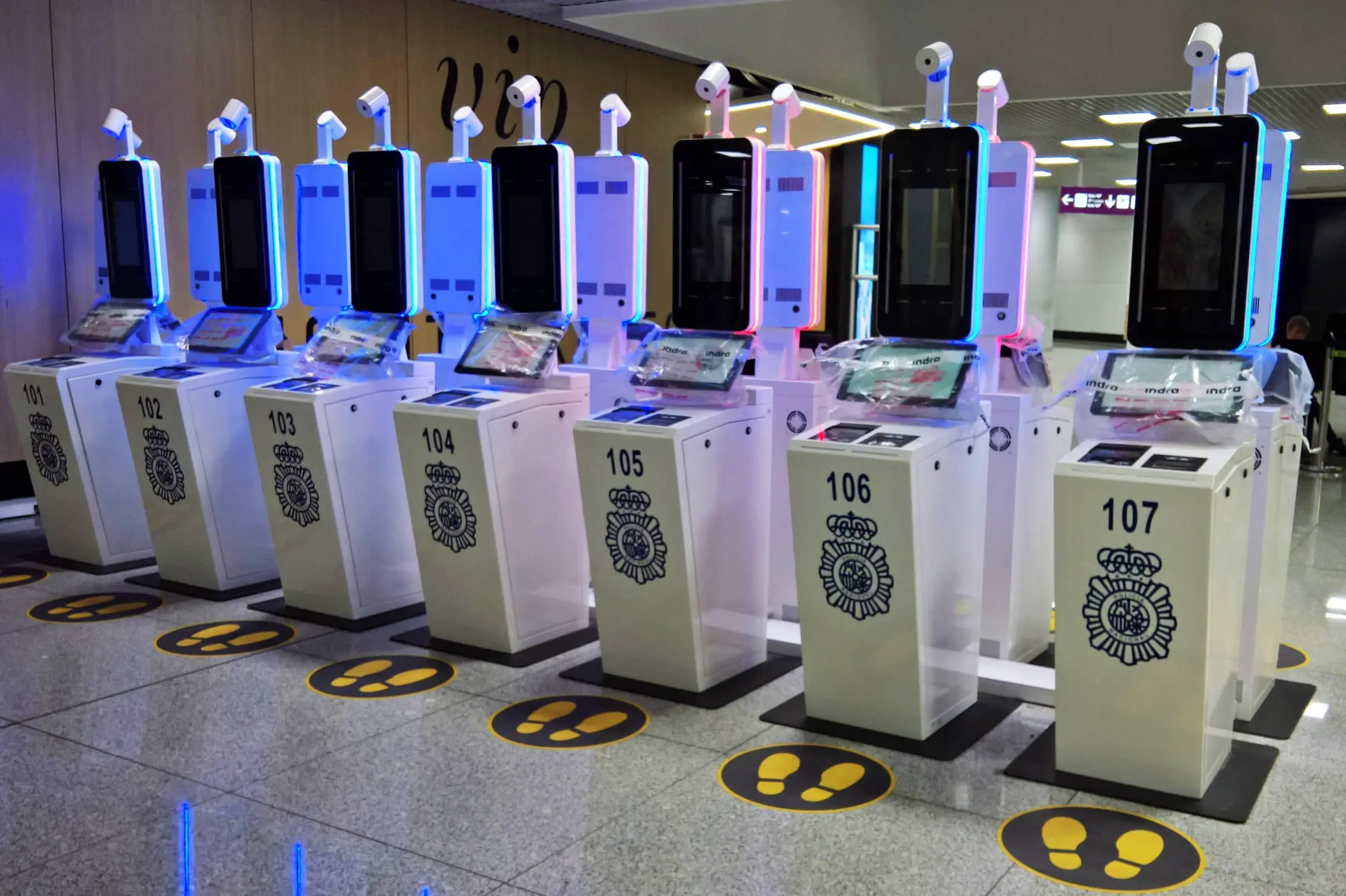 An automated entry system at Palma de Mallorca airport Alamy
The operational design was also developed with “limited input from airport operators, despite the fact that airports are the ones managing passenger flows every day”, Troncone added. “In our view, the process should have been designed from the outset around the operational reality of Europe’s largest hubs, not only around the regulatory requirements.”
EES involves people from non-EU countries, such as the UK, having their fingerprints registered and photograph taken to enter the Schengen Area.
Most airlines and industry bodies agree the system is a necessary long-term step, as countries including the US, UK and Australia all have their own digital border systems and EES has already caught 7,000 overstayers since its launch.
But issues have arisen after some EU member states have attempted to connect their own national software systems to the central EES platform. Some EU countries also want to procure their own hardware.
Across the 29 countries in the Schengen area, responsibility lies with different government departments in different countries, and the technology has been designed and rolled out by different providers in different countries.
The central computer system was built by the Belgian arm of French IT firm Atos, in partnership with IBM Belgium and Leonardo, the Italian defence contractor.
In some airports the kiosks are switched off entirely — in the Eurostar terminal at St Pancras, where European border checks take place, some are still in their original wrapping — while in others there have been IT failures, or not enough of them.
Troncone backed calls by Airports Council International (ACI) Europe, the industry group which represents airports in the region, for the European Commission (EC) to suspend the system “at least through July and August”.
Members of the aviation industry will hold crisis talks with the EC on Tuesday to discuss EES, which is causing disruption in several holiday hotspots including Italy, Spain, France, the Netherlands and Greece.
From September, ACI wants the flexibility to indefinitely suspend EES in “exceptional circumstances” until “structural challenges” are addressed including: adequate levels of border staff, fully functioning kiosks and allowing passengers to provide biometrics in advance when a pre-registration app has been rolled out to all countries. Currently it is only used by Portugal and Sweden.
Amsterdam Schiphol, Corfu and Naples airports have also urged the EC to relax rules as the busy summer season begins.
Schiphol, which handles about 220,000 passengers a day, said EES was “impacting operations at the border, particularly during busy moments”.
“In light of disruptions across European airports, we think it is important that the deadlines are reconsidered at a European level. This is paramount to keeping the situation manageable both for airports and national authorities over the busy summer holidays,” a spokesman said.
The mayor of Naples wrote to the Italian government stating EES “could significantly impact tourism flows”. Currently Naples international airport has an average queue time of 90 minutes but it can rise up to three hours, it said. The airport has added extra seating and drinking water facilities.
Fraport, which runs Corfu airport, said “processing times have increased considerably compared to pre-EES operations” and that queues were currently about 40 minutes, adding flexibility was “essential until the full EES system is fully operational and optimised across the European network.” Olga Kefalogianni, the Greek tourism minister, has said that EES should be “rethought at a European level”.
EES regulation provides a small amount of flexibility for countries to temporarily switch off EES checks for up to six hours at a time in “exceptional circumstances” if queues get too long. They must notify EU border agencies of the reason for the suspension.
Greece has already made widespread use of this but Frontex, the EU’s border security agency, confirmed that this arrangement would come to a hard stop at the start of September.
In its letter to Ursula von der Leyen, the EC president, last week ACI Europe said border checks were causing queues of up to five hours and some flights were leaving half full, urging it to “act now”.
 Ursula von der Leyen, the European Commission presidentOLIVIER MATTHYS/EPA
One airline source told the Financial Times that delays directly linked to border-processing issues have risen by a third.
Two of Europe’s largest airlines, Easyjet and Ryanair, have also called for the system to be suspended.
Neal McMahon, the chief operations officer of Ryanair, Europe’s largest airline, called EES “half-baked” and said passengers should not be used as “guinea pigs” for the new border checks. “It is as simple as postponing EES until September, as other EU countries like Greece have already done,” he said.
 Neal McMahon
Kenton Jarvis, the chief executive of easyJet, called the delays “completely unacceptable”, urging border authorities to “make full use of the permitted flexibilities and if this cannot be done effectively, the system must be reviewed to ensure our customers do not continue being disrupted”.
 Kenton Jarvischris ratcliffe/Getty images
Many industry figures are dreading the impact of EES on what will be the busiest summer on record for air travel. According to official figures from Eurocontrol, which runs European air-traffic control, the number of flights is expected to be up 2 per cent from last summer, and in some weeks could be as much as 5 per cent more. Almost 37,000 flights around Europe are scheduled on the busiest days.
The ACI letter said: “The commission and member states must take stock of the reality of the current situation and of what our air transport system will face over the coming weeks. Without additional flexibility, existing challenges will inevitably intensify.”
The EC did not respond when approached for comment.