
Your support helps us to tell the story
From reproductive rights to climate change to Big Tech, The Independent is on the ground when the story is developing. Whether it’s investigating the financials of Elon Musk’s pro-Trump PAC or producing our latest documentary, ‘The A Word’, which shines a light on the American women fighting for reproductive rights, we know how important it is to parse out the facts from the messaging.
At such a critical moment in US history, we need reporters on the ground. Your donation allows us to keep sending journalists to speak to both sides of the story.
The Independent is trusted by Americans across the entire political spectrum. And unlike many other quality news outlets, we choose not to lock Americans out of our reporting and analysis with paywalls. We believe quality journalism should be available to everyone, paid for by those who can afford it.
Your support makes all the difference.Read more
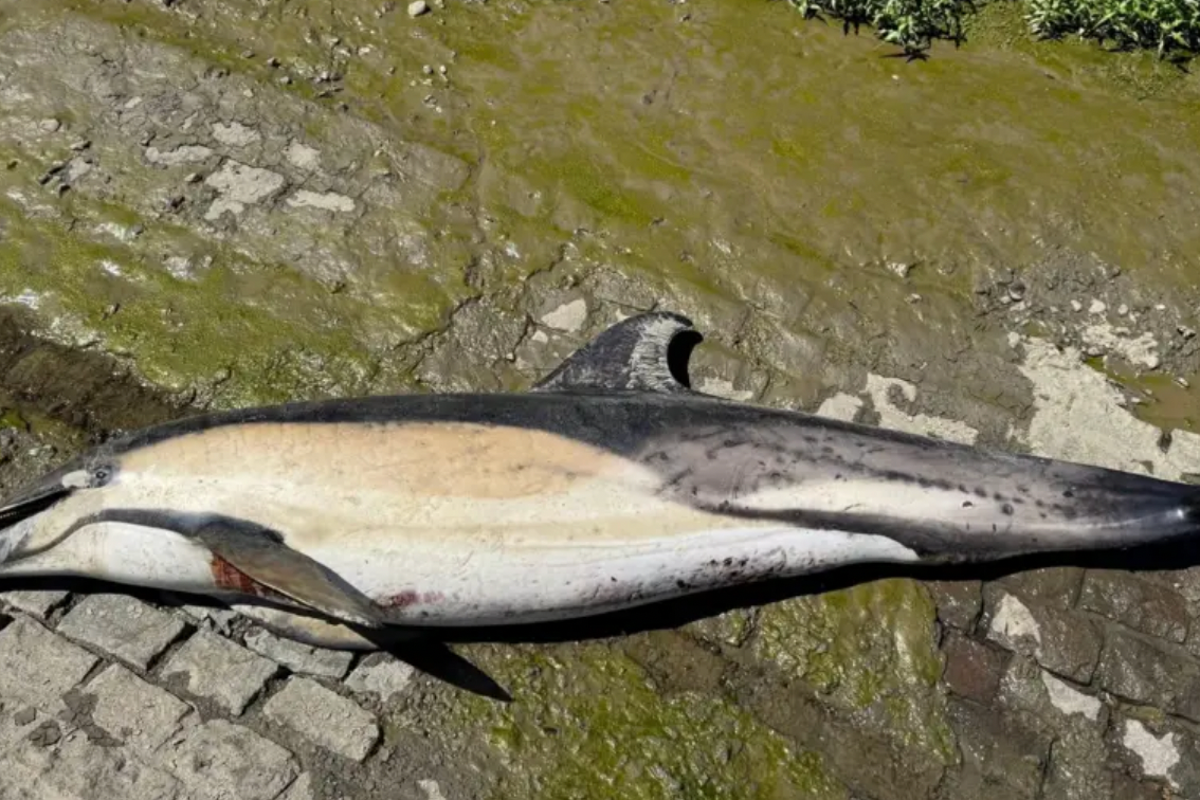
A dolphin has been found dead on the bank of the Thames in Southwest London.
The mammal, which has now been confirmed as an adult male short-beaked common dolphin by the Port of London Authority (PLA), was seen washed up on the foreshore at Mortlake in Richmond on Thursday.
It comes days after public sightings of a dolphin swimming in the river between Hammersmith Bridge and Putney Bridge.
A spokesperson for the PLA told the BBC: “Unfortunately, when dolphins are sighted this far up the Thames it can often indicate they are already in distress.”
In an effort to find out exactly what happened to the dolphin, and the possible causes of its live stranding, the British Divers Marine Life Rescue is now working alongside the Cetacean Strandings Investigation Programme (CSIP).
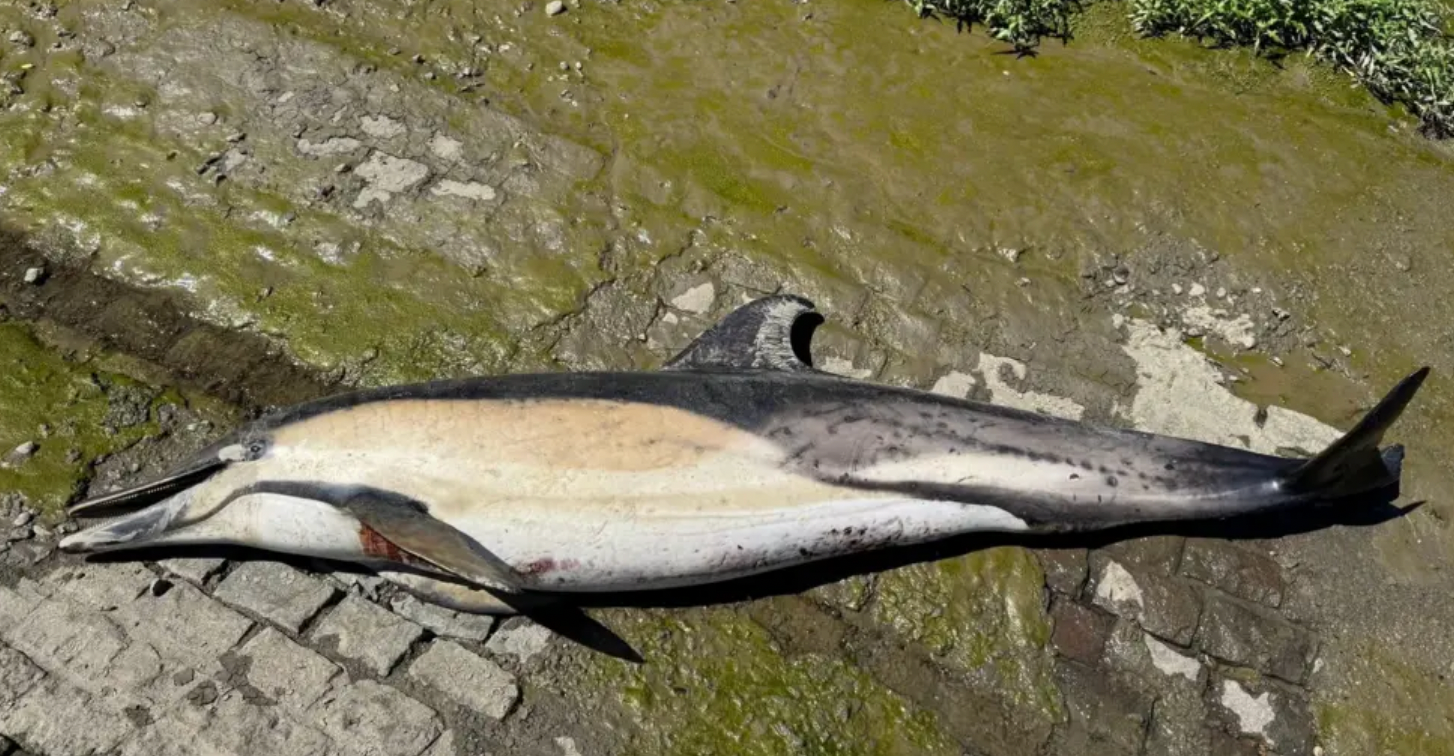 The dolphin appeared “skinny” and “not in the best condition” (Zoological Society of London)
Rob Deaville, CSIP project manager, observed that the animal had travelled the furthest west up the River Thames than is usually expected for a common dolphin.
The CSIP shared on Facebook: “This is an unusual stranding for the region — common dolphin strandings have been rarely reported within the southern North Sea over the last 35 years since the inception of the CSIP.”
Reports of dolphin deaths are increasing, with Mr Deaville expressing that it was a “reasonable assumption” to attribute this rise to the impacts of climate change.
A post-mortem exam is expected to take place on Friday, but the animal was noted to not be in the best condition, having experienced skin damage from being in fresh water for some time.