
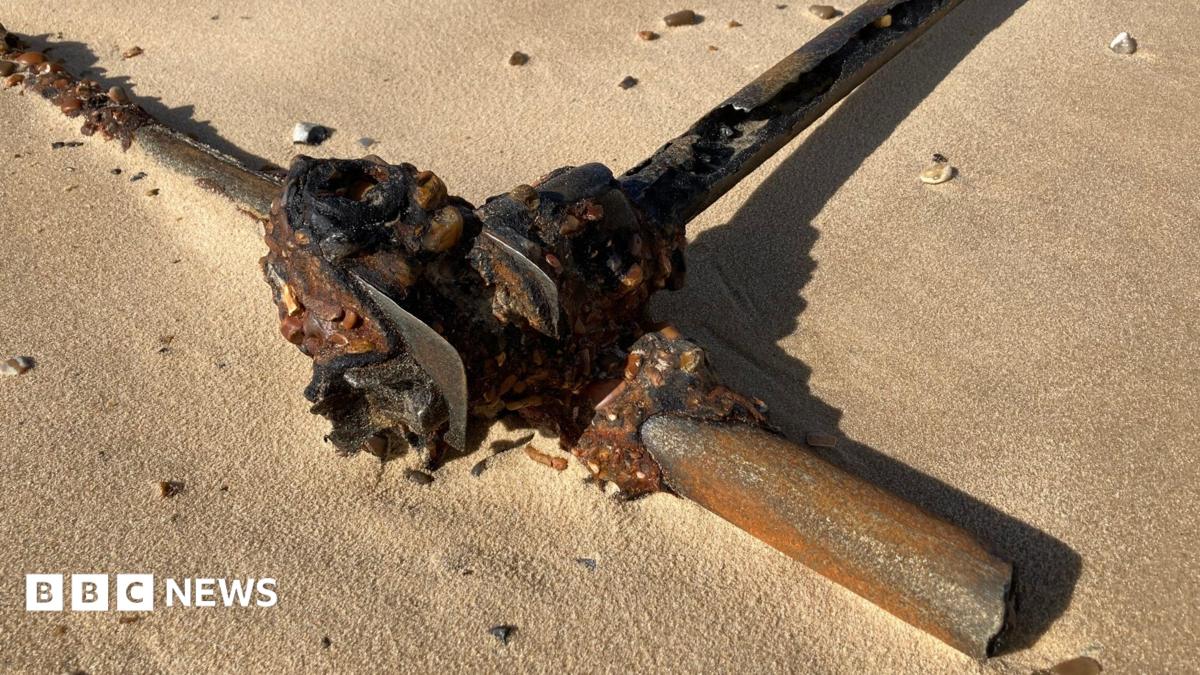
The remains of this scaffolding can still be seen at Minsmere, if the conditions are right.
Thurlow said: “Sections of it were left in isolated bits of beaches like here, and occasionally during winter storms, after surge tides, you can see the fragmentary remains of it.”
The defences were typically exposed for two or three weeks before the shingle hid them once again, he explained.
This is not the first time Minsmere’s World War Two history has been unearthed.
A similar thing happened in 2013 and again in 2022, before the tides and the wind covered the scaffolding once again.
Dr Sophie Day, senior research associate at the University of East Anglia’s School of Environmental Sciences, said the east Suffolk coast has “a highly dynamic frontage and soft geology of the shore and cliffs”.
“Coastal change is driven by factors including wave action – climate change and sea level rise will have an impact on this, accelerating natural sediment transport and erosion processes,” she said.
Meanwhile, a report from the Royal Meteorological Society in 2024, external, said the UK’s climate has become steadily wetter since the 1980, but does not appear to have become windier or stormier.