
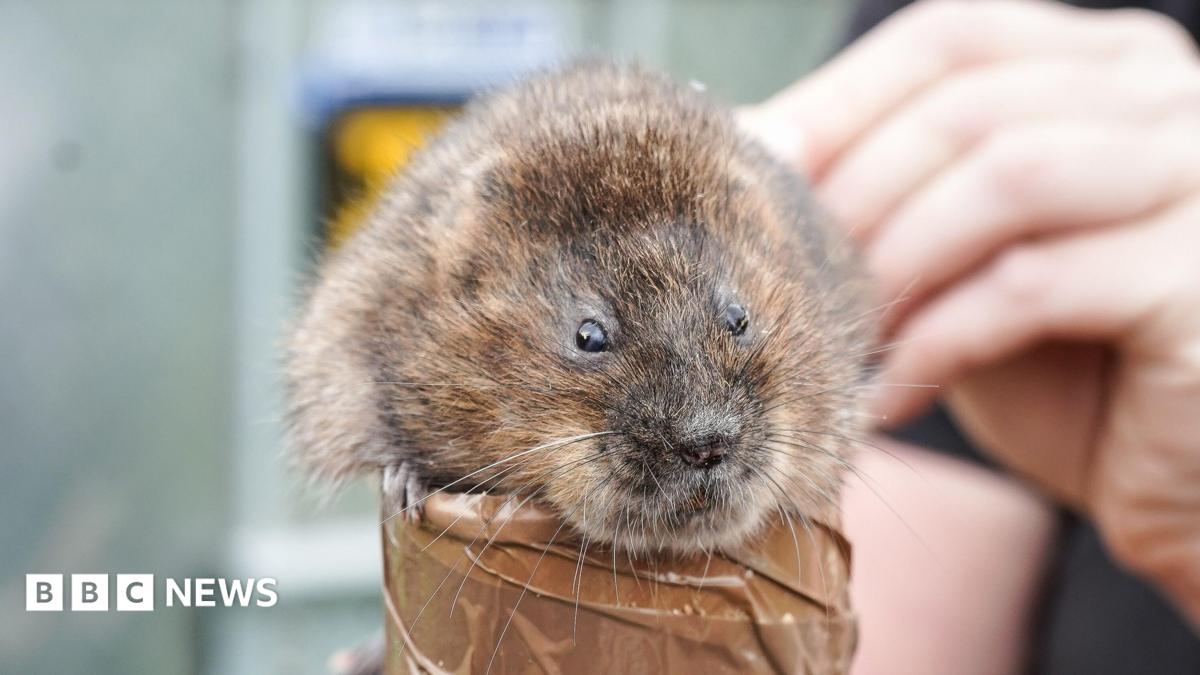
The reintroduction project has involved the creation of 20 ponds and scrapes, removing land drains, planting 26,000 trees and sowing 15 hectares (37 acres) of wildflower seed.
Natural flood management measures and rewetting have also been introduced, with 1,700m (5,577 ft) of watercourse, alongside conservation grazing to support biodiversity.
South said: “We’ve released about 110 voles. We might top that up depending on how they’re doing.
“You’d expect that number to more than double, maybe triple, by the end of the season, and then numbers will drop back down again come the end of the winter.
“If they do really well, they’ll expand out, and there’s a few neighbouring watercourses that we’re keeping an eye on to see if they turn up there as well.”
South said the reintroduction was important because the animals “have a right to be there”.
He added the reason for their decline is “because of mistakes that we’ve made in the past”.
“They create burrows for other animals to use as dens and create a more complex habitat,” he said.
“They’re a small mammal, and that just means that they become prey items for a lot of things. So, if you look at things like herons and foxes, they’re useful prey items for animals like that – they breed a lot and so they can cope with it.”
Water voles were declared “functionally extinct” in North Devon in the year 2000, meaning their numbers were so low they were unlikely to produce a viable new generation.