
The electronics industry in India does not wait. Brands like OnePlus, ASUS and iQOO have doubled down on gaming-first devices, building dedicated communities. Quick commerce listings for smartphones and accessories, once considered unlikely, are now a reality, with Apple, Samsung, Vivo, and Realme all available for rapid delivery. New launches arrive at a pace that would have seemed unsustainable a few years ago. And when it comes to sports, the spending is significant as brands treat team sponsorships and cricketer associations as baseline visibility plays.
Standing out in such a market requires more than another product launch. Leading up to its first anniversary, Ai+ Smartphone has chosen to introduce its latest Nova series through ‘India’s Got Nova’, a brand integration with Season 2 of Samay Raina’s India’s Got Latent, a partnership that inevitably drew attention not just for its format, but also because it followed the controversy surrounding the show’s previous season.
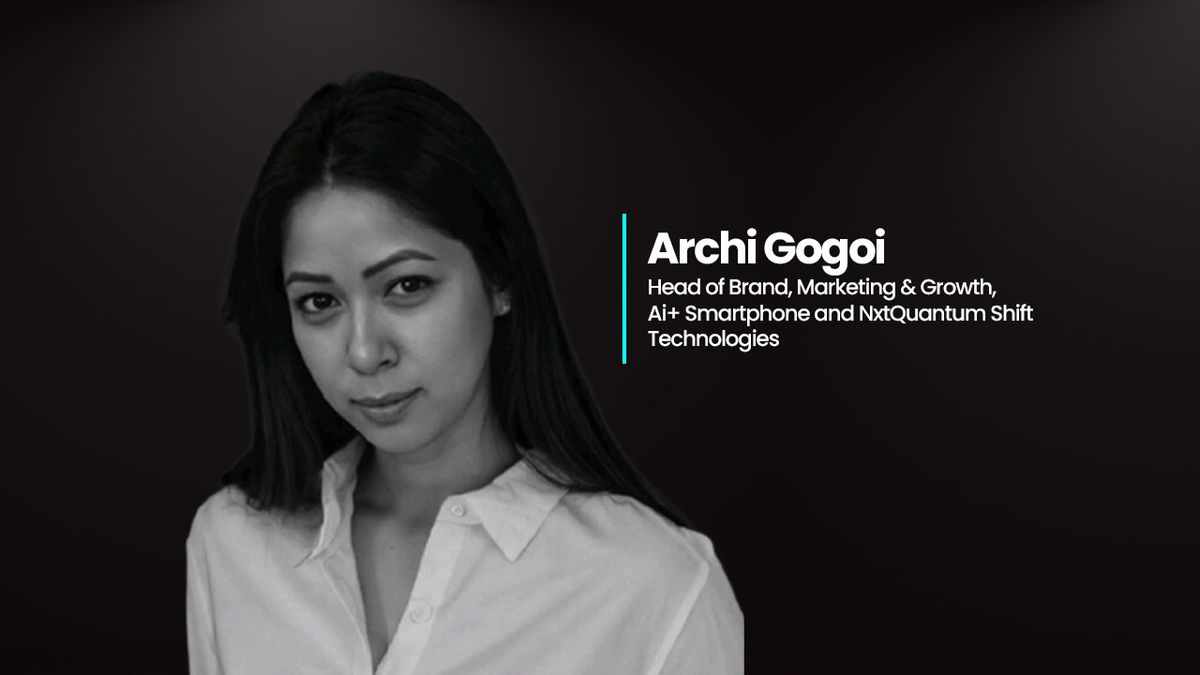
For Archi Gogoi, Head of Brand, Marketing & Growth, Ai+ Smartphone and NxtQuantum Shift Technologies, the decision ties back to a philosophy that has shaped the brand from the beginning. “We always go back to one word before we start conceptualising a product, a design or specifications: democratisation. How can we make technology accessible and help bridge the digital divide?” she says. That thinking, she explains, informed the decision to turn a smartphone launch into an entertainment-led community experience.
Gogoi mentions, “Samay Raina was a natural fit because he has built a format that thrives on unscripted conversations and audience engagement. Rather than using a conventional celebrity endorsement, we wanted to create an entertainment-led launch that felt authentic, relatable and relevant to a younger digital-first audience.”
However, the partnership was not without its risks. In its first season, Raina and his show drew FIRs and content takedowns over remarks made by panellists. The episodes were pulled down from YouTube, and debates were held around creator accountability and advertiser exposure. For Gogoi, these conversations were fully factored in before making a decision.
“Every brand partnership is evaluated on multiple parameters, including audience relevance, brand fit, creative alignment and reputation. We believe it’s important to assess partnerships based on the present context, the safeguards in place and the purpose of the collaboration, rather than solely on past events,” Gogoi says.
That balancing act, finding unconventional ways to build visibility while remaining rooted in the brand’s core positioning, has defined the brand’s first year in India’s smartphone market.
Consumer preferences in this market have sharpened. They evaluate camera quality, battery life, and data privacy before making purchase decisions, according to research.
In the competitive electronics market, there are brands like Ai+ Smartphone that have been in the industry for barely a year. Launched on July 8, 2025, by Madhav Sheth under NxtQuantum Shift Technologies, the brand entered a category already occupied by well-established players with years of channel relationships, consumer trust, and marketing infrastructure. Entering a market dominated by players is difficult enough. Doing so while launching multiple products, investing in national advertising, multilingual campaigns, celebrity-led communication, retail visibility and IPL partnerships makes the challenge even more complex.
Gogoi notes the first year was less about competing with other players but more about establishing a clear reason to exist.
“We understand it’s an extremely cluttered market. We understand there are many players in this market. Yet we’ve been brave enough to launch a new product category and a new brand. We want to coexist with everybody else because healthy competition helps the industry grow,” she says.
The brand launched its first smartphones in July 2025 and has since expanded into multiple categories, including smartwatches, earbuds, tablets and laptops spanning multiple price points. According to company announcements, Ai+ crossed one million users within six months and launched 17 products in under a year.
Communicating accessibility
Most consumer technology brands define themselves around specific cohorts, whether gamers, creators, professionals or Gen Z consumers. The brand has taken a broader approach.
Rather than focusing on a narrow target group, it positions itself around people looking to upgrade their technology experience, whether they are students, first-time job holders, parents, or users moving from feature phones to smartphones.
“We don’t have a particular target group. It’s anybody and everybody who wants to upgrade. For many people, owning a new phone is an emotion, but that emotion can only be fulfilled if you’re giving them accessible technology,” divulges Gogoi.
That philosophy has also influenced product development. While much of the smartphone industry has moved towards premiumisation, Ai+ Smartphone has focused on bringing features typically associated with higher-priced devices into lower price brackets. The brand has repeatedly positioned its products around accessibility, trust and privacy, themes that also appeared in its first television campaign featuring actor Abhishek Banerjee.
The film opened in a mobile store with an exaggerated sales pitch, and Banerjee’s character cut through it with a point about smartness mattering only where it counts.
The follow-up campaign for the Nova 2 Ultra, fronted by cricketer Ishan Kishan, took a different route: a humour-led film built around a relatable story of a friend who becomes famous but stays grounded in his smartphone choices because it provides him with the necessary features. Both campaigns ran across nine Indian languages, covering television, digital, OTT platforms, and outdoor.
The challenge, however, is ensuring such positioning translates beyond marketing language.
“We’ve led by example and not hearsay. If these were only buzzwords, we wouldn’t have launched so many products in such a short period. Accessibility, trust and bridging the digital divide are reflected in the products and price points themselves,” Gogoi says.
The approach comes at a time when smartphone manufacturers are increasingly using AI capabilities as a primary differentiator. Interestingly, Gogoi says the company interprets AI differently.
“For us, AI stands for Applied Intelligence, not Artificial Intelligence. Artificial intelligence can only be optimised if there is human intelligence applying it,” she reveals.
Why a young brand invested in sports properties
Building awareness remains one of the hardest challenges for any new entrant. While established smartphone brands rely on years of equity, newer players must create visibility quickly without being drowned out by competitors.
That partly explains Ai+ Smartphone’s decision to partner with IPL franchises Mumbai Indians and Kolkata Knight Riders within its first year.
“No marketing activity comes cheaply. But for us, it’s important to be present where India is present. We want to be where India’s emotions are, and cricket is one of the strongest examples of that,” Gogoi says.
The IPL partnership was supported by multilingual campaigns, television advertising, digital activations, retail visibility and collaborations with cricketer Ishan Kishan. Yet Gogoi argues the strategy was never about a single channel.
“It will always be a 360-degree approach. Digital, TV, on-ground and retail. Every touchpoint matters if you want awareness across the consumer journey,” she remarks.
That thinking also extends to distribution. The brand’s primary distribution channel has been Flipkart, where early sell-outs and sustained ratings above 4 have created a feedback loop that Gogoi says has driven the pace of new launches. Gogoi indicates that emerging commerce formats will eventually become part of the mix.
“Along with making technology accessible, we’d also want to make technology accessible faster. We will get into those channels eventually,” she mentions, referring to quick commerce.
Looking ahead, the brand’s priorities remain centred on expanding accessibility, growing its community and remaining visible in cultural moments that matter to consumers.
“My goal every day is making technology more accessible and making sure we’re present where India’s youth, emotions and conversations are present,” Gogoi says.
India’s smartphone market is projected to reach 295 million units by 2034, growing at a compound annual growth rate of 6.5%, and the mass-market segment Ai+ Smartphone is targeting will remain the volume anchor of that growth. For a brand that has spent less than a year in the market, that ambition may sound large. But in a category where visibility often determines survival, the bigger challenge may be relevance.