
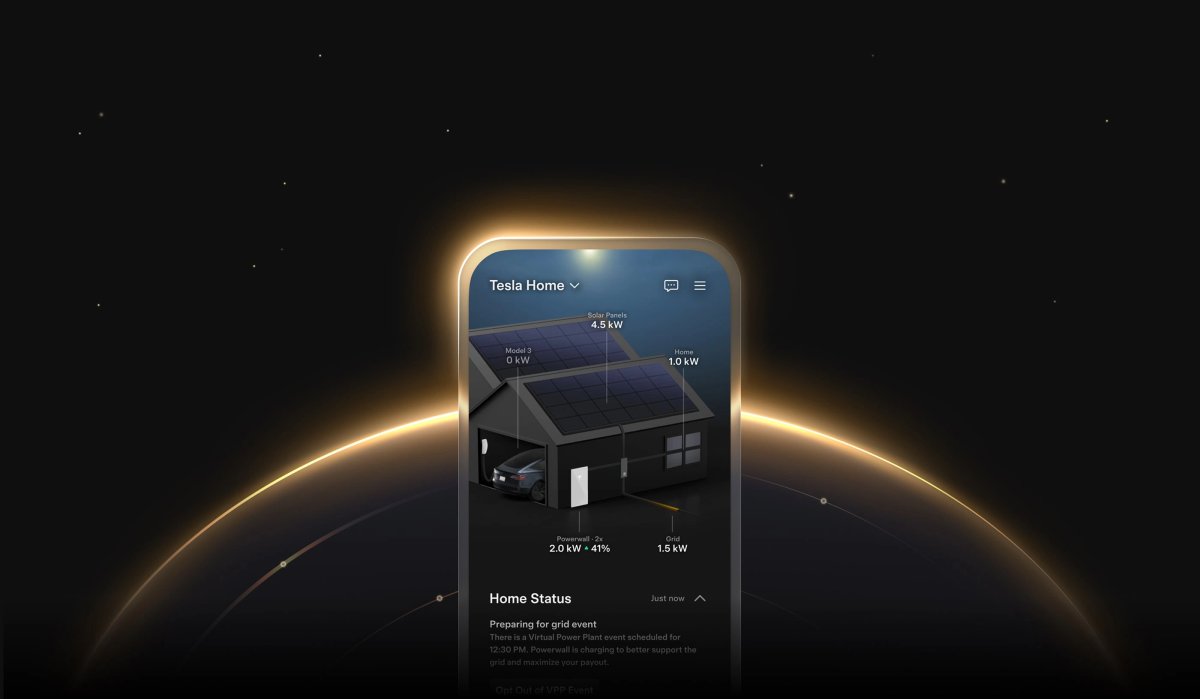
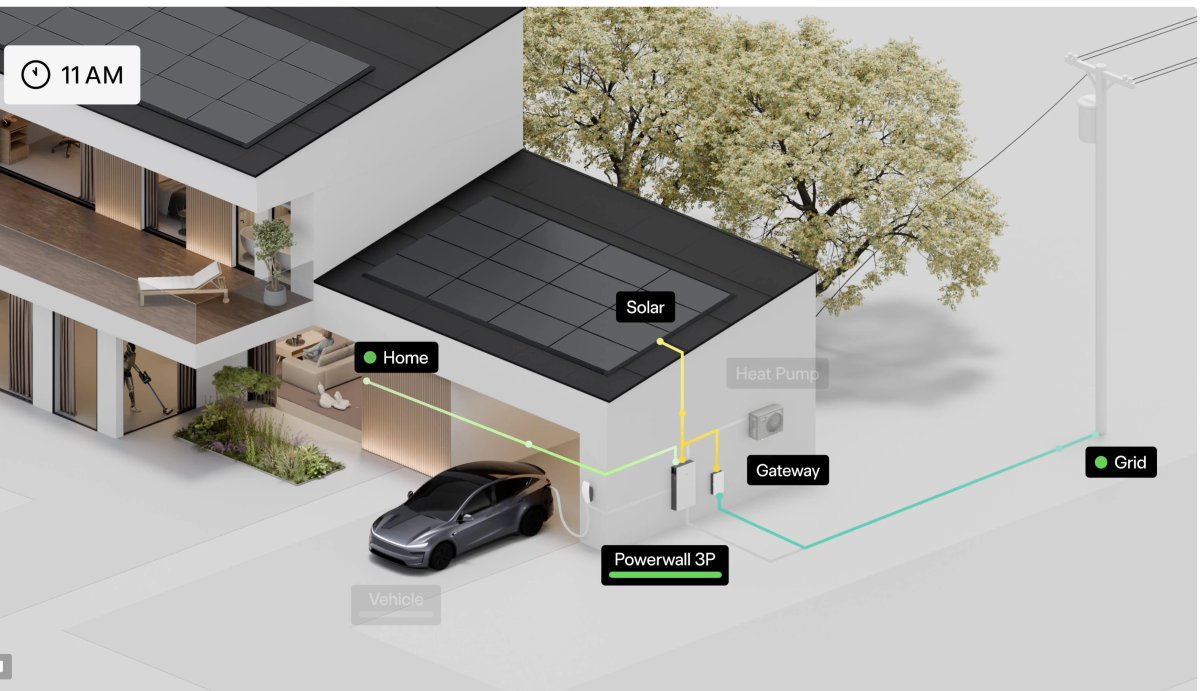
Tesla is making a major push to consolidate its energy ecosystem under a single umbrella, moving well beyond vehicles to permanently reshape how we power our households. A fresh branding initiative aims to tie Tesla’s Powerwall and Solar products, EV charging, and full-home energy management into a single smart network.
Tesla has officially launched Tesla Home, a comprehensive home energy management system (HEMS) that comes standard in every Powerwall. It’s built to combine hardware tracking with cloud optimization software, letting ecosystem owners manage their energy generation and consumption from a single interface.

Not a Tesla App
The software update to support this rollout has also dropped. These consumer-facing dashboard changes are officially rolling out with the latest Tesla app update, version 4.58.6, which started hitting customer devices this Monday.
Your Energy, Optimized by AI
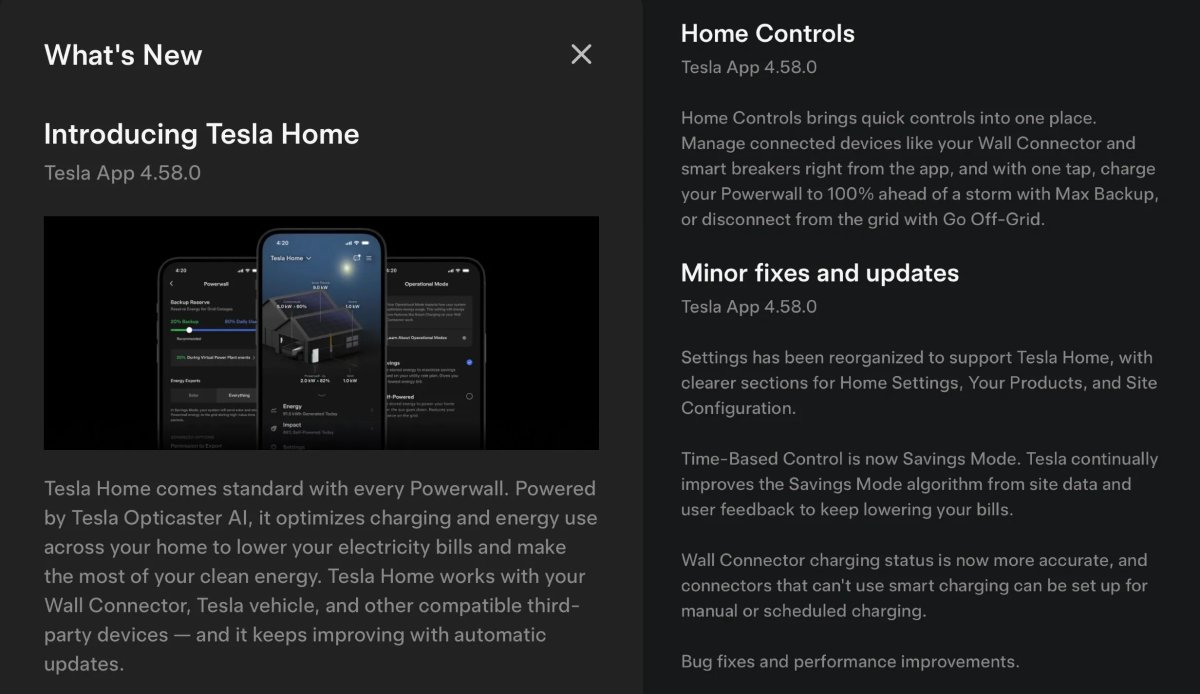
The brain behind the ecosystem is a new AI-powered automation engine called Opticaster. According to Tesla, “Opticaster is the AI optimization software that powers Tesla Home. It automatically decides where to source your energy from and how to use it in your home.”
Instead of operating on rigid timers, Opticaster allows Tesla Home to create custom plans based on your energy generation, consumption, utility plan, and surroundings. Tesla noted that Opticaster “assesses your energy usage and the weather forecast to predict your home’s solar generation and energy consumption.” From there, it targets automated savings. The platform is built to prioritize using solar or stored energy when utility prices are high, and charging your Powerwall and EV from solar or the grid when rates are low.
Not a Tesla App
Tesla Home operates as a learning machine, meaning it continuously analyzes your home’s energy usage, solar production, and local utility prices to improve its optimization and forecasting abilities. And with Tesla’s signature to over-the-air software updates, it’ll only get better over time. This marks the next major step in a long-running software path. Tesla has been moving toward deeper AI integration and increased feature consolidation for its energy products for a while, with recent releases like the AI-powered “System Status” feature for Powerwall carving out the path for Tesla Home.
Not a Tesla App
Changes Inside the Tesla App
The energy portion of the Tesla mobile app received a notable layout update to keep pace with the launch of Tesla Home. Existing hardware owners will instantly spot a clean interface change once version 4.58.6 of the Tesla app hits their phones. The mobile app now features a dedicated Home Controls menu in Tesla Home, collecting your active ecosystem products and their settings under one roof (via @brandonee916).
Tesla App Home Controls are refreshed and now visible. Server side change most likely 🙌🏻 pic.twitter.com/EFKyA3yV3N
— Brandon 🌎☮️🚗⚡️🔋 (@brandonee916) June 30, 2026
This change operates largely as a user interface cleanup. The underlying toggles — like the Max Backup trigger, off-grid modes, and manual backup reserves — were already scattered across various sub-menus. The new interface pulls all of those scattered toggles into one central spot. The app’s Settings menu has also been reorganized to better support Tesla Home, splitting into clear sections for Home Settings, Your Products, and Site Configuration.
Not a Tesla App
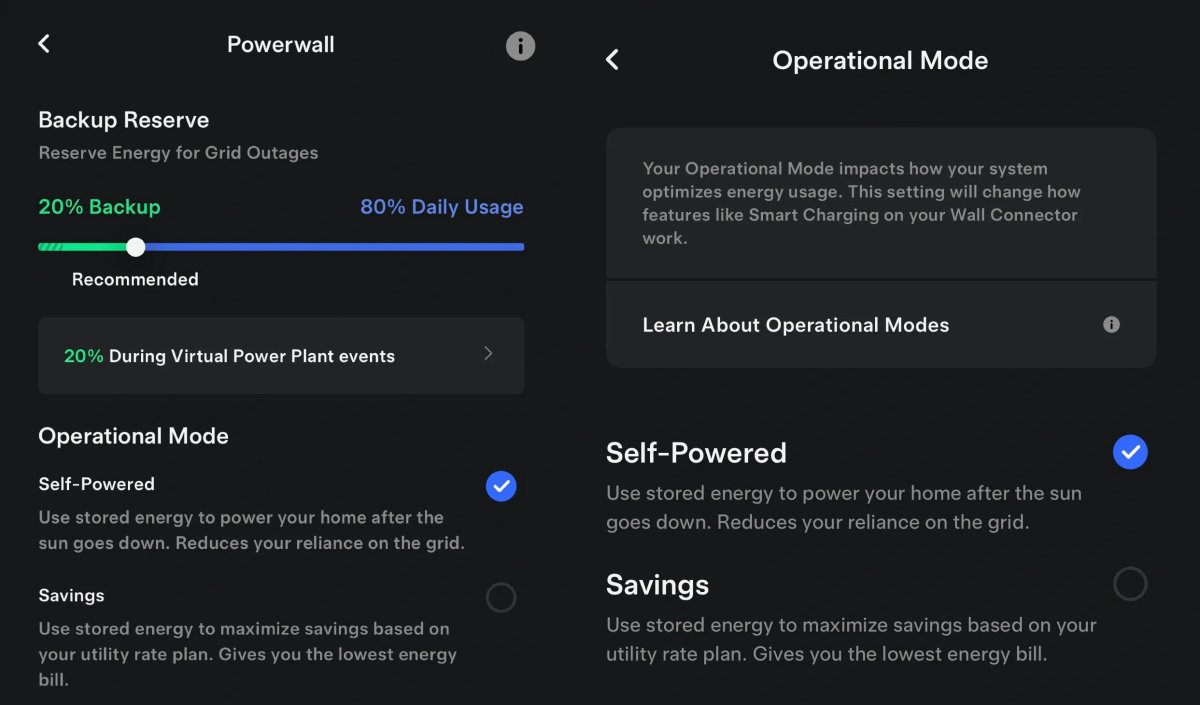
What’s more, the new mobile app dashboard lets you choose specific core energy targets for your ecosystem, sorting Powerwall Operational Modes into two main pathways. Selecting Self-Powered instructs the hardware to rely strictly on stored clean energy to run the house after the sun goes down, lowering your general grid footprint. Selecting the Savings option hands the keys over to the Opticaster engine, adjusting your real-time grid draws against floating utility prices to deliver the lowest possible overall electric bill.
Not a Tesla App
Tesla Home also debuts smart breaker integration, which Tesla has been working on for a while. This feature brings physical smart breaker support directly to the Tesla app, letting you define when to run or shut off major household appliances and decide which of them remain active when grid power drops. For instance, in the event of a blackout, you can configure the app to automatically cut off a heavy appliance like an electric heat pump, saving Powerwall backup to keep your lights, refrigerator, and other essentials running for a longer period.
We also recently discovered evidence of Tesla working on bringing home heat pump control to the Tesla app for even more granular energy management. While that hardware control isn’t included with Tesla Home, the launch of smart breaker toggles indicates that direct HVAC management could follow very soon.
Real-Time Savings with Wall Connector Smart Charging
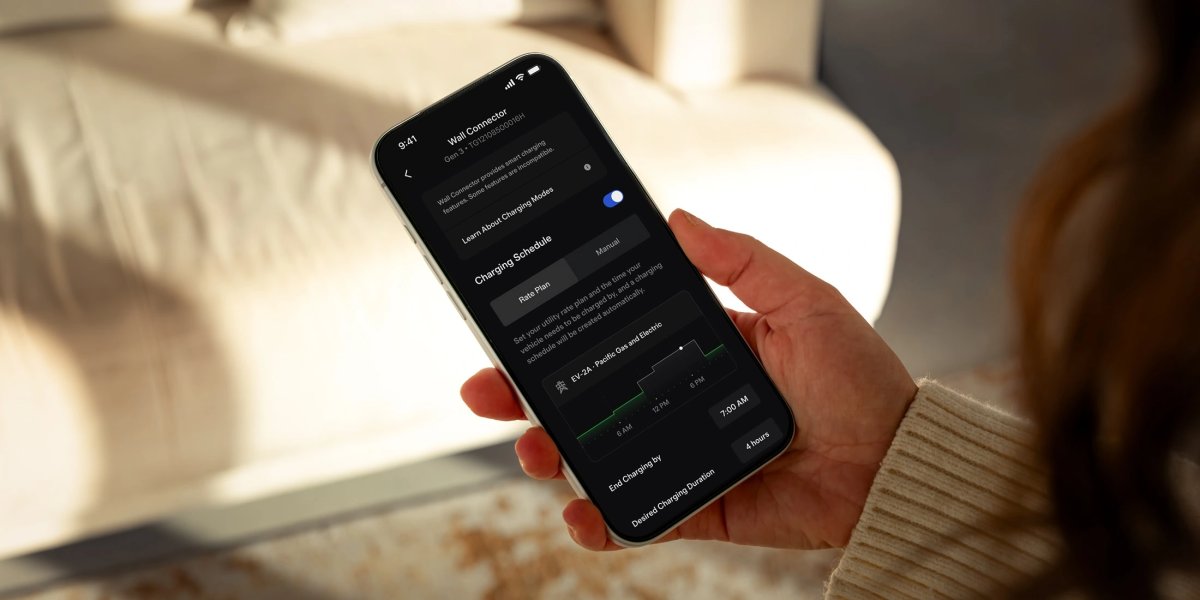
The mobile app update also introduces smarter logic for vehicle charging. The updated Tesla Wall Connector management interface adds an automated charging algorithm that works dynamically with your local electricity provider, presumably backed by Opticaster.
Not a Tesla App
Instead of forcing you to guess and manually input a charging window to save cash, Opticaster can automatically come up with one by scanning your specific utility rate plan. Once activated, the charging logic calculates the cheapest hours (usually during the night) to juice up your EV. Tesla Home ensures the car finishes its full charging cycle right before your local utility rate plan price increases for the morning rush.
Gathering all of these standalone products and features into a single automated dashboard proves that Tesla is treating home hardware with a similar long-term platform approach as its vehicle fleet. As Opticaster gathers even more feedback from your home and the broader grid, it should continue to get smarter at predicting daily household needs.