
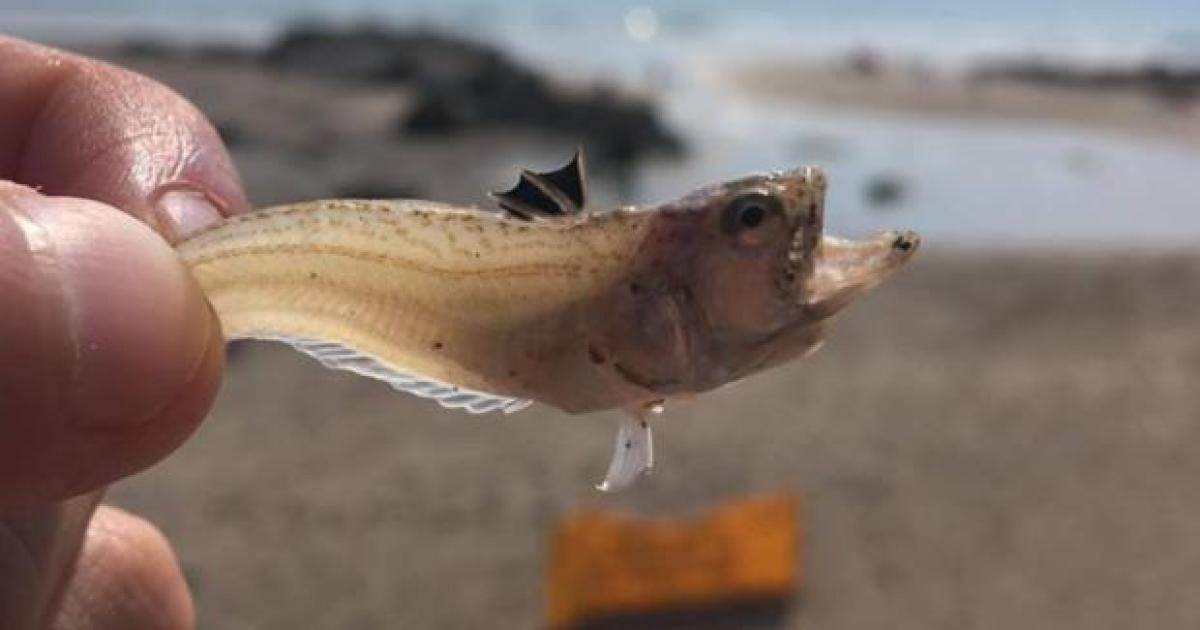
The RNLI has issued a warning about the species, which is common in the south west, and has a sting that causes ‘intense pain’.
A video recently posted by the lifeboat charity explains the risks, describing the fish as a seasonal hazard.
An RNLI spokesperson said: “Weever fish are a small fish that sit just under the surface of the sand.
“Their dorsal fin has three spikes. If you stand on one, it might feel like you’ve cut your foot and a pin-prick mark might be visible on your skin.
“The longer you leave the sting without treatment, the more painful it gets.”
Lifeguards recommend placing the affected area in hot, but not boiling, water as soon as possible.
This helps to neutralise the enzyme that causes your skin to react.
The pain should begin to subside within 10 to 15 minutes, though some bruising may remain.
The lesser weever fish (Echiichthys vipera) is one of the only venomous fish found in UK waters.
It measures around 15cm long and has a sting containing venom that causes “intense” pain.
Though small, its venom is delivered through spines on its dorsal fins and gill covers.
Weever fish bury themselves in the sand.
They lie in wait for prey such as prawns and small fish.
The lesser weever fish is one of the only venomous fish found in UK waters (Image: Getty Images)
The Wildlife Trusts describe the fish as “certainly one to watch out for.”
The only part of the fish typically visible above the sand is its eyes, as its body remains buried.
It’s identifiable by its deep yellowish body, “grumpy” mouth and eyes that sit on the top of its head. Its black dorsal fins, spines and gill covers are where you will find the venom.
The Wildlife Trusts said: “Weever fish are located on beaches all over the UK.
“However, they are most common in the south and south west of the country.”
The RNLI advises beach visitors to approach lifeguards immediately if stung.
Most people stung by a weever fish are able to continue enjoying their day following treatment.