
The hospital could soon be home to a brand-new centre for surgery and diagnostics, bringing together operating theatres, scanning suites and endoscopy rooms in a single, purpose-built facility on the existing hospital site.
Salisbury NHS Foundation Trust has launched a public engagement process about plans to build a new Diagnostic and Surgical Hub, known as DASH, at Salisbury District Hospital, with residents invited to have their say on the proposals and learn more about how the hub would work in practice.
If approved, DASH would include five operating theatres, MRI and CT scanners, and four endoscopy rooms, all housed in a modern, purpose-built building designed to replace some of the hospital’s ageing infrastructure and expand capacity for planned procedures and diagnostics.
Artist’s imagination of what the DASH might look like (Image: NHS)
Trust leaders say the hub is intended to benefit patients by increasing the number of operations and tests that can be carried out in Salisbury, cutting the time people wait for treatment and making it less likely that planned procedures will be cancelled at short notice when the main hospital is busy with emergencies.
The trust expects to submit a planning application to Wiltshire Council in July, with construction anticipated to begin in early 2027 if permission is granted.
The project is backed by £77.5m of NHS funding, although the total cost is expected to exceed £80m, leaving the trust to cover the funding gap through its own resources and further capital.
Originally, the plans focused on replacing the hospital’s existing day surgery unit.
However, after NHS funding was paused in 2025, the scheme was re‑evaluated and combined with another planned project: the Community Diagnostic Centre.
Following a thorough review, both projects were merged to form the current proposal for a single integrated hub, bringing surgery and diagnostics together in one building.
Edmund Ellert, head of estates capital at the trust, said: “Every cloud has a silver lining — we’ve just got to actually sometimes make that silver, or find it.”
Under the proposals, DASH will be dedicated exclusively to day-surgery patients, with no inpatient wards within the hub.
By separating planned care from emergency and inpatient services, the trust aims to improve patient flow and reduce delays, giving day‑surgery patients a smoother journey from admission through to operation and discharge.
At present, planned day‑surgery lists can be disrupted when urgent emergency cases come in, forcing operations to be postponed and adding to waiting times. The new hub is designed to protect elective procedures from that pressure, so patients are more likely to be treated on the day they expect.
Some parts of buildings in the hospital grounds were constructed during the Second World War, and the trust says the new hub will help bring services up to modern standards, both in terms of equipment and layout.
The design eliminates the need for separate anaesthetic rooms, as patients will now receive anaesthetic treatment inside the operating theatre itself.
Julia Gregory, from the trust’s capital projects team, said: “Clinically, it’s also a little bit safer because you’re not moving an anaesthetised patient from one room into another and changing from one set of kit to another.”
She said the change should reduce risks linked to moving patients while they are anaesthetised and make the process feel more straightforward for patients and staff.
Mr Ellert acknowledged the scale and ambition of the project.
He said: “It’s innovative, what we’re doing, and innovation in healthcare can be dangerous.
“We’ve got to make sure that this new layout is repeatable.”
One challenge highlighted during the consultation is the loss of more than 100 staff parking spaces during construction.
The trust plans to demolish unoccupied and derelict buildings to create replacement parking, but staff will face temporary disruption while the hub is built.
The existing helipad will also be relocated, though the new location has not yet been confirmed.
Trust officials say public and patient parking will not be affected.
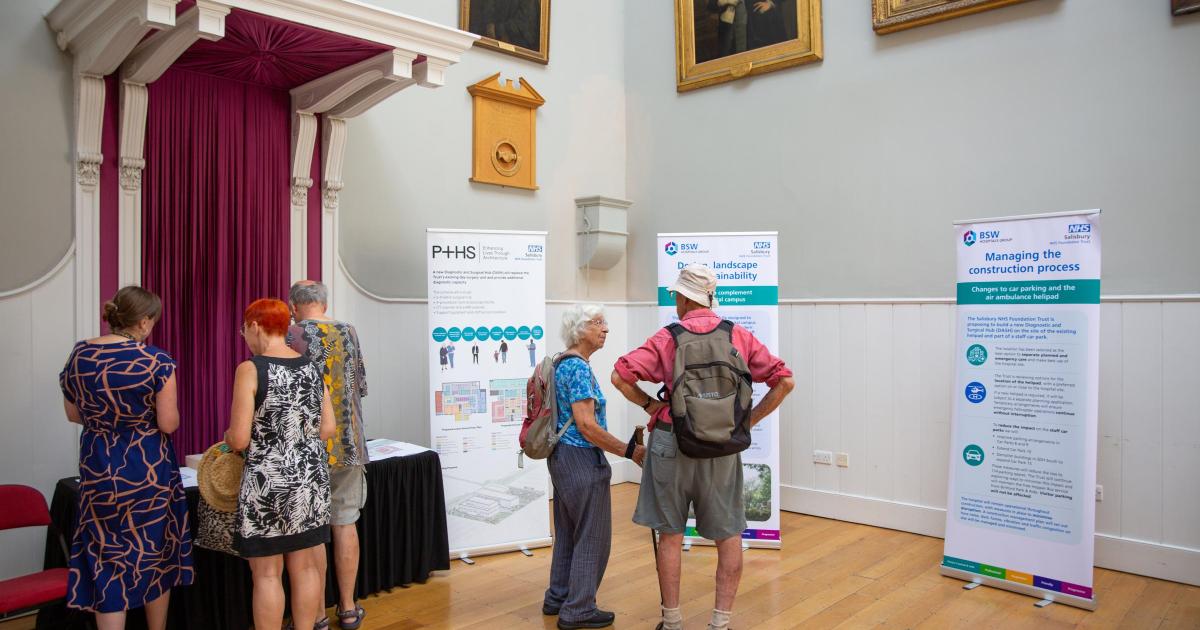
On Tuesday, July 7, a public consultation event was held, inviting the public to share feedback and learn more about the plans through display boards, presentations and conversations with the project team.
One visitor to the event, Ms Jen Grant, said she welcomed investment but was concerned about the impact on hospital staff who already struggle to park.
“It bothers me that they will lose some of the staff parking because it’s always a nightmare for them, and although they say they’re doing other things like bicycles and the park and ride, sometimes that’s just not practical.
“They’ve got other plans in the pipeline which haven’t come to fruition yet, so is this actually going to happen?”
Project manager James Day, who joined the scheme in November 2025, believes it could serve as a regional model.
Mr Day said: “The combining of diagnostic and surgery within the same building creates efficiencies between those.
“You cut down on circulation space, and it becomes more efficient and more cost‑effective.
“All the headlines right now are about NHS waiting times and budgets, and this can combat that.
“It’s exciting; it’s a really good‑looking project.
“I’m not a surgeon or a doctor, but my part in this enables them to do their part in healthcare.”
Edmund Ellert, head of estate capital, said the trust hopes patients will begin receiving treatment at the hub by autumn 2028, subject to planning approval and construction going to schedule.
The trust is encouraging local people to use the consultation period to give their views on the plans and raise any concerns, so the final design reflects what patients, staff and the wider community want from the future of Salisbury District Hospital.