
Your support helps us to tell the story
From reproductive rights to climate change to Big Tech, The Independent is on the ground when the story is developing. Whether it’s investigating the financials of Elon Musk’s pro-Trump PAC or producing our latest documentary, ‘The A Word’, which shines a light on the American women fighting for reproductive rights, we know how important it is to parse out the facts from the messaging.
At such a critical moment in US history, we need reporters on the ground. Your donation allows us to keep sending journalists to speak to both sides of the story.
The Independent is trusted by Americans across the entire political spectrum. And unlike many other quality news outlets, we choose not to lock Americans out of our reporting and analysis with paywalls. We believe quality journalism should be available to everyone, paid for by those who can afford it.
Your support makes all the difference.Read more
The Trump administration is considering using the more than 3 billion acres of U.S. offshore territory for space launches, according to a federal notice.
The Bureau of Ocean Energy Management announced on Tuesday it was seeking public input on the possibility of using the submerged land formations and existing offshore facilities of the Outer Continental Shelf for space-related activities, including the “operation of offshore space launch platforms and potential identification of re-entry sites.”
“The Outer Continental Shelf presents a significant opportunity to support the future of America’s space economy,” Matt Giacona, acting director of BOEM, said in a statement.
The agency, which oversees offshore developments including oil platforms and wind projects in these areas, argues the potential space launches will advance priorities for the sector laid out in a 2025 Trump executive order.
“Offshore launch, re-entry, and recovery infrastructure could expand operational flexibility, increase capacity, reduce constraints on growing launch demand, and strengthen the nation’s commercial and national security space capabilities,” he added in his statement.
Some have questions about using these coastal zones for space activities.
“Space junk and rocket explosions have already been trashing our coastal wildlife refuges and now Trump wants to expand that destruction farther into our oceans,” Miyoko Sakashita, oceans program director at the Center for Biological Diversity, told The Hill.
Demand for regular space launches remains high, as companies such as SpaceX and Amazon pursue satellite-based internet networks and AI companies clamor for a future of data centers in space.
Companies such as SpaceX and Blue Origin have further driven down launch costs, and Lockheed Martin, Firefly Aerospace and Seagate Space are seeking to used sea-based platforms for national security missions.
One such mission could include supporting the Trump administration’s Golden Dome defense initiative, a space-based missile defense system.
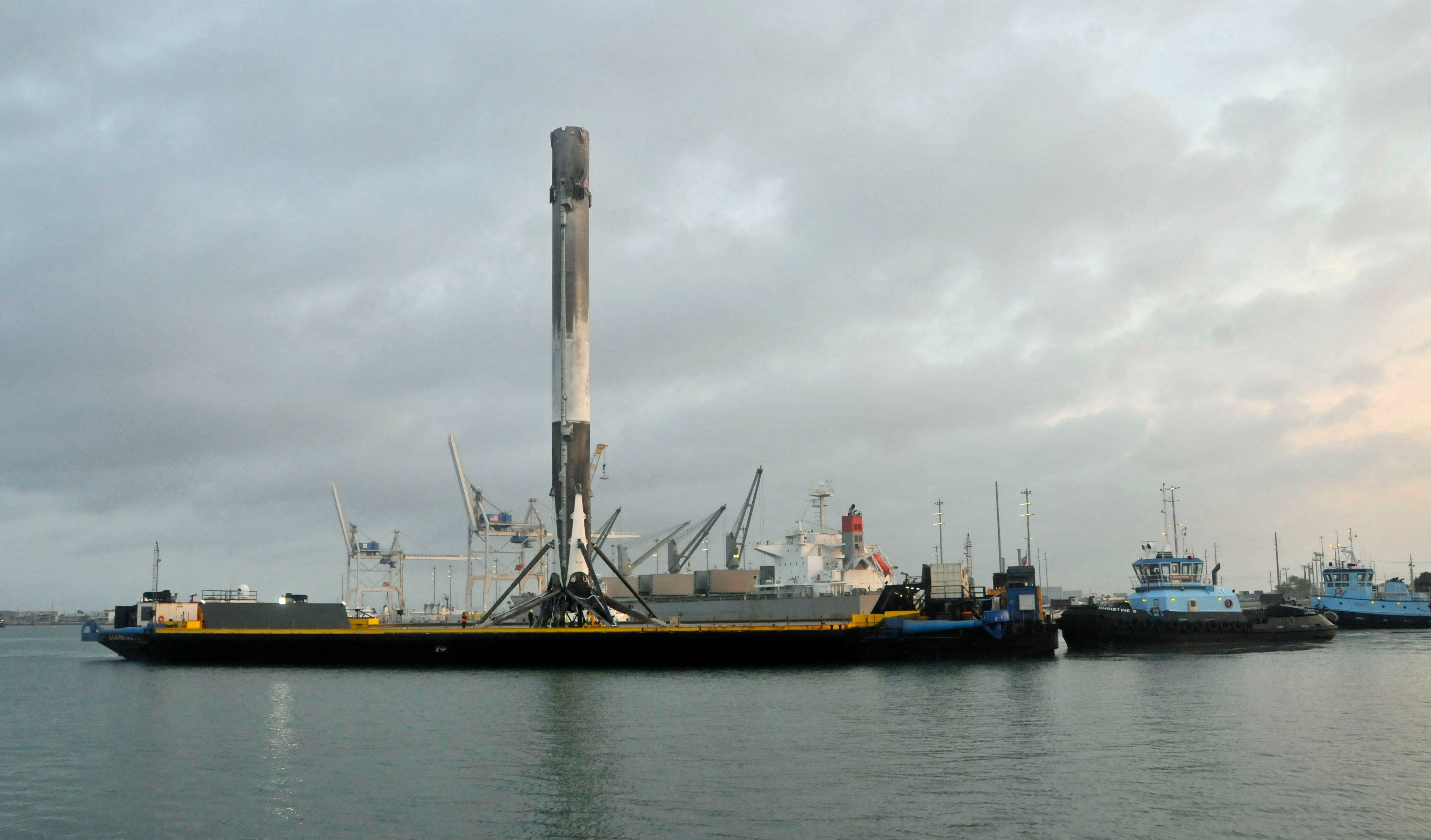 Demand for space-based internet systems, exploration projects, AI data centers and national security missions is driving rocket launches, and firms are exploring using offshore platforms to conduct them (AFP/Getty)
Coastal areas are already used for launches, including Vandenberg Space Force Base in central California, Cape Canaveral Space Force Station in Florida and SpaceX’s Starbase facility in southern Texas.
SpaceX also lands certain stages of its rockets on autonomous “drone ships.”
Environmentalists accuse the company of causing “devastating impacts” on the wildlife, particularly birds, that lives by Starbase, which is near Las Palomas Wildlife Management Area, Boca Chica State Park and the Laguna Atascosa National Wildlife Refuge.
In a 2024 report, the Audobon Society claimed the company is in the process of undoing “decades of work and investments to protect this unique ecosystem for future generations.”