
Jeremy Clarkson’s bombshell cancer diagnosis has put a spotlight on prostate cancer (Image: Getty)
Jeremy Clarkson’s bombshell cancer diagnosis has put a spotlight on prostate cancer, triggering a surge in awareness and men checking their health. And the timing could not have been more striking. The Top Gear star’s news – revealed when he told his staff in an emotional episode of Clarkson’s Farm – came just days after the NHS announced that thousands of men with prostate cancer will be offered a new form of precision treatment. The Express has taken a detailed look at this latest cancer breakthrough and who will be eligible. Decisions about how best to tackle prostate cancer take into account many factors including the stage of disease, whether it has spread around the body or remains “localised”, side effects, and patient preference. Jeremy, 66, has said he had an aggressive but early form. He underwent a high-intensity focused ultrasound (HIFU) procedure, which left the cancerous 10% of his prostate “dead” while preserving the rest.
HIFU involves using high frequency sound waves to heat and destroy tumour cells. It has become a popular alternative to radical surgery for some patients, and may have allowed Jeremy to avoid the cardiovascular risks of a major invasive operation, given his history of heart problems. For men with low to intermediate risk prostate cancer, the NHS is rolling out another potential weapon. Stereotactic ablative radiotherapy (SABR) uses multiple beams of radiation to target a tumour while reducing collateral damage. Simon Grieveson, assistant director of research at Prostate Cancer UK, explains: “It’s much like if you shine a number of torches onto the same spot. The intensity of the brightness is higher in that point where they all meet. “It’s exactly the same with this form of radiation treatment the intensity of the radiation is much higher at the point of the cancer and much lower around it, hopefully sparing any damage to the surrounding tissue.”
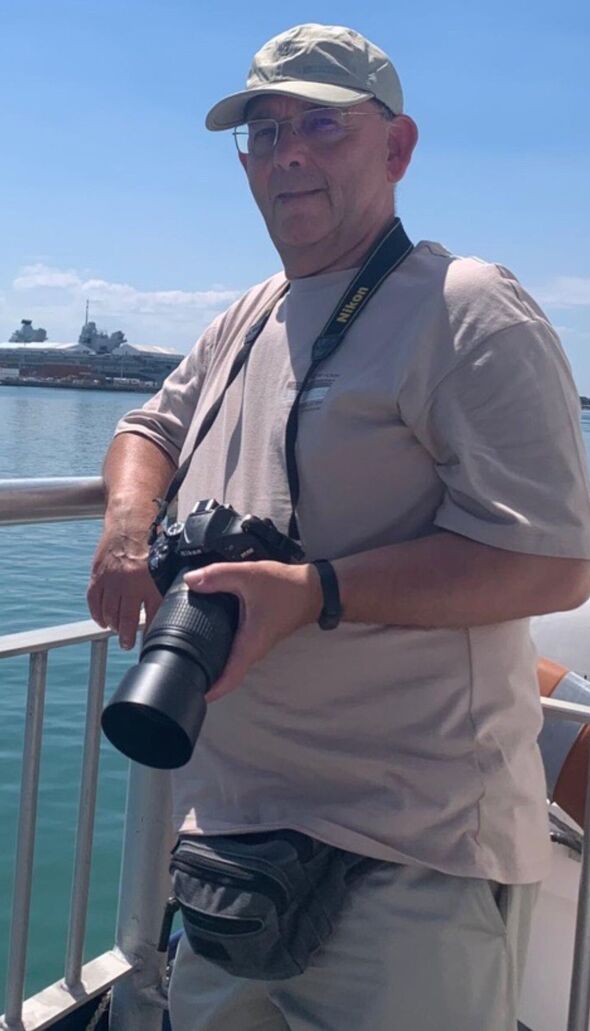
Edwin Lambert, 70, underwent SABR after joining a study in July 2025 (Image: Supplied)
With this method, radiotherapy can be delivered in around five doses, which is far fewer than the usual 20. It is already used on the NHS for some specific types of lung, pancreatic and liver cancers. For prostate cancer, it was previously only available in specialist centres through clinical trials.
Edwin Lambert, 70, underwent SABR after joining a study in July 2025. He had been diagnosed with prostate cancer in January of that year after his wife Pat and son Stuart noticed he was urinating more frequently. The dad-of-two says: “My wife had been nagging me for some time but I didn’t think I had a problem. I duly went off, had the blood test and didn’t think any more about it. I then had a phone call asking me to go to the doctor’s surgery.
“When I went in, they said that the normal readings for a person of my age should have been [a PSA level of] somewhere around 0-4.5ng/mL. She said: ‘Yours is 22.9ng/mL.’” Following biopsies, a urologist confirmed a diagnosis of adenocarcinoma, the most common type of prostate cancer. “It’s strange,” adds Edwin. “You get this feeling – is he talking about me? Has he got the right set of results? I suppose it’s disbelief.
“Once it sunk in and I had accepted everything, I was angry with my body. How could it let me down like this? But such is life.” After researching his options, Edwin requested a radical prostatectomy – surgery to remove the entire prostate. He was wary of traditional radiotherapy: “It was 20 daily doses but there’s quite an extensive period of post-term therapy recovery and quite a high risk of double incontinence. It really didn’t appeal to me.”
However, Edwin was advised that he might not be accepted for the surgery because the cancer had broken through the outer lining of his prostate. His doctor instead invited him to join a trial of SABR. “He explained that it was five mega-doses, closely targeted and very focused. And it’s done over a 10-day period so you have a dose, then a day off. He said the side effects were much more severe but over a lot quicker.”
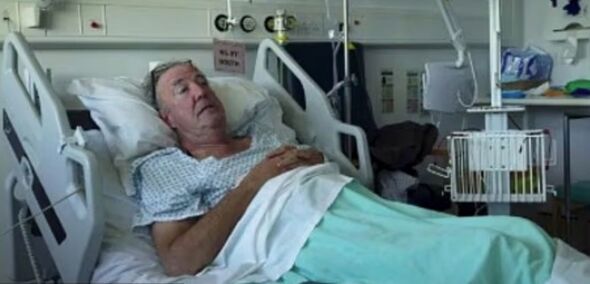
Jeremy Clarkson was diagnosed with an aggressive form of prostate cancer but is now in remission (Image: Clarkson’s Farm/Prime Video)
Offering advice for those facing a diagnosis, he adds: “Talk to the professionals. I have an amazing key Macmillan support worker called Alex. He’s talked me through so many things, explained so many things. Just talk to them, don’t hide, don’t be shy.” The SABR side effects were “over a lot quicker [than standard radiotherapy], and they’re manageable”, Edwin adds. “If you’re given the chance to have this form of therapy, take it with both hands and open arms.”
Keen citizen scientist Edwin, of Suffolk, had booked a place on an upcoming archaeological dig. He decided this new option would give him the best chance of recovering in time. After more scans to confirm eligibility, he was tattooed with three dots to align the radiotherapy beams during each session.
There was guidance on what to eat and drink. Edwin recalls: “They don’t want you to have a bowel full of gas because that causes movement, which throws the targeting off. So you have to have an enema about an hour before each session. And you have to eat quite bland foods for about two to three weeks. The trial actually specified the specific volume in your bladder, so you had to drink about 300ml of water about an hour before going in.”
During each session, Edwin would strip from the waist down and lie on a bed. “They gently move you into the right position, so the emitters are pointing where they need to be. You just lie there staring at the ceiling.The equipment was brand new and had just been bought by the hospital, so my doses only took seven seconds. I understand some machines can take anywhere between three and seven minutes. Ideally, you’re not supposed to move. You don’t feel anything at all. After that you get dressed and go home.” Edwin adds: “The treatment itself was a walk in the park. The side effects were tough.” He suffered from painful radiation-induced cystitis which “kicked in with a vengeance after about a week”, and bowel disturbances.
He had also started hormone replacement therapy to “turn the testosterone off”, which had further consequences including hot flushes, mood swings, loss of libido and erectile dysfunction. It was a gruelling process but, Edwin says, a “small price to pay” for treating his cancer. The radiotherapy side effects cleared up within around five weeks and he was soon helping to clean and catalogue finds from the dig in East Yorkshire.
Now in recovery with a PSA level below the detectable threshold of 0.02ng/mL, Edwin says the treatment has given him the opportunity to watch his grandson grow for many more years to come. He wants to encourage other men to be more open about cancer and the tough realities of treatment.
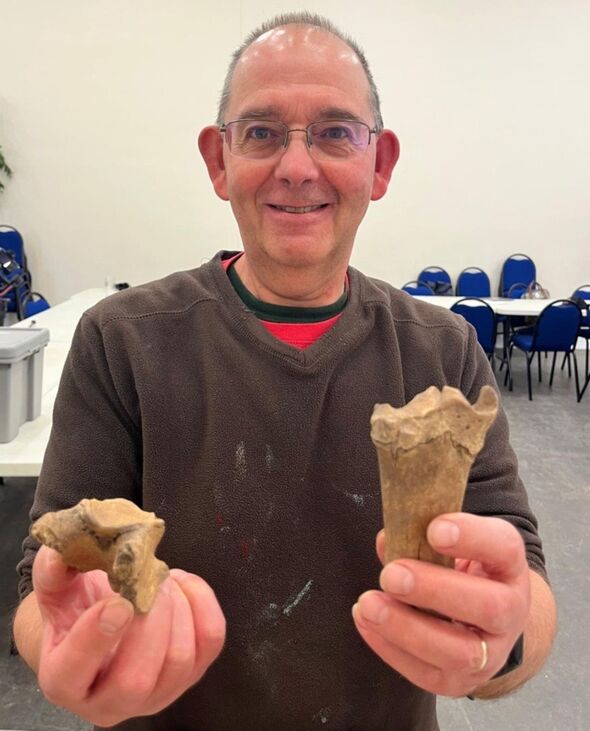
Edwin Lambert thought SABR would be his best option to be fit and well enough for an archaeological dig he wanted to attend (Image: Edwin Lambert)
“There’s far too much secrecy about male cancers in general,” he says. “49% of the population has got a prostate, testes, a penis, and everything related to it. Men need to get over it, to get out there, to have the tests, to talk. Men don’t like talking about erectile dysfunction but 40% of the male population suffers from it at some point.”
Around 17,500 men with low or intermediate risk prostate cancer are expected to qualify for SABR following the NHS rollout to 48 providers across England. NHS modelling suggests around one in five are likely to choose it. Meanwhile, researchers are investigating whether it could be even more widely used to treat men with advanced disease. Prostate Cancer UK is investing £865,000 in the STAR-TRAP study led by The Royal Marsden NHS Foundation Trust and The Institute of Cancer Research in London.
It will test whether offering SABR to men with incurable prostate cancer that has spread around their bodies can delay cancer progression. Simon Grieveson says: “The previous trial we funded proved that SABR can give men extra months before their cancer starts to grow again and could allow some men to safely hold off having chemotherapy, and the side-effects that come with it, for longer. This now needs to be tested in a larger study.
“The trial is still recruiting at the moment so it’s a little way off yet, but we’re very hopeful that when the results read out, it could potentially expand the use of this treatment approach to men with advanced disease.” The NHS rollout of SABR is part of an “exciting revolution in the way radiotherapy is being delivered”, Mr Grieveson adds. “Outside of that, we’re seeing great advancements around more precision treatments, so being able to identify particular treatment for particular men based on the characteristics of their cancer.
“That means looking at the underlying genetics. We’re moving into this more precision medicine approach, personalised approach, rather than one-size-fits-all.” As the treatment landscape widens, men facing such decisions should work with their clinicians to make the right choice for them — whether it’s radiotherapy, surgery, a focal therapy like the one Jeremy opted for, or even “watch and wait” active surveillance. Mr Grieveson adds: “It’s really important that men are informed of their treatment choices, what’s available and what’s potentially right for them and for their cancer.”