
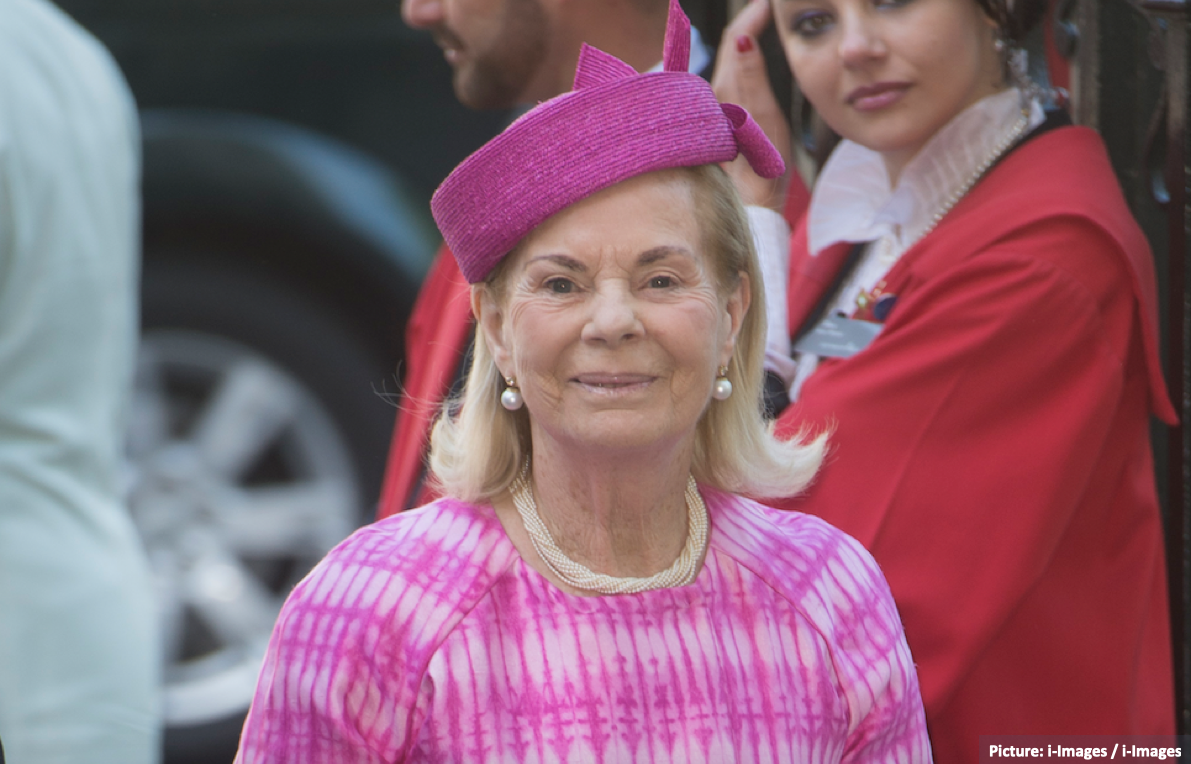
For many tennis fans, the Duchess of Kent will forever be
associated with Wimbledon. For more than three decades, she was the
familiar face presenting trophies to the champions on Centre Court,
becoming one of the tournament’s most recognisable royal
figures.
Although the Duchess of Kent – who preferred to be known simply
as Katharine Kent in later life – died in 2025, her connection with
Wimbledon remains one of the defining aspects of her remarkable
public life. Yet despite her deep affection for the Championships,
her relationship with the All England Club was not always
straightforward.
Alongside her husband, the Duke of Kent, Katharine began
presenting Wimbledon trophies in 1969. It was a role she continued
until 2001, long after she had stepped back from official royal
duties. The final champion to receive a trophy from her was Venus
Williams following her victory that year.
The Duke of Kent continued the tradition until his own
retirement from the role in 2021, when the responsibility passed to
the Princess of Wales as Patron of the All England Lawn Tennis
Club.
One of Katharine’s most memorable moments came during the 1993
Ladies’ Singles final. After Jana Novotná suffered a heartbreaking
defeat to Steffi Graf, the devastated Czech player burst into tears
during the trophy presentation. The Duchess instinctively embraced
and comforted her, creating one of the most iconic and
compassionate moments in Wimbledon’s history.
Her commitment to the Championships was equally evident on
another occasion when she insisted on presenting the trophies
despite wearing a plaster cast on her foot.
Away from Centre Court, the Duchess also quietly used her
position to help others. After learning that Martina Navratilova’s
family had been unable to leave communist Czechoslovakia to watch
her daughter compete, Katharine helped secure a visa for the tennis
star’s mother so she could finally attend Wimbledon.
Despite her popularity among players and spectators alike, the
Duchess’s relationship with the tournament’s organisers became
strained in 1999.
Katharine had hoped to invite the 12-year-old son of murdered
headteacher Philip Lawrence to Wimbledon as a special treat.
Lawrence had been fatally stabbed outside his London school while
protecting one of his pupils from an attack, and the Duchess wanted
to offer his son a day to remember.
However, the Chairman of the All England Club, John Curry,
reportedly informed her that only royal children were permitted to
sit in the Royal Box. Although he later apologised for the tone of
his response, the club refused to make an exception.
The incident deeply upset the Duchess and prompted widespread
reports that she intended to boycott Wimbledon. Friends later
insisted that was never truly the case.
One friend explained: “It’s simply not her style. She goes there
every year, often sitting with friends in the cheap seats where no
one notices her.”
Indeed, although she largely disappeared from public life,
Katharine occasionally returned to the Championships. In 2017 she
made a surprise appearance in the Royal Box—the first for many
years—and attended again on several subsequent occasions.
In a rare television interview with the BBC in 2018, she
reflected warmly on her lifelong affection for the tournament.
“I think it is truly the best thing in the world; the atmosphere
is electric,” she said.
Recalling the experience of walking onto Centre Court, she
added: “I was so frightened about going onto Centre Court. Even
just walking into the Royal Box is absolutely incredible. You are
so close – that is amazing.”
Following her retirement from public duties, Katharine largely
withdrew from royal life, preferring to be known simply as
Katharine Kent rather than by her royal title. She devoted much of
her later life to music and education, teaching at a state primary
school in Kensington and working with children, including pupils
affected by the Grenfell Tower tragedy.
While she will always be remembered for her compassion towards
Jana Novotná, the Duchess of Kent’s Wimbledon story was about far
more than presenting trophies. Her warmth, humility and genuine
love of the Championships ensured she became one of the
tournament’s most cherished royal patrons, even if her relationship
with the All England Club was, at times, a complicated one.