
Kenya’s economy expanded by 5.3 per cent in the first quarter of 2026, driven by strong growth in tourism and transport, with international visitor arrivals and Standard Gauge Railway (SGR) passenger numbers recording double-digit increases.
This is according to the latest Quarterly Gross Domestic Product (GDP) Report by the Kenya National Bureau of Statistics (KNBS) published on Friday, July 10.
The report showed that the accommodation and food service sector was the fastest-growing segment of the economy, expanding by 14.7 per cent compared to 8.0 per cent during the same period in 2025.
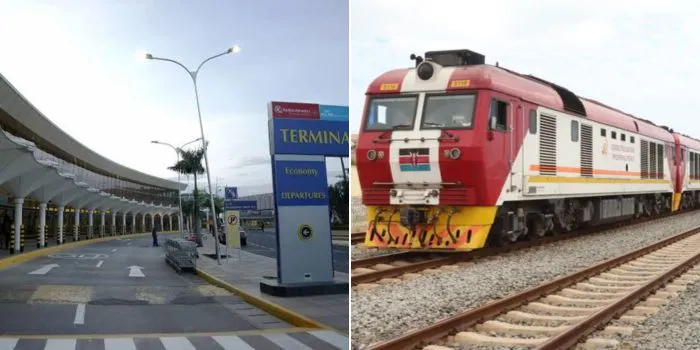
According to KNBS, the growth was supported by a 13.1 per cent increase in international arrivals through Jomo Kenyatta International Airport (JKIA) and Moi International Airport (MIA), with the two facilities handling 506,622 visitors during the first quarter of 2026.
An image of the Jomo Kenyatta International Airport
Photo
Kenyans.co.ke
The country’s transport sector also maintained steady growth, expanding by 3.6 per cent as more passengers and cargo were transported across the country using rail and road networks.
SGR passenger numbers rose by 12.3 per cent from 529,600 travellers in the first quarter of 2025 to 595,000 during the same period this year, highlighting increased uptake of the railway service.
Cargo transported through the SGR also increased significantly, rising by 12.7 per cent to 2.05 million metric tonnes from 1.82 million metric tonnes a year earlier.
The Port of Mombasa equally recorded improved activity, with cargo throughput increasing by 3.7 per cent to 10.99 million metric tonnes, while light diesel consumption, an indicator of road transport activity, rose by 9.9 per cent.
“The accommodation and food service sector recorded a growth of 14.7 per cent in the first quarter of 2026 compared to a growth of 8.0 per cent in the corresponding quarter of 2025,” KNBS stated in the report.
Beyond tourism and transport, manufacturing accelerated to 4.4 per cent from 2.8 per cent a year earlier, supported by higher production of cement, assembled vehicles, sugar and soft drinks.
Construction also strengthened, growing by 6.6 per cent as cement consumption and imports of bitumen and steel increased.
Agriculture, forestry and fishing expanded by 4.9 per cent, backed by increased tea production, sugarcane deliveries and milk deliveries to processors, although declines in coffee and fruit exports weighed on the sector’s overall performance.
Despite the stronger economic performance, KNBS noted that inflation increased to 4.35 per cent from 3.45 per cent in the first quarter of 2025 due to higher food prices, while the country’s current account deficit widened from Ksh70 billion to Ksh120.9 billion over the same period.
National Youth Service graduates riding the Madaraka Express Passenger Service train from Suswa station in Narok County to Mombasa, September 4, 2024.
Photo
Kenya Railways