
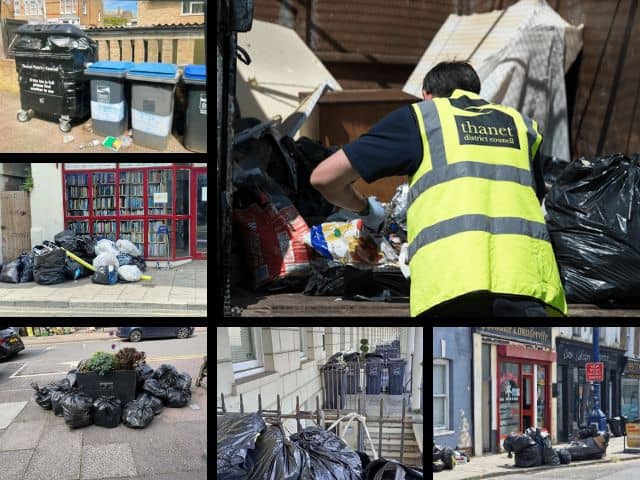
 A council report of the issues with bin collections has been published
A report into the failures of food, waste and recycling collections across Thanet has laid out eight reasons why the service has struggled since 27,000 homes were added to a Simpler Recycling Scheme.
Until April this year, those 27,000 households received non standard collections. This meant that they were not offered all of the waste and recycling services on the ‘standard’ rounds.
Approximately 6,600 of the households received a weekly refuse collection. A further 9,300 were flats with communal refuse bins on weekly collections. The remaining 11,100 households were considered to have restricted access meaning that a smaller refuse truck was deployed.
Some of the 27,000 households had food or recycling collections but there was no requirement for them to be used.
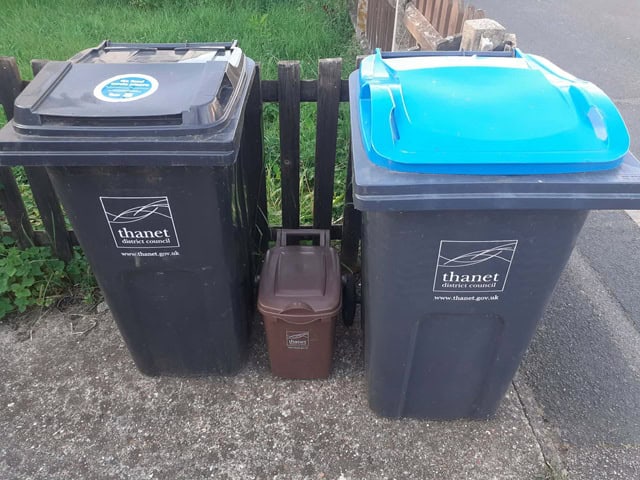
On 13 April, the Simpler Recycling Service (SRS) started for those properties and there was a £400k budget to implement the required changes – including £142k government funding.
The council collects waste from approximately 77,000 homes and just under two thirds of households (47,300) already had ‘standard’ weekly food waste collections alongside alternating weekly refuse and recycling collections since 2013.
Simpler recycling has six operational rounds each with a driver and two crew. Four of the rounds collect either Fully Mixed Recycling or Refuse on alternate weeks. The remaining two vehicles collect the food waste on a weekly basis.
Residents were notified of the changes. A report to councillors says: ““A letter was sent by post explaining the forthcoming changes and included details of when collections would start and what to expect.
“Materials were explicitly edited to maintain an accessible reading level, typically targeting an audience reading age of approx. 10-11 years old.”
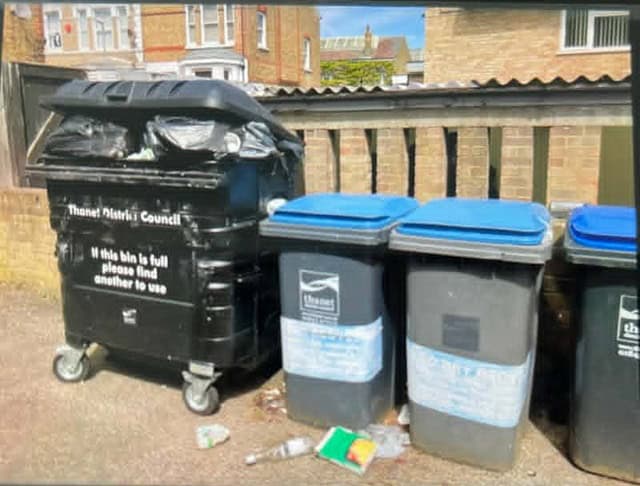
But complaints have been voiced across the isle about missed collections, overflowing bins, rancid food caddies and homes which have not even received the new bins and bags.
Businesses say they are also suffering with household waste being left outside their premises.

In Ramsgate Michael’s Bookshop owner Michael Child said: “We have a serious and developing problem in King Street Ramsgate, with piles of domestic rubbish in front of the shops during the trading day.
“This is particularly a problem on Fridays when the rubbish and recycling are supposed to be collected. Up until recently all of the rubbish was removed before the shops opened.
“I have traded here in King Street since 1987 and the rubbish has always been collected before the shops open. Previously I traded in various other towns and always rubbish outside the shops in the town centres was cleared before the shops opened.
“Apart from the obvious detrimental effect on any shop trying to trade with piles of rubbish in front of the shop window, there is also a considerable problem for disabled people trying to do their shopping.
“It does look as though something has gone seriously wrong with TDC’s rubbish and recycling. I tried reporting this using the council form on numerous occasions, but all that happens is you get an email several days later saying that the rubbish had already been removed when they came to look.”
Between February 2 and April 12 526 bins were missed for standard collections and 272 for the new simpler recycling homes.
But from April 13 to June 12 although missed bins on standard rounds only rose slightly to 584, the simpler recycling missed collections shot up to 1108.
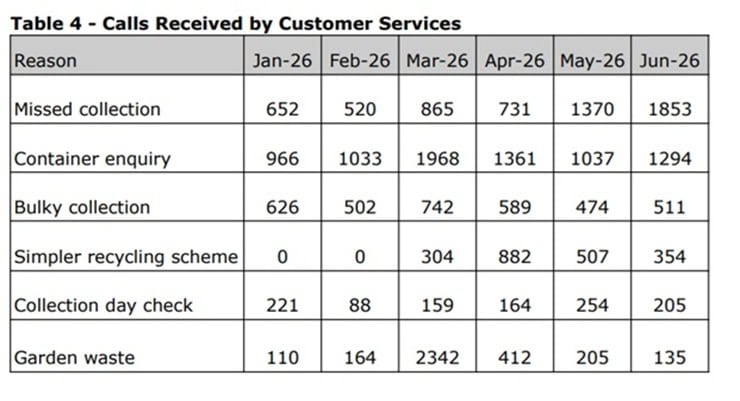
In January calls to customer services regarding missed bin collections totalled 652. In June there were 1853 calls.
Notice of motion
On June 10, frustrated councillors across Conservative, Green and Reform lodged a notice of motion for an extraordinary meeting of council on 18 June to highlight increasing concerns across the district regarding missed and incomplete household waste collections, overflowing public bins, and wider concerns relating to waste collection services.
At a meeting of the Overview and Scrutiny Panel (OSP) on 16 June it was agreed to discuss the matter as soon as possible. The motion was still raised at the extraordinary council meeting two days later but the majority Labour members voted not to debate it on the basis that a report was already being prepared for the scrutiny panel.
That report has now been published and it has laid out the reasons for the collection chaos over the past three months.
Reason 1 -More travel
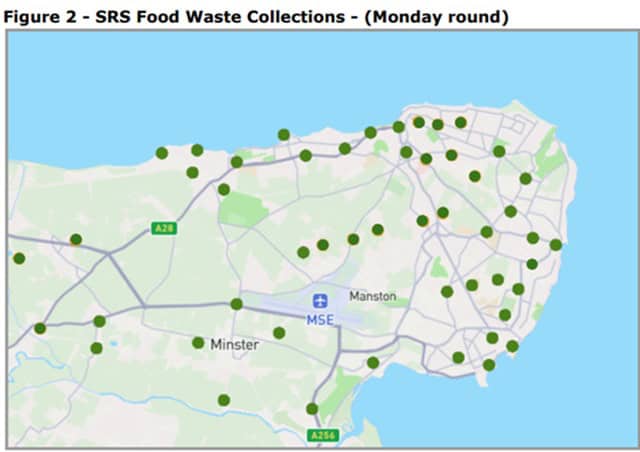
New Simpler Recycling rounds (the 27,000 homes) are more widespread and there is more travel time for vehicles each day as a result. When the district is busy this has a greater impact on the efficiency of collections.
Two of the six Simpler Recycling round vehicles are allocated to food waste collections from the 27,000 properties. Crews have struggled to complete their rounds since the service change in April due to the need to collect from wide areas each day, including areas that are considered harder to access
Reason 2 – No increase in resources for collections
No extra funding was used to increase collection resources on the basis that the service changes did not mean that more waste was going to be produced. However, the report says more recycling ‘participation by residents’ was expected.
The report says: “Residents are not being asked to store more waste than before, but instead to separate waste into the three different waste and recycling streams. Food waste, which is the most difficult waste type to store, is collected every week. With careful waste separation the volume of refuse can be reduced significantly making storage over a two week period easier.
“ Although the principle is sound, the allocation of resources assumed a greater initial level of participation by residents in the new service. This assumption was with hindsight ambitious and was influenced by the overarching principle of avoiding revenue budget growth unless absolutely necessary.
“To be clear, the point about participation is not made to levy criticism at residents. It is accepted that participation in a new collection service may be low initially and it is the council’s responsibility to engage with residents to seek to increase participation levels.”
The report says this ‘low participation’ has resulted in more waste than crews can collect.
It says: “Peaks in the refuse week tonnages effectively exceed the capacity of the service to collect the waste presented. This requires resources to be diverted from other areas of the service and results in rolled over collections. This imbalance in tonnages is one of the fundamental reasons for the collection issues seen since 13 April.”
Reason 3 – Housebuilding New homes build in Thanet
The last time a new round was added to the collection service was in September 2020. As a rule of thumb a whole round can accommodate between 4,000 and 5,000 properties. The addition of circa 4,300 dwellings since then effectively represents a new round on its own without the corresponding increase in resources needed.
The piecemeal addition of new dwellings to existing rounds has slowly removed available capacity and the ability to run the service in a flexible way to maximise resilience. The growth within existing rounds is believed to have contributed to the recent missed collections issue as there has been little or no opportunity to divert resources from other rounds to help.
Reason 4 – Working hours and less take up of offered overtime
Household Waste and Recycling collection staff are contracted to work 37 hours a week. For a combination of reasons including the increasing number of dwellings and increased food waste participation, many of the rounds deployed now require more than the daily average (7 hours 24 minutes) to complete the work allocated each day. The demand for a longer working week affects drivers more than loaders because drivers often release their crews ahead of the final run to the transfer station in Hersden to empty the vehicle at the end of the working day.
Until recently and in response to that need, crews and particularly drivers on the standard refuse and recycling rounds have been electing to work overtime offered by their supervisors, bringing their working hours up to between 8.5 and 9.0 hours per day. Until March 2026 a 44 hour working week for drivers was not uncommon.
However, since the scheme was introduced there has been a reduction in the acceptance of overtime when offered to household collection crews. In March there was around £10,250 overtime pay. In June this had dropped to £3,889
Reason 5 – Fleet use

Historically the service operated with one or more spare vehicles which meant that vehicles could be taken out of service for the various mandatory reasons such as legally required tests and compliance checks without impacting service delivery.
Tighter regulation has resulted in less operational days for each vehicle and the gradual increase in the volume of collections and the corresponding service strain has resulted in operational decisions to deploy spare vehicles to routine work rather than reserving those vehicles to cover for other vehicles while they are being serviced or inspected. Examples of this include deploying a recall round to catch up on missed collections and doubling up on vehicles on a round where crews have had difficulties in completing work on a scheduled day when waste volumes are too great. This has all resulted in a gradual reduction in fleet resilience.
There has been no growth in the size of the vehicle fleet since 2020 and the lead-in period to obtain new specialist vehicles is some 18-20 months.
Reason 6 – Driver hours
Waste collection HGV drivers fall under GB Domestic Drivers hours rules and the road transport working time directive. Historically, the council used paper log books to record the hours. In 2025 a decision was made to transition to digital tachograph systems fitted to vehicles and digital tachograph cards. As part of both the working time and drivers hours rules, drivers must take breaks at specific times to ensure they are meeting this legislation. The tachograph system ensures compliance with the statutory breaks and avoids the possibility of drivers and crews cutting breaks short in order to get on with the completion of busy rounds. Round finishing times have become slightly later since this implementation and management of the new tachograph system and this may have inadvertently contributed to the service strain issue.
Reason 7 – Sickness rates Photo TDC
In the last quarter of the 2025 calendar year the Cleansing service had an average absence rate of 26.1 days lost per FTE (Full Time Equivalent employee). This is very high within the waste industry and a dedicated HR officer has been employed to help the service manage the sickness absence rate down.
In the first quarter of 2026 the rate had reduced to 23.1 days lost per FTE. By comparison the sickness absence rate for the whole of the council was 10.7 days lost per FTE. Absence rates are generally higher in manual roles due to physical risks, the inability to work remotely, higher general fatigue and environments that exacerbate minor illnesses.
Cover by agency staff at the last minute is not always possible as there have been a number of occasions in recent months where workforce agencies have been unable to provide sufficient trained staff when needed. This means some rounds not being started on some days in recent months meaning collections are missed and rolled over to the next working day or to the weekend.
Reason 8– KCC project
A project was run by Kent County Council in March 2026 to encourage greater participation in the Food Waste Service for those on ‘normal’ rounds (so not the 27,000 properties introduced to simpler recycling) resulted in an additional 2,573 brown/silver caddies ordered by residents wishing to take part. The report says: “In isolation this may seem to be a minor issue, but if each additional food waste bin takes 10 seconds to empty, this will add an additional 7 hours each week to the total work on the already busy standard collection. The increased food waste collection is undoubtedly a positive change but it also adds to the service strain issue.”
Additional issue
In some areas that receive the new Simpler Recycling service general waste (non-recyclable waste) has been presented on the recycling week. This was initially collected for the first month of the new service with an additional vehicle and crew that had been allocated for the transition period.
A letter was sent to 1,850 households to confirm that refuse would no longer be collected on a recycling week from 18 May. Although the scale of this issue has reduced, refuse is still being presented in some areas during recycling weeks. Crews have not collected this waste as to do so would contaminate the recycling load. There are no further resources allocated to general waste on these days
The report says: “Given the high number of missed waste collections across the district the existence of this wrongly presented black bagged general waste has been conflated with the separate issue of missed collections or rolled over collections. If waste is not taken back into the household until the correct collection day the council can use enforcement powers and issue a fixed penalty notice
How is it going to be fixed?Additional Round Capacity
Additional capacity in the form of a recall round was added recently on a temporary basis in response to the recent collection issues. A recall round is generally assigned work based on recent missed collections.
An additional standard refuse round served by a 26 tonne refuse truck was introduced on 6 July. This has been implemented for a 6 month period. The cost of this additional round for 6 months including vehicle hire, crew, fuel and vehicle servicing and crew is estimated to be £107k.However, it reduces the workload on each round and the corresponding pressure on working hours and overtime. There is also some flexibility to the way in which this round is deployed. It also assists the Simpler Recycling route on refuse week.
An additional food waste vehicle and crew was deployed from 1 July. This has been implemented for a 6 month period and the cost, including vehicle hire, crew, fuel and vehicle servicing, is estimated to be £81k.
Service Review
An independent review of the Cleansing Service will be commissioned. The purpose of the review is to analyse the operation of the service and identify areas for improvement.
Route Optimisation
Waste collection route optimisation is the process of using data-driven software and GIS tools to design the most efficient paths for waste disposal vehicles.
Staff Working Hours and Welfare
The introduction of the two additional rounds on a temporary basis will reduce workload on most rounds and the corresponding pressure on working hours and overtime. However the need for overtime will not be removed and staff’s unwillingness to work overtime is “cause for concern,” says the report.
A staff a survey will be launched in August. This will assist the council to understand concerns that may have led to the recent decline in accepting overtime when offered.
The council is also exploring whether some driver roles could have longer contracted hours. These would not be imposed on existing drivers. Engagement with staff would take place including through the unions.
Communication with residents
The website will be updated in August to allow residents to order replacement clear plastic recycling sacks after their initial supply is used.
There will be further letters/information leaflets and house knock visits with representatives talking about recycling, handing out rolls of food bags and recycling sacks and noting any missing equipment. It’s planned to start door knocking activity in August.
Councillor contact
All councillors have recently received an update from the Cleansing service about a new way of contacting the service and sharing collection or street cleansing issues. Meetings have also taken place to discuss the possibility of a stock of bags and caddies being held by towns and parishes so that residents can collect them from there.
The public bins issue
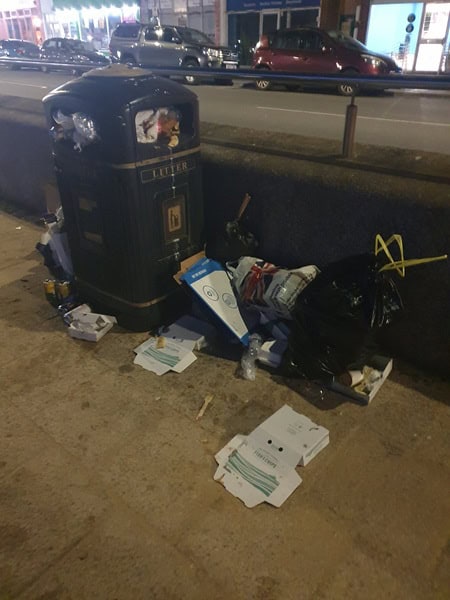
The report says during April and May there were problems with public bin emptying, resulting in overflowing bins. This affected on-street locations, areas within parks and at the main beaches. The overflowing bin issue was exacerbated by the disposal of household waste in street bins which reduces capacity for public bin users.
Over the Whitsun bank holiday weekend (23-25 May) the weather was consistently hot and there were very high numbers of beach users all around the coastline, particularly at the main bays. There were also multiple events around the coastline including the Little Ships Return in Ramsgate, and the unofficial Margate Meltdown event. Dreamland also held the two-day Recessland music festival. All events contributed to the traffic on the already busy roads and significantly affected crews who were trying to access coastal roads and promenades to empty overflowing bins.
Over the whole bank holiday across the district, crews cleared 49.62 tonnes of litter and waste from street and beach bins. This is approximately the weight of a Boeing 737 airliner and is the highest tonnage recorded over a 3 day period in recent years.
Staggered start and finish times were not in place and all cleansing operatives therefore worked from 6am to 6pm over the three day weekend. The fine weather meant that lots of beach users stayed on the beach into the early evening. This resulted in large piles of beach waste building up around beach bins after crews had finished for the day. The rota was adjusted to ensure a staggered start was in place ahead of the following weekend and will continue to be in place for the remainder of the season.
The report to councillors will be discussed at a scrutiny meeting on Tuesday (July 14).