
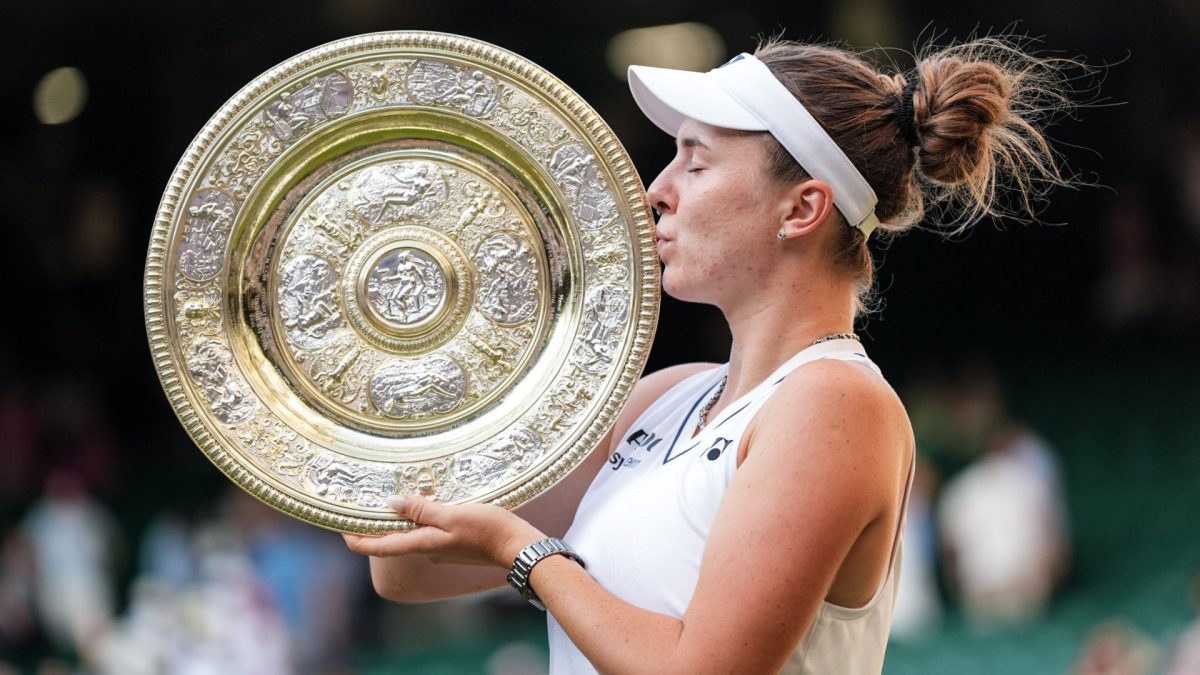
WIMBLEDON — In the Czech Republic, grand slam finalists are 10 a penny in the women’s game. Even Wimbledon finalists are fairly common.
When Linda Noskova booke her place in the final to face fellow Czech player Karolina Muchova in Saturday’s final, she guaranteed that there would be a Wimbledon champion from that country for the third time in the last four years. On Saturday, she joined Marketa Vondrousova and Barbora Krejcikova as part of a Czech dynasty of grass-court queens.
Since Petra Kvitova won Wimbledon in 2011, there have now been seven different Czech women in grand slam finals, and the country currently boasts eight players in the world’s top 50.
However, this was the first time two have faced off in a final in the history of the game, and the country was split between Noskova and Muchova.
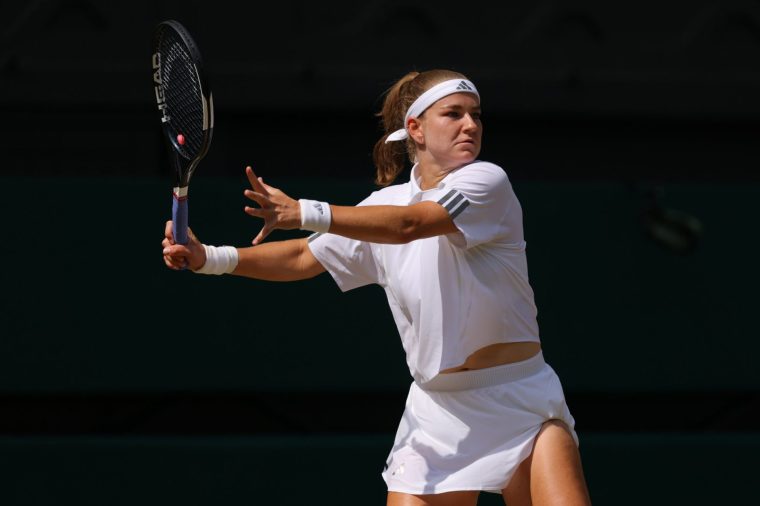 Muchova came close in her second grand slam final (Photo: Getty)
But the former had support from a little further afield. On the islands of Zanzibar, off the coast of Tanzania, Noskova has left a lasting impression, after choosing to spend her off-season there volunteering. With the help of charity Zanzibar Learning 4 Life, she spent a week working at a school of 300 pupils aged six to 11.
“There was a lot of poverty,” she said. “Conditions were not easy. It was hard to see sometimes.
“When I came back, I was definitely more appreciative of everything that I have.
“I would say that for every player, it’s important to see the other side, the other lives and the other world, so that we can appreciate this lifestyle that we have a little bit more.”
Noskova was not living it large in Zanzibar either. She slept in a bunk bed, sharing a stuffy room without air-conditioning with three other volunteers, and during the day helped with childcare and teaching.
“Traveling to Zanzibar, Africa to volunteer was one of the most meaningful experiences of my life, and finally making that long-time dream happen felt both surreal and unforgettable,” Noskova said.
“I prepared myself for the cultural shock, but nothing could compare to being there in person — seeing how people live, understanding their challenges and feeling their warmth despite having so little.”
She has vowed to continue supporting the school beyond her week there last year – and her run to the Wimbledon final will certainly help: her prize for winning Wimbledon is £3.6m.
“Their kindness, their excitement and their resilience changed something in me,” Noskova said.
“Supporting them now feels like the most natural thing to do. This trip opened my eyes in ways I didn’t expect, and it reminded me how fortunate we are, an experience I believe everyone should have at least once in their life.”
Noskova’s social conscience extends far beyond just volunteering one week a year. She has a separate Instagram account for off-court matters including “the environment, human rights, animals”, with the first of those particularly close to her heart.
Ahead of the final, she explained: “I grew up in a small village, in a forest basically, so I’m very much like a nature lover.
“Actually, a little sneak peek, I want to do some volunteering with nature in the next months or years. I have always been very active during whatever crisis there might have been happening.”
Read more
And unusually for a 21-year-old tennis player, she has already started thinking about where her passion might take her later in life.
She added: “After I finish my career, I definitely want to do something environmentally related.”
Perhaps it is Noskova’s path less travelled to the professional game that has given her a wider perspective. Her parents never played tennis growing up but took it up as a hobby when she was young. Their daughter Linda would run around the court copying them, and when it turned out she had some natural talent, they got her lessons at the age of six. By 16 she was the junior French Open champion, and will reach a career-high of No 7 on Monday.
“I’ve had a lot of hobbies,” said Noskova, “so I’m glad I picked tennis.”