
He said cygnets faced a difficult start in life, with risks from predators like birds of prey, foxes and dogs, as well as disease and pollution.
Members of the public who monitor the location of swans local to them are “a great help to the swan population”, he added.
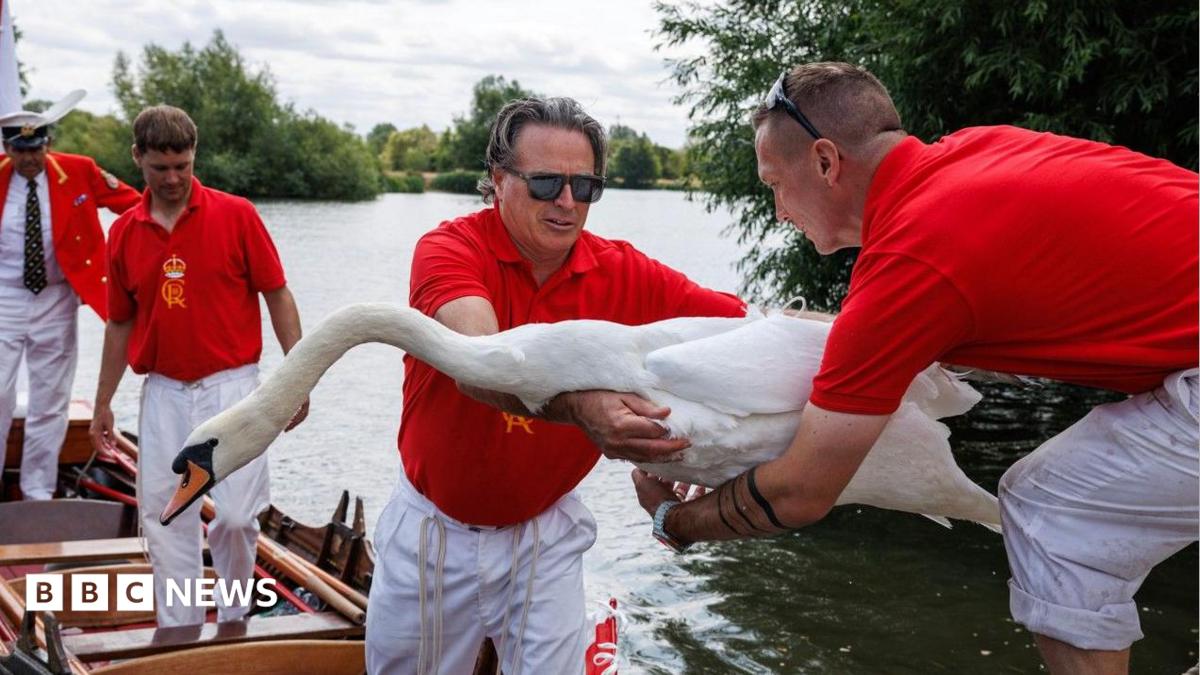
Swan Upping dates back to the 12th century and takes place every year during the third week of July.
Six traditional rowing skiffs will travel the Thames over five days, with the Swan Marker’s team counting, weighing and examining swans and cygnets for injury or disease.
All cygnets are fitted with a British Trust for Ornithology ring, allowing their movements to be traced in future.
Primary schools along the route are again expected to visit this year, giving pupils the chance to see cygnets up close and learn about swan ecology.
This year’s Swan Upping runs from Monday until Friday, passing through Windsor, Marlow, Henley, Reading and Wallingford before finishing in Abingdon.