
The family office has become one of the defining institutions of modern Asian wealth management. Yet as the market matures and standards rise, the gap between the headline narrative and the operational reality is widening. For families seeking to preserve and transfer wealth across generations, the question is no longer simply whether to establish a family office, but whether the structures, governance and advisory frameworks around it are genuinely fit for purpose.
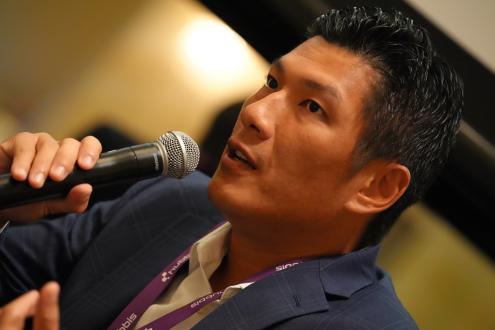
At the recent Hubbis Wealth Planning and Structuring Forum held in Singapore, Kendrick Lee, CEO of Singapore and Co-Founder of Raffles Family Office, offered a practitioner’s perspective on these challenges. Speaking as part of the opening panel discussion, Lee drew on his experience managing multi-family relationships across the region to provide a grounded assessment of how intergenerational dynamics, family office economics, and next-generation readiness are shaping the industry’s trajectory.
Key Takeaways
Next-Generation Engagement Has Shifted Markedly: Families that once resisted involving younger members are now bringing them into the wealth conversation as early as their mid-teens, driven by hard lessons about the cost of leaving it too late.
Investment Philosophy Is the Primary Generational Fault Line: The most persistent disconnect between founders and successors lies not in values or lifestyle, but in fundamentally different views on asset classes and risk.
Singapore’s Family Office Market Is Evolving, Not Contracting: Higher entry standards and greater selectivity reflect a deliberate move towards quality, and continued inflows suggest the model retains its appeal for serious families.
Multi-Family Offices Fill a Critical Gap: For families below the single family office threshold, multi-family structures offer meaningful access to investment opportunities and advisory infrastructure without prohibitive cost.
Early Preparation Is Non-Negotiable: The single most important thing families can do for the next generation is to give them responsibility and exposure to wealth management well before it becomes urgent.
Bridging the Generational Divide
Lee’s contributions to the discussion centred on what he described as a visible and welcome shift in how Asian families approach the involvement of the next generation. Drawing a contrast with the landscape of eight to ten years ago, he noted that the prevailing attitude among wealth holders at that time was one of deliberate secrecy. Founders resisted bringing children into conversations about wealth, partly to prevent complacency and partly out of a desire to maintain control.
That approach, Lee suggested, may create real risks. “We have instances where the patriarch or the matriarch, due to unforeseen circumstances, left earlier, and the kids were left with a huge amount of money, not knowing what to do,” he explained. The consequences of these cases have been sufficiently visible across the region that they have shifted attitudes.
Today, Lee observed, families are increasingly introducing the next generation to wealth management at a much earlier stage. Internships during school holidays, structured exposure to family office operations, and deliberate financial literacy programmes are becoming more common. The objective is not to create investment professionals overnight, but to ensure that younger family members understand the mechanics, responsibilities, and governance frameworks that underpin their family’s wealth.
“Education for the next generation is very important,” Lee said. “And today we are actually seeing many younger, the next generation coming in at a very early stage, even during 16 or 17, all the way through to university.”
The Investment Philosophy Disconnect
Yet involvement alone does not resolve the deeper tensions that emerge when two generations sit at the same table. Asked where the biggest disconnect typically lies between founders and their successors, Lee was unequivocal: investment philosophy.
The divide is not abstract. First-generation wealth holders built their fortunes through tangible, traditional asset classes, most commonly real estate and established business interests. Their understanding of risk, return and capital preservation is shaped by decades of direct operational experience. The next generation, by contrast, is frequently generating wealth through private equity, venture capital and digital assets, categories that many founders neither understand nor instinctively trust.
“Sometimes sitting at the table to bridge that gap between both generations, we see that struggle to actually understand each other’s philosophy,” Lee observed.
The advisory response, he suggested, is to depersonalise the disagreement. Rather than framing the conversation as a contest between old and new thinking, practitioners should recast it as a question of asset allocation. Both generations have legitimate track records of success in their respective domains. The task is to construct a portfolio that accommodates both perspectives while maintaining discipline and coherence.
“It is always important to remind them that, look, you are both right in your own ways, and that is the reason why you are successful in your different aspects,” Lee said. “But how do you bridge that to then come into play where it is a matter of asset allocation?”
This reframing, he noted, is often the moment at which families begin to move from argument to alignment.
The Reality of Singapore’s Family Office Market
Lee was equally direct in his assessment of Singapore’s family office landscape. He acknowledged that the challenges facing the market today are fundamentally different from those of a decade ago. In the early years, the primary task was education. Many families in the region had limited understanding of what a family office could offer in terms of structuring, preservation and succession planning.
That phase, Lee suggested, is largely over. Awareness is high, interest remains strong, and the concept of the family office as an institutional solution for multi-generational wealth is well established across the region. The new challenge is one of calibration.
Singapore has deliberately moved towards a more selective posture in the types of family offices it welcomes. Lee framed this as a positive development, arguing that greater selectivity benefits the broader economy and strengthens the credibility of the ecosystem. “Being very selective also helps the general economy, helps what can be provided, what can be offered, and how we can help Singapore as a whole,” he said.
The Multi-Family Office Alternative
For families below the single family office threshold, typically benchmarked at around 100 million dollars in assets under management, Lee was clear that viable alternatives exist. Multi-family offices, he argued, serve a critical function in bridging the gap between the aspiration for institutional-quality wealth management and the economic realities of smaller family fortunes.
The value proposition is principally one of access. Multi-family structures can offer families participation in investment opportunities, such as private equity allocations and co-investment vehicles, that would otherwise be beyond their reach. They also provide advisory infrastructure and governance support without the full cost burden of a standalone operation.
However, Lee cautioned that the economics must be considered carefully. “Setting up structures for families that cannot write below that threshold, the cost will still remain,” he noted. “Certain fixed costs still remain.” The advisory obligation, he suggested, is to ensure that families understand these realities before committing, and that the structures recommended are genuinely proportionate to the family’s needs and means.
Start Early, Start Now
Throughout the discussion, Lee returned consistently to a single, overriding message. When asked in the closing rapid-fire round what the one thing families need to do better in preparing the next generation, his answer was immediate and direct.
“Do not leave it too much, too late,” he said. “Please do give them responsibility at a much earlier age. I think that will really help the family in terms of succession planning.”
It is a deceptively simple prescription, but one that carries the weight of years spent observing the consequences of delay. In Lee’s experience, the families that thrive across generations are not necessarily those with the most sophisticated structures or the largest asset bases, but those that treat preparation as an ongoing discipline rather than a task to be deferred.
As the family office market in Asia continues to mature, and as the expectations placed on advisors grow ever more demanding, that discipline may prove to be the most valuable asset of all.