
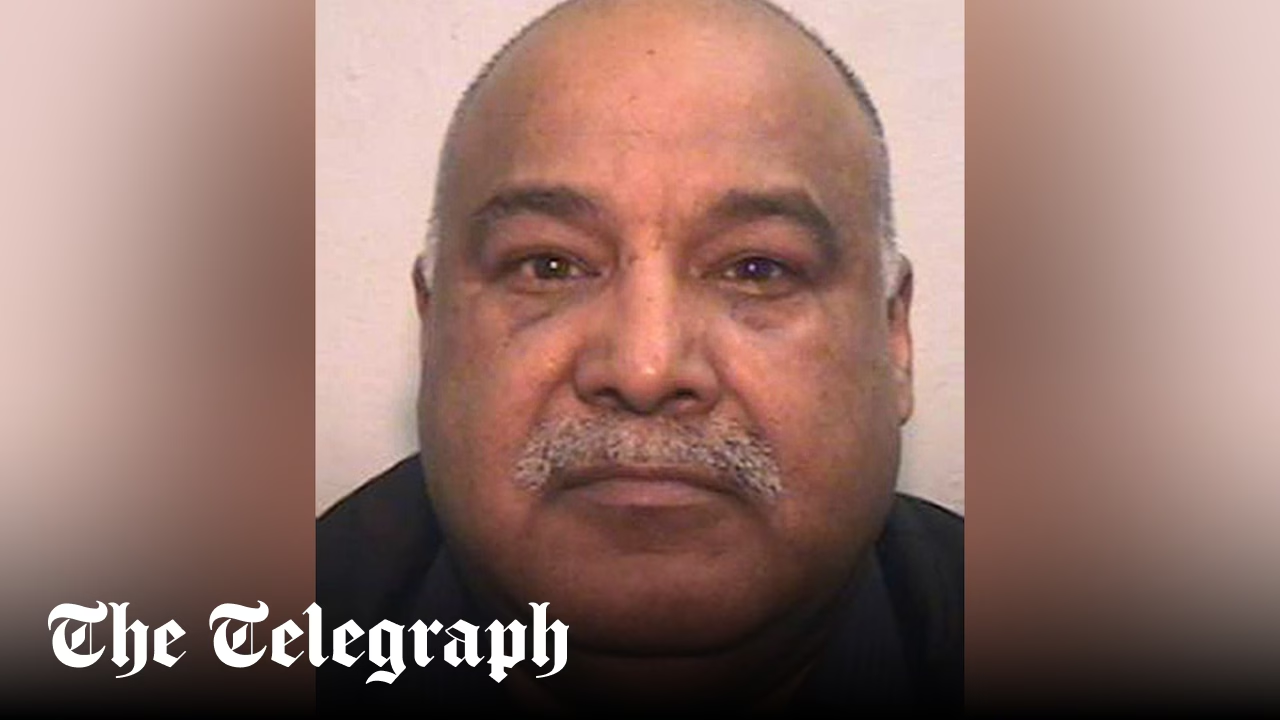
The legal change follows demands from Labour and Tory MPs, and from victims, for Ahmed to be thrown out of the country.
However, Ms Mahmood warned that it would not guarantee Ahmed’s deportation, given Pakistan’s refusal to take him back. It will also not be implemented until the bill gains Royal Assent, which the Tories claimed could delay it for up to a year.
The Opposition has offered to support Labour pushing through emergency legislation to pass it into law within days.
“The Foreign Secretary and I continue to explore all avenues to pursue a deportation. I know the thoughts of everyone here are with the victims and survivors of this vile criminal,” Ms Mahmood said.
Pakistan has so far refused to take back Ahmed and two other freed ringleaders of the Rochdale grooming gang because it claims none of the three are Pakistani nationals, having renounced their citizenships. All three have also been stripped of their British citizenships because of their crimes.
Britain disputes that Ahmed renounced his citizenship decades ago, as Pakistan claims, pointing to evidence that he did not go through the full and proper process to disavow his birthright.
Demands for dissidents
Another hurdle is a series of demands by the Pakistan government, revealed by The Telegraph on Tuesday. It includes the extradition of Pakistani political dissidents from Britain who Pakistan alleges are inciting “hatred, violence and social unrest”.
A senior Pakistani government official told The Telegraph: “Our position is that [the UK] must listen to us too. Both sides need to apply standards. Pakistan cannot be railroaded into agreeing to terms and conditions that are suitable only to the UK.
“These demands [to take back Ahmed] are being made about somebody who is now around 75 and who has spent more than 60 years in your country. How is he our national when he is actually not our national? This is arrogance and a colonial mindset. It is unacceptable to us.”
Britain would face significant human rights obstacles were it to agree to extradite dissidents who could face persecution on their return to Pakistan.
One of the Pakistani dissidents subject to an extradition request is Mirza Shahzad Akbar, who was a minister in the former prime minister Imran Khan’s cabinet.
It was reported in January that Scotland Yard’s counter-terrorism command was investigating a series of “highly targeted” attacks on two Pakistani dissidents living in Britain, including Mr Akbar.
It is understood that the UK has not ruled out the possibility of imposing visa sanctions on Pakistan as a diplomatic “nuclear option”.
Other options would be financial sanctions or withholding some of the £50m in foreign aid that the UK provides to Pakistan each year.