
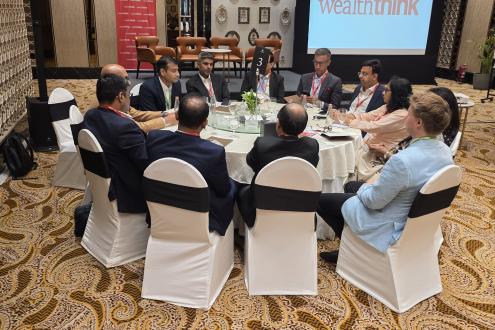
Hosted by Kshitij Kulkarni, Partner at 1291 Group, this WealthTHINK India 2026 table examined how international insurance is being considered within the cross-border planning needs of Non-Resident Indians (NRIs) HNW and UHNW families.
As Global Indian families become more internationally connected, wealth managers are being asked to think about protection, liquidity and succession across more than one jurisdiction. The discussion explored where insurance can sit within that broader advisory conversation, particularly where family members, assets or future residency plans extend beyond India.
The table treated the topic as a planning issue rather than a product discussion. Participants focused on suitability, policy ownership, beneficiary location, regulatory interpretation, jurisdiction-specific tax treatment and the need for specialist advice where the facts are complex.
Key Takeaways
Cross-border family planning is becoming mainstream: NRI and Indian diaspora wealth is increasingly connected to overseas education, migration, foreign beneficiaries and global asset ownership. Advisers need to understand where the family is heading, not only where the assets currently sit.
Insurance is being reframed as a planning instrument: The table discussed life insurance as a tool for protection, estate liquidity, business continuity and succession planning, rather than as a simple investment product.
Ownership and residency matter: Policy owner, life assured, premium payer and beneficiary can each carry different implications. The planning must therefore be assessed against the client’s residency, remittance route, jurisdiction and purpose.
Product innovation has expanded the toolkit: International markets now offer a wider range of options, including multi-currency policies, whole-of-life cover, indexed universal life, critical illness protection, investment-linked policies and private placement-style structures.
Entrepreneurs may need net worth-based protection: For business owners whose wealth is concentrated in companies, property or private assets, liquidity planning may be as important as investment performance.
Foreign assets need earlier review: International portfolios, foreign brokerage accounts and overseas securities can create succession, tax and administrative issues if they are not planned for before a transfer or death occurs.
Adviser discipline is essential: The opportunity is not simply to introduce products. Wealth managers need to understand suitability, licensing, referral models, documentation and where legal or tax professionals must be involved.
Setting the Scene: What is WealthTHINK?
WealthTHINK is an exclusive, invitation-only forum designed for CEOs and senior management at leading private wealth management firms. It provides a platform for industry leaders to engage in peer-to-peer networking and collaborative discussion, free from product pitches and formal presentations. The event focuses on proactive, table-specific debates around key themes shaping the future of wealth management, including succession, cross-border structuring, regulation, business model profitability, family office development, asset protection, product innovation and regional connectivity.
By keeping participation senior and the format deliberately interactive, WealthTHINK is designed to encourage honest, commercially grounded exchanges on the issues firms are grappling with in real time.
The Cross-Border Family Is Now A Planning Reality
The discussion opened by distinguishing between the movement of people and the movement of wealth. Global Indian families are increasingly international in education, residency and lifestyle, while substantial wealth may remain concentrated in domestic businesses, real estate, promoter holdings or local portfolios.
That distinction matters because many next-generation family members have already built lives outside India. Some will return; others will not. As a result, first-generation wealth creators may need to think earlier about how overseas heirs or beneficiaries will be supported, how liquidity will be created, and how planning should interact with the legal and tax systems in which those family members live.
The table did not present this as a single-product question. Participants recognised that families may use a range of legitimate planning routes depending on their circumstances. The more important point was sequencing: understanding the family map, residency profile, asset base and intended outcome before deciding whether insurance has a role.
Insurance As Protection, Not A Return Product
A recurring theme was the need to separate insurance-led outcomes from investment performance. While some international policies may include savings or investment-linked features, the table’s core focus was on defined protection, estate liquidity, business continuity and family provision.
One participant made the distinction directly: “It’s insurance in the true sense and not anything else.”
This matters because clients may instinctively compare financial products by return. A life policy is designed to solve a different problem. It can create liquidity at death, support beneficiaries outside the home jurisdiction, provide business continuity funding or reduce pressure on heirs to sell assets at an unfavourable time.
For entrepreneurs in particular, this can be relevant where wealth is significant but illiquid. A family may have substantial value in a business or property portfolio, but relatively limited cash available when succession, taxation or family settlement issues arise.
Ownership, Residency And Jurisdiction Matter
The table spent considerable time on the legal and regulatory sensitivities around international insurance. Participants discussed the distinction between policy owner, life assured and beneficiary, and noted that each role can carry different implications depending on the client’s facts.
This was not treated as a simple checklist. Interpretations can differ where NRIs, international policies, remittance pathways, overseas beneficiaries and foreign insurers are involved. The practical message for advisers was to avoid assuming that a structure is appropriate merely because it is commercially available.
One speaker put the compliance point plainly: “The client needs to take his legal opinion.”
For wealth managers, the responsibility is to identify the planning need, then ensure the discussion is handled through the right advice channels. That means understanding when to involve legal, tax and regulatory specialists, and when a referral or specialist broker relationship is more appropriate than direct product discussion.
Product Innovation Has Expanded The Toolkit
Participants also discussed how international insurance has changed over the past decade. The market is no longer limited to a narrow set of universal life products. Depending on jurisdiction, suitability and client profile, the available toolkit may include high-value protection, whole-of-life cover, indexed universal life, multi-currency savings plans, critical illness protection, investment-linked policies and private placement-style structures.
One participant described the shift as a major change in the market: “The last five or six years, [there has been] an explosion of flexibilities and features.”
Those features can include the ability to adapt currency exposure, provide contingent ownership, support staged beneficiary payouts, or allow a policy to continue across generations. The table also noted that critical illness and incapacity-related provisions may become more relevant as families think about access to liquidity during life, not only after death.
The point was not that every feature is suitable for every client. Rather, the wider product universe gives advisers more ways to match an instrument to a specific planning objective. As one speaker put it, “Don’t look at insurance like the hundred metre race in the Olympics.”
Foreign Assets Need Earlier Review
Another theme was the growing exposure of NRIs and Global Indian families to assets across jurisdictions, particularly listed securities, foreign brokerage accounts and international portfolios. Clients may focus on investment access and performance, while paying less attention to estate tax, probate, reporting or succession consequences in the relevant jurisdiction.
This can create practical difficulties for heirs. Accounts may be frozen, documentation may be required, and beneficiaries may discover that the estate treatment is different from what they expected. The table discussed insurance as one possible liquidity tool in such cases, particularly where restructuring may not be straightforward or where families need a separate pool of funds to meet future obligations.
The broader point for wealth managers is that foreign asset exposure should be reviewed before a triggering event. Ownership, beneficiary arrangements and liquidity should be part of the planning conversation, not an afterthought.
Sophisticated Structures Need Clear Purpose
The discussion also covered more sophisticated insurance-based structures, including private placement life insurance (PPLI) and investment-linked policies. These can, in appropriate jurisdictions, combine an insurance chassis with an underlying investment portfolio managed by a licensed adviser or external asset manager.
Participants noted that these structures are more relevant for larger clients, complex families and cases where there is a defined cross-border planning need. They may support consolidation, reporting, succession planning or jurisdiction-specific treatment, but they are not mass-market products.
Minimum ticket sizes, underwriting, diversification rules, investment restrictions, reporting obligations and tax treatment can all matter. For US-connected clients, the requirements may be materially different from those applying to clients in Europe, the Middle East or Asia. The table’s message was that these solutions require a clear purpose, appropriate counterparties and strong execution discipline.
Strategic Summary: Insurance As Part Of Global Wealth Planning
The WealthTHINK India 2026 discussion made clear that international insurance is even more relevant today than ever for NRIs as families, assets and beneficiaries become more geographically dispersed.
Participants saw insurance as a potential tool for defined planning needs, including protection, liquidity, succession, business continuity and health-related risk. They also recognised that the product universe has expanded, giving advisers more flexibility than was available in earlier generations of high-net-worth insurance.
However, the table did not present insurance as a shortcut or universal answer. In the Global Indian context, the structure around the policy matters as much as the policy itself. Residency, remittance rules, ownership, tax treatment, licensing and documentation all need to be considered carefully.
For wealth managers, the strategic implication is straightforward. Cross-border insurance planning should be treated as part of a broader advisory process, supported by specialist advice where required. The strongest firms will be those that can identify legitimate planning needs, maintain regulatory discipline and help families prepare for a more international future.
At WealthTHINK India 2026, the message from this table was that insurance-based wealth structuring is no longer only about protection. For the right client, it can form part of long-term family planning, provided the purpose, structure and advice around it are sound.
Note: This discussion focused exclusively on planning considerations relevant to Non-Resident Indians (NRIs) and offshore Indian families. It does not address or apply to resident Indians.