
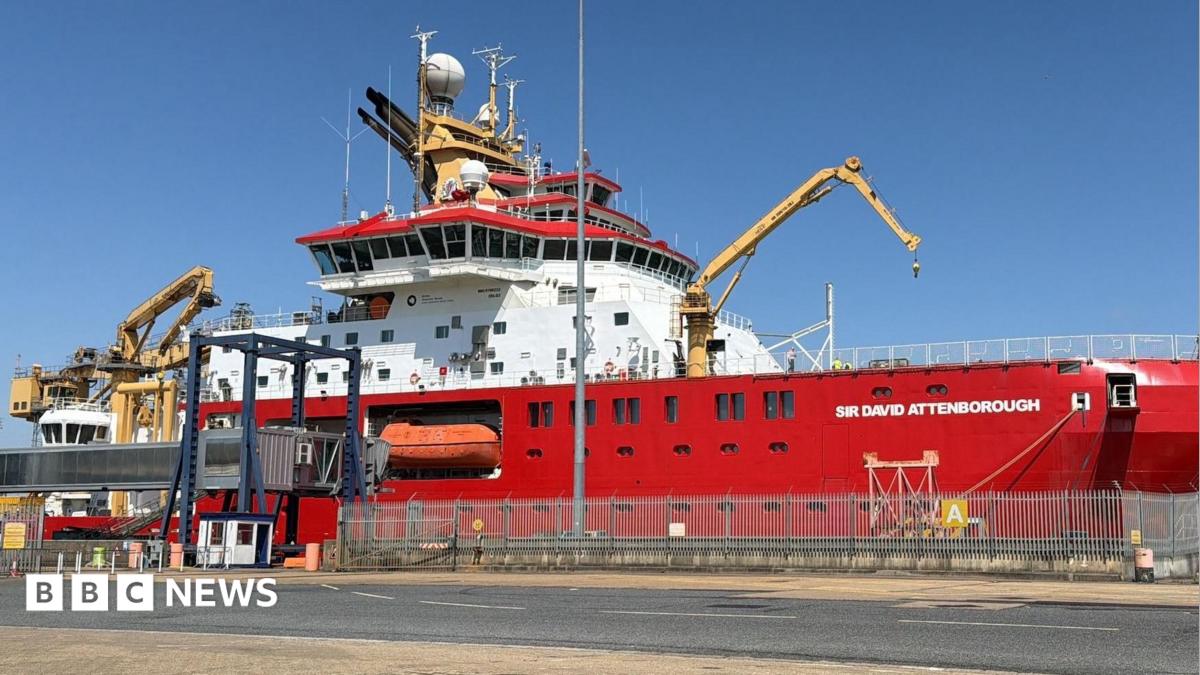
The scientist told the BBC the six-week project should lead to crucial and better climate analysis.
“What happens in Greenland really affects what happens in the UK,” said Hogan.
“So if you melt more ice in Greenland, you get more fresh water into the North Atlantic, that can slow down the transfer of heat to Europe.
“And in the short term, like in 10 years, what could happen is that would change where it rains in the UK and it would be more stormy in our winters.
“That’s a real problem if you’re a farmer. That’s a real problem if you’re looking at where our reservoirs located. It’s a real problem if you count on fish stocks in the North Atlantic for your job.”
A small team of researchers will also be camping near the glacier itself to collect more data about how the ice is behaving, using instruments that measure how fast the glacier is moving and recording ice cracking or breaking off into the sea.
Using machine learning and artificial intelligence, the data collected will feed directly into a hierarchy of ice, ocean and climate models, which scientists say will be better equipped to predict how Greenland ice loss impacts global climate change.
Do you have a story suggestion for Essex? Contact us below.