
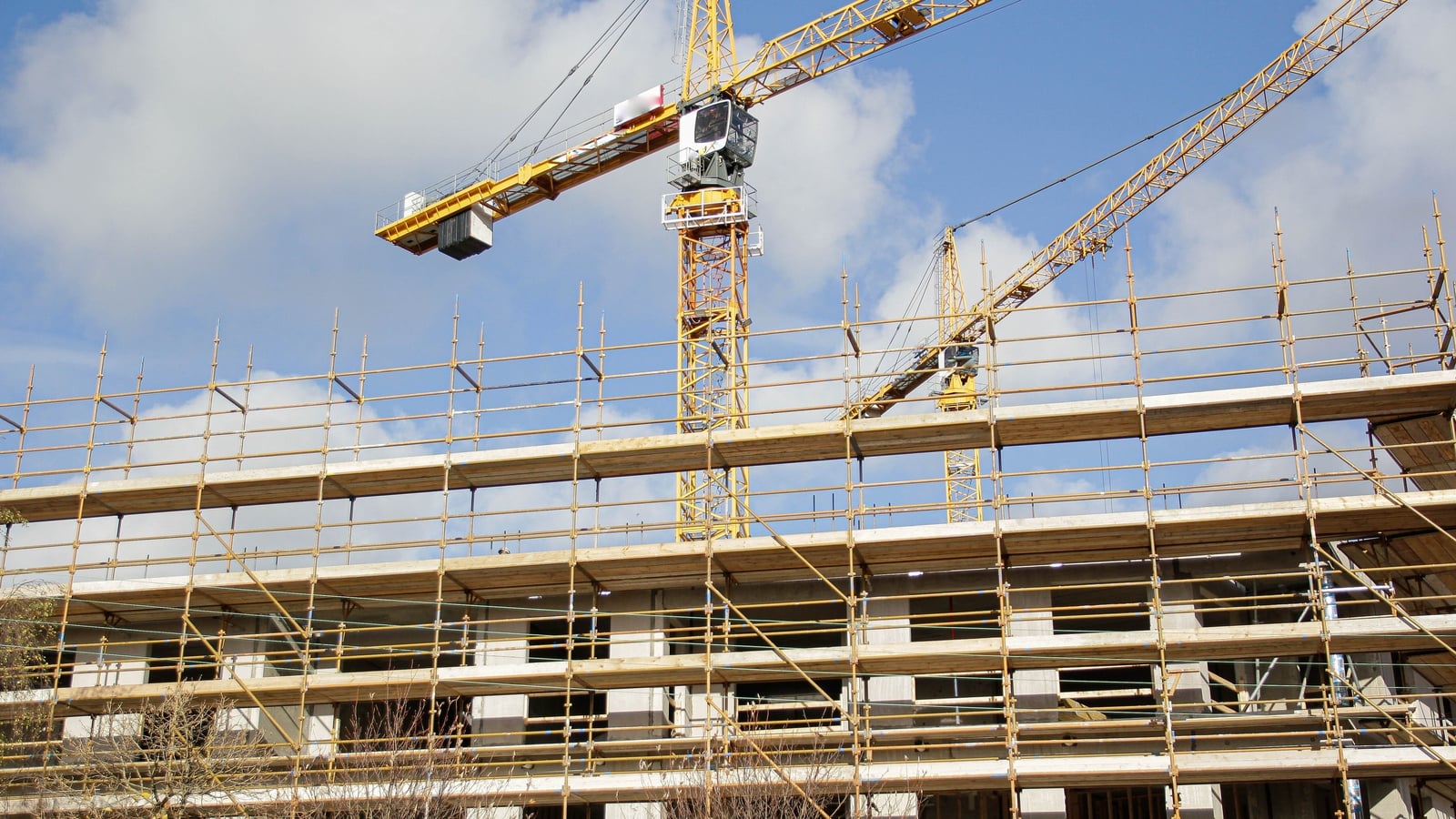
Inflation and shipping delays caused by the Middle East war contributed to a sharp slowdown in construction output last month, with house building slowing at the fastest pace in almost four years.
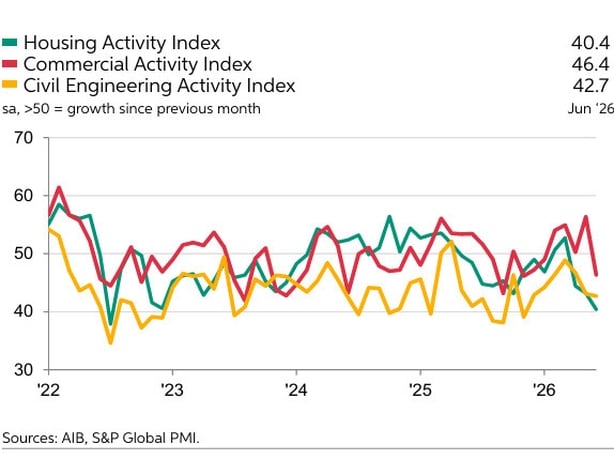
The latest Construction Purchasing Managers’ index from AIB for June dropped to 45.4 from 50.2 in May, falling below the 50 mark, which signals contraction, for the month.
This marked the second monthly reduction in construction activity in the past three months, and the sharpest drop since last September.
The sectoral breakdown showed that the weakness in June was broad-based with all three sub sectors registering contraction.
Today’s index shows that after four months of expansion, commercial registered a fall in activity in June, but remained the least weak of the three sectors.
Activity levels in the residential sector contracted for the third consecutive month and by the fastest pace since July 2022, while civil engineering recorded its 14th successive month of contraction.
AIB said that reduced workloads led construction companies to scale back their purchasing activity for the first time in eight months.
Despite lower demand for inputs, a further lengthening of suppliers’ delivery times was signalled amid reports of shipping delays caused by the war in the Middle East and stock shortages at suppliers.
Today’s report also shows that the effects of the war in the Middle East continued to be felt with regards to input costs, with higher prices for oil and other raw materials mentioned by firms.
Input prices continued to increase sharply in June, despite the rate of inflation easing slightly for the second consecutive month. But sub-contractor rates increased at a much slower pace than seen in May, AIB noted.
But while activity, new orders and purchasing all decreased in June, employment continued to rise, extending the current period of jobs growth to eight months.
Meanwhile, hopes for an increase in new orders over the coming year and expected improvements in demand for housing work supported confidence in the 12-month outlook for construction activity.
AIB said that sentiment improved for the second month in a row but remained relatively muted amid concerns around the impact of inflationary pressures.
John Fahey, AIB’s senior economist, said the AIB Irish Construction PMI survey for June indicated that the sector ended the second quarter on a weak footing as sharply rising prices weighed on activity.
“The challenging operating environment for the construction sector last month is further highlighted by some of the other key underlying measures in the survey,” the economist said.
“The new orders index, which is viewed as a leading indicator, fell for the second time in three months, with the pace of decline its steepest since August 2023,” he said.
“The report noted that some respondents attributed the weakness to the backdrop of rising prices acting as a disincentive for potential clients to commit to new projects,” he said.
“The input cost inflation measure indicated that price pressures remained elevated with many firms continuing to link this to the fallout from the Middle East conflict,” he said.
“One positive aspect of the June report was regarding optimism on the outlook for construction activity. Confidence levels on the prospect for increasing activity levels over the coming year improved for the second month in a row,” he added.