
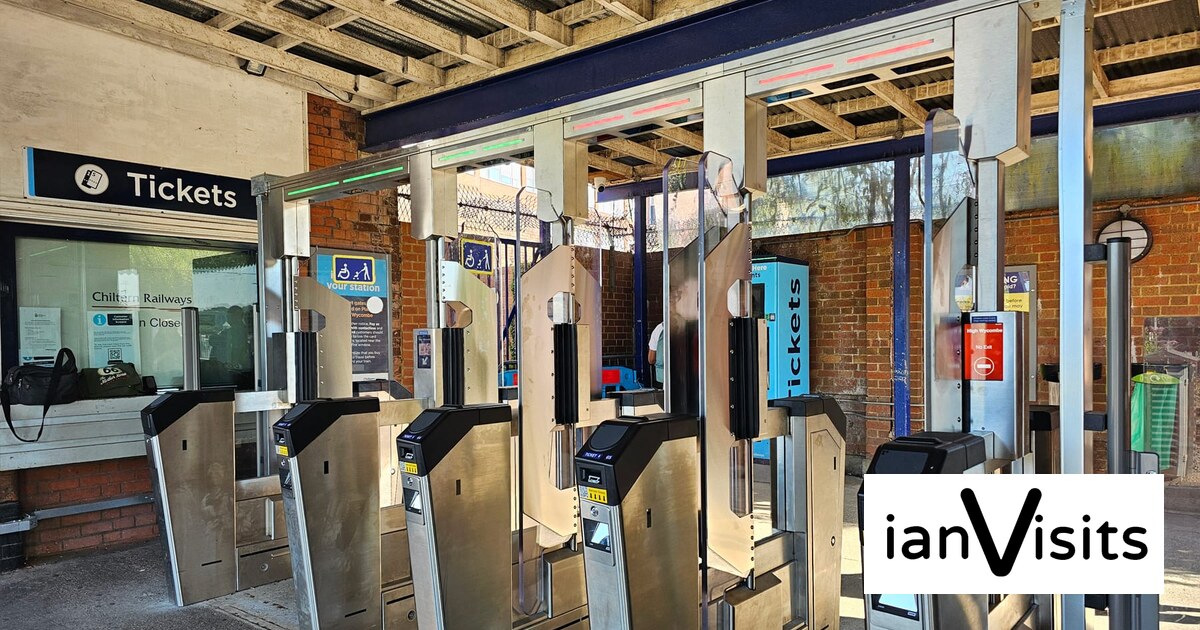
Chiltern Railways has become the first train operator in the UK to trial a new generation of ticket barriers designed to crack down on fare evasion while keeping passengers flowing quickly through stations.
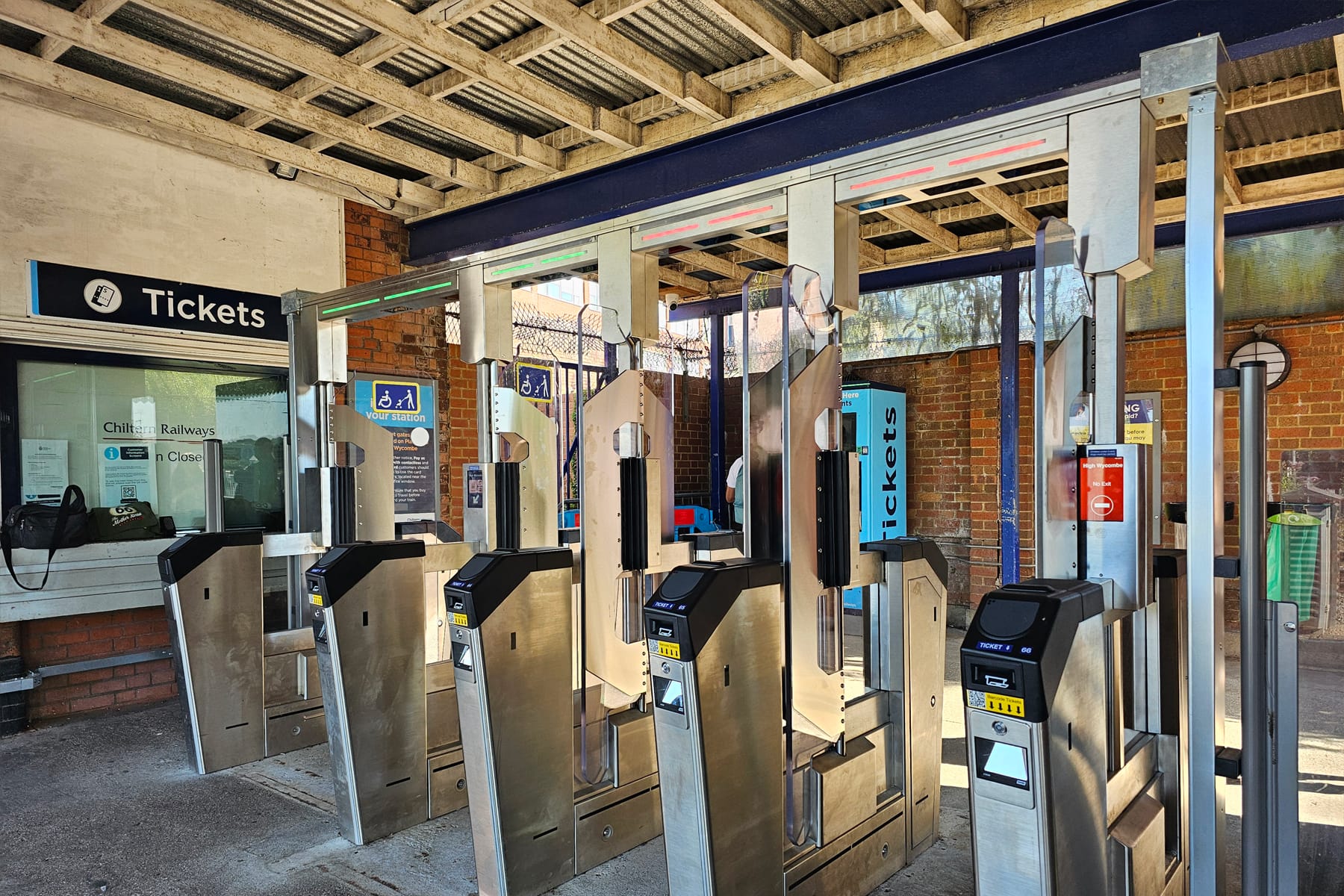
The new barriers have been installed at High Wycombe station, replacing an older life-expired gateline on the London-bound platform.
Designing ticket barriers has always involved a balancing act. They need to process large numbers of passengers during rush hour without creating bottlenecks, while remaining robust enough to deter fare evaders and to allow stations to be evacuated quickly if necessary. Supplied by Cubic, the new barriers are part of the company’s FEnX Fare Gate range and incorporate several features designed to reduce fare evasion.
The most obvious change is the much taller paddle doors. In addition to making it harder for people to jump over the barriers, the doors extend much closer to the floor, reducing the gap that some fare dodgers exploit by attempting to slide under the barrier paddles. That might already be an uncomfortable stunt on High Wycombe’s concrete platforms, but it is more a tactic I’ve seen at stations with smooth tiled floors, such as on the London Underground.

The paddles are also driven by a breakthrough-resistant mechanism designed to make it much more difficult to force the gates open without slowing the normal flow of passengers.
The other most noticeable feature is the bar running along the top of the gateline.
Apart from the coloured lights indicating the direction of gate flow, there are also passenger sensors that track how many people use the gates when they are open, and whether the passenger walking through has tapped or swiped a ticket first.
Forget to tap, and the doors beep a short alarm as a warning. The audio beep also alerts station staff to a person who may have innocently forgotten to tap in and, where safe to do so, makes it easier to monitor active fare evaders.
On my visit, when the barriers were kept in the open position, the beep often had passengers already reaching for their tickets even before they spotted the platform staff waiting with a handheld scanner to check them.
Apart from reducing fare dodging, if the new design encourages more tapping among legitimate passengers, the railways should also obtain more accurate passenger counts at their stations, which is useful intelligence for planning station activity and train timetables.
The sensors can also detect tailgating — where a second person attempts to slip through immediately behind a paying passenger before the gates close. Although the barriers themselves cannot prevent this, they record the event, providing operators with data to target fare-evasion enforcement more effectively.
The key is that if rolled out more widely, then the gatelines deliver the intelligence that can lead to more focused interventions by police and ticket inspectors.

At the moment, the ticket barriers at High Wycombe are set up to accept barcode tickets with a new vertical scanner, and are – at the time of visiting – still being configured for contactless ticketing, which will be switched on shortly.
The first installation is now operational on High Wycombe station’s London-bound platform, and the gateline serving the opposite platform is also due to be replaced with the new design in the near future.
A Chiltern Railways spokesperson said: “We are installing new ticket gates at High Wycombe to replace the current 30-year-old gates at the station
“Installation work on the new gates is expected to finalise this summer.”

The gates do have a certain utilitarian, almost American look to them, not just because the paddles are larger, but probably because the gates are undecorated at the moment, and the plain metal look is very American in style.
The design also looks slightly fortress-like, and while railways need to be safe and deter fare dodgers, they also need to be welcoming to the vast majority of honest passengers. If the entrance to the station starts looking more like a forbidding security barrier, then it’s less of a welcome and more of a warning.
However, it’s still a new design, and the rough edges can be smoothed out.
No other Chiltern Railways stations are confirmed to be getting the new gatelines at the moment, although one is being installed in a new entrance at Salford Crescent station in Manchester as part of the station’s third-platform expansion works.
UPDATE 15th July 2026:
The Department for Transport (DfT) has just announced which stations will get the new gatelines installed:
Avanti West Coast: Stafford, Liverpool Lime Street
East Midlands Railway: Market Harborough
Greater Anglia: Witham, Rayleigh, Ware, Hertford East and Manningtree
Thameslink Southern Great Northern: Royston, Stevenage, Elephant and Castle, Worthing and Gipsy Hill
TransPennine Express: Manchester Piccadilly
West Midlands Trains: Tamworth, Nuneaton, Worcester Foregate Street and Worcester Shrub Hill
The DfT said that this is the first stage of a wider programme to increase the number of ticket gates in use across England, with the potential for further rollout across the UK in the future. Delivery of the new ticket gates is expected by mid-2028, with the first phase of rollout beginning in the first half of 2027.