
Health chiefs have said a recent increase in measles is “concerning” as nine new cases have been recorded in Kent already this month.
The highly contagious illness has been circulating in other regions recently, particularly in London and the West Midlands, but the county has had very few cases confirmed so far this year.
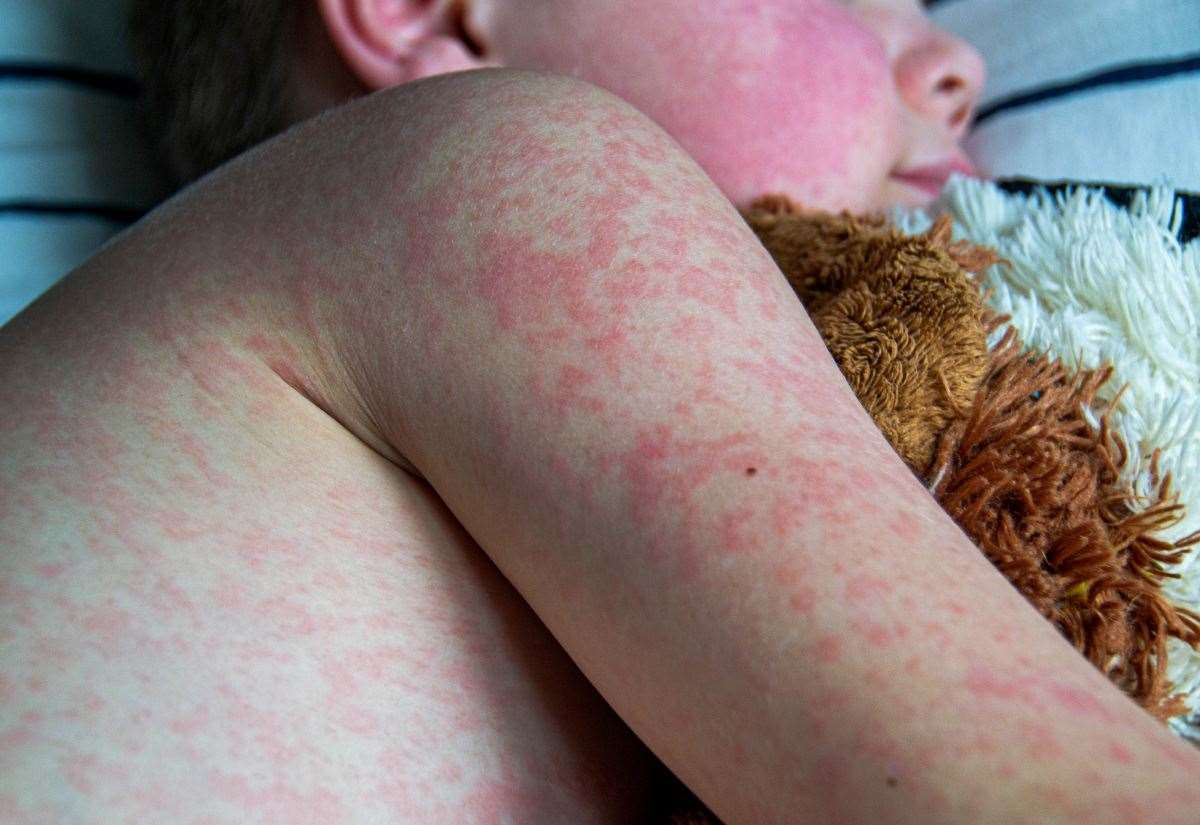
 Nine new cases of measles have been recorded in Kent this month. Stock picture
Official data from January 1 to July 6 shows the South East has had 17 cases of measles, compared to 463 in London and 147 in the West Midlands.
However, since July 1, nine new cases of measles have been reported in Kent and Medway, prompting health bosses to urge people to check they are up to date with their MMR vaccines.
Speaking to kmfm, consultant in health protection for UKHSA, Rachel Mearkle, explained that some of the cases are linked to one another, but not all are, suggesting there has been a local spread of measles and there may be a risk of further cases.
Her colleague, Dr Rob Verrecchia, added: “This recent increase is concerning and does suggest there is some limited transmission in the community, particularly in people who are unvaccinated.
“Uptake rates of the vaccines are at lower levels than we would like and good coverage is vital to protect those who are unable to get vaccinated.
“Rates for the second dose are considerably lower than the first and it is very important to get both doses to ensure the best protection.”
Professor Anjan Ghosh has urged parents and carers not to take risks
The latest vaccination coverage rate for five-year-olds who have had two doses of MMR between January and March is just below 83% for both Kent and Medway. The World Health Organisation’s target is 95%.
Kent County Council’s director of public health, Professor Anjan Ghosh, said: “With measles continuing to circulate, and new cases emerging, I urge parents and carers not to take any risks.
“Make sure your child has both doses of MMR for full protection and, if they need catching up, contact your GP or book an appointment at a Community Clinic.
“Measles spreads very easily and unprotected children are vulnerable to severe complications like pneumonia and brain inflammation. In rare cases, measles can be fatal.”
Professor David Whiting, Medway Council’s director of public health, added: “These new measles cases are a reminder of why getting vaccinated is so important.
Professor David Whiting has reminded people to get vaccinated
“If you are unsure if your child is up to date with their MMR or MMRV vaccines, ask at your GP surgery. These vaccines are safe, effective, free and it is never too late to get them.
“Getting vaccinated also helps protect others who cannot have the vaccine. This includes infants under one and people with weakened immune systems, who are at greater risk of serious illness and complications from measles.”
You can check your child’s Red Book for their vaccination status or ask your GP.
Initial symptoms of measles develop around 10 days after a person is infected and can include cold-like symptoms, sore, red eyes that may be sensitive to light and a fever, which may reach around 40C.
A few days later, a red-brown blotchy rash will appear, which usually starts on the head or upper neck, before spreading outwards to the rest of the body.
Health bosses are urging people to get their MMR vaccinations. Stock picture
NHS Kent and Medway’s chief medical and outcomes officer, Dr Kate Langford, advised that if you are experiencing these symptoms to seek medical attention.
She added: “Please ensure that you phone ahead before visiting a healthcare setting, such as your GP practice, so that arrangements can be made to prevent others from being infected.
“Those at the highest risk of severe infection include pregnant women, children under one-year-old and immunocompromised individuals.
“We all have a responsibility to help protect these groups by getting vaccinated and reducing the spread of the infection.”
Symptoms should resolve in about seven to 10 days; however, sometimes it can lead to serious complications.