
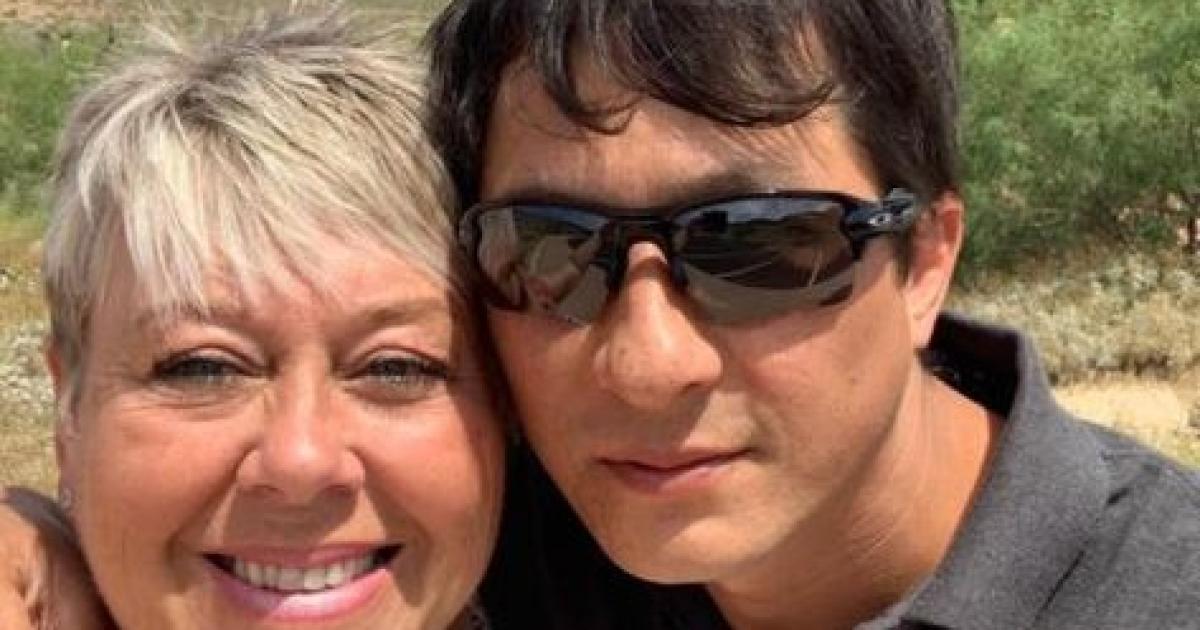
Dawn Ellis, 58, from Redcar, has been diagnosed with spinal degeneration and nerve compression after three years of hospital visits following sudden, severe back pain in 2022.
Her pain has left her unable to walk her dog or drive a car.
Dawn Ellis from Redcar. (Image: Dawn Ellis)
She says she has been passed between NHS departments but has never received a clear explanation of her condition or a firm treatment plan.
Her condition has worsened sharply over the past six months, leaving her unable to walk even short distances without severe pain.
“I can’t even walk my dogs,” Dawn said.
“I’m in constant pain. I don’t go anywhere or do anything anymore, I don’t have a life.
“I had to get rid of my manual car and get an automatic instead because I couldn’t drive.”
Dawn with her son. (Image: Dawn Ellis)
Thankfully she has had amazing support from her loved ones.
Dawn said: “My friends and family have been amazing, from walking my dogs, to cutting my grass and cleaning for me. I couldn’t manage without them.”
She now works from home teaching online due to her pain, but previously worked as an electrician.
As one of the few female electricians in the North East, she says she has always been independent, making it difficult to ask for help.
Dawn explained: “I do not find it easy to ask for help, but I am now in a position where I need support to access the treatment that could give me some of my life back.”
Dawn with her dad. (Image: Dawn Ellis)
Dawn claims she was told by the NHS it could take more than a year to secure a pain clinic appointment to organise epidural spinal injections.
She instead sought private treatment through Circle Health Group, where four injections cost £9,000.
Dawn said she has now been told that her condition is advanced and she will likely need lumbar spinal decompression surgery, pushing total costs to more than £20,000.
Mr Kalyan, Dawn’s surgeon, said the degeneration is likely caused by an extra bone creating asymmetry in her spine, combined with high-impact workouts while working on a military base in the Middle East in 2017.
“I thought I was doing exercise to keep fit,” Dawn said. “But it was damaging the bones, wearing my back out quicker, and the extra bit of bone just advanced it.”
During her most recent consultation, Dawn claims the surgeon said the operation would likely be a complex, multi-level procedure involving several discs, and that Dawn would need to start using a walker.
One of Dawn’s recent X-Ray’s. (Image: Dawn Ellis)
A University Hospitals Tees spokesperson said it could not comment on individual cases due to patient confidentiality, but offered general information on its services.
A spokesperson said: “All patient referrals are clinically triaged to determine the most appropriate next steps, and patients are offered appointments where needed.
“Treatment recommendations are discussed directly with patients, and clinic letters are shared with them outlining their diagnosis, where appropriate, available treatment options, the potential benefits and risks of surgery, and any alternative approaches that may be suitable.”
“We recognise some patients are waiting longer than we would like to access pain management services, and understand how difficult this can be.
“Reducing waiting times remains a key priority, and we are continually reviewing pathways to improve access and ensure patients are seen as quickly as possible based on clinical need.”
Despite the impact of the pain on her personal life, Dawn says she is grateful for the support she has received.
“I appreciate everyone who has donated,” Dawn said.
“My boss has just donated £1,000 as well, he’s been fantastic, letting me do things in my own time.”
Dawn continues to raise money for private treatment through her GoFundMe page.