
Updated July 17, 2026 07:01AM
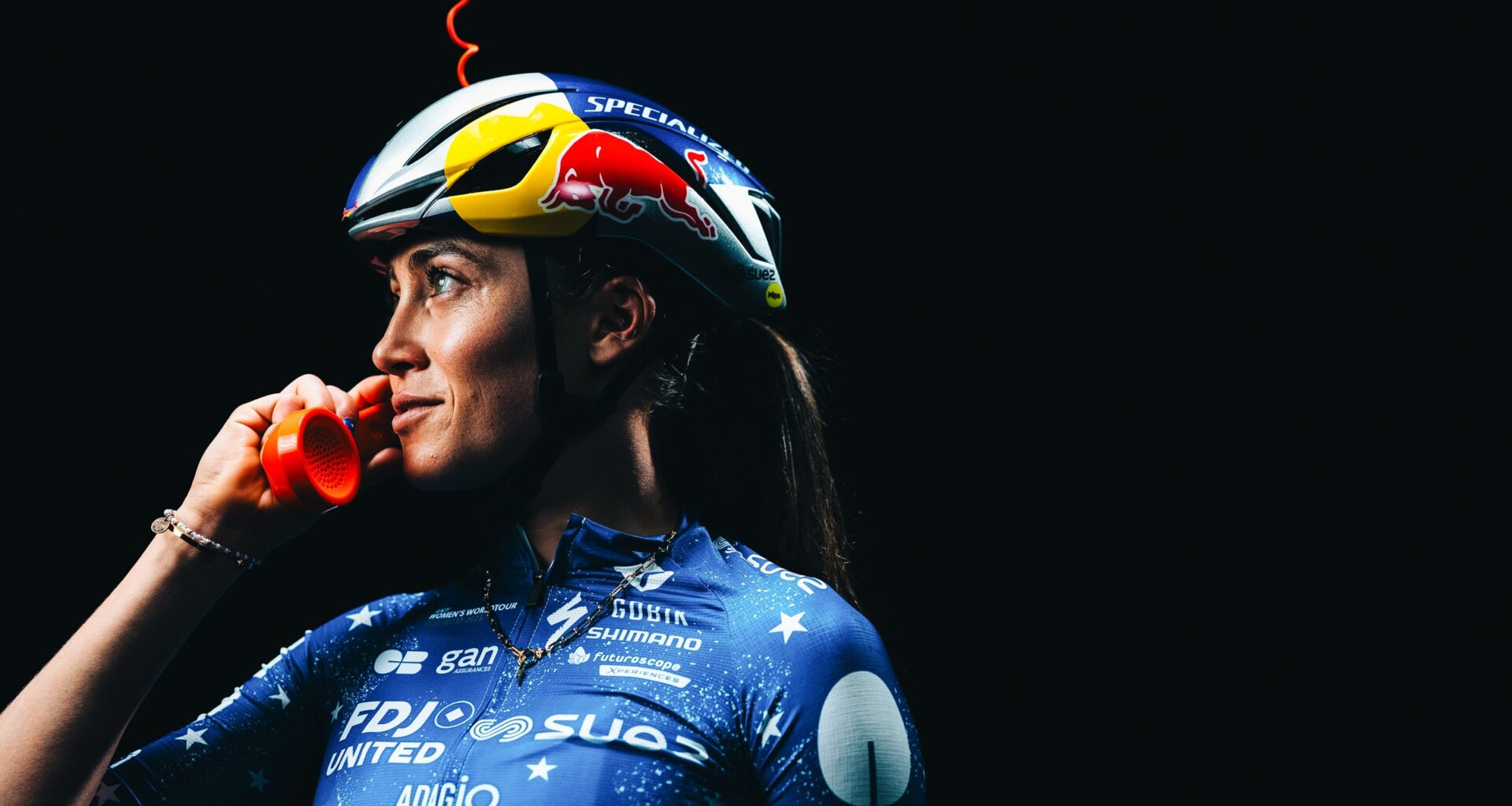
Effective immediately, Kate Courtney is a full-time road racer for one of the best women’s teams in the world, after debuting on the road this May. It is a massive pivot for the off-road privateer who came to prominence as a mountain biker, winning the XCO World Championship at age 22.
Yet, Courtney is not that 22-year-old anymore. Now 30 and a veteran of the World Cup circuit, she has been on a quest to find a new challenge over the last few seasons with her She Sends Foundation and privateer program. Embracing that freedom, she dabbled at different distances last season, won a marathon mountain bike World Championship, and set a Leadville course record—all of which set the stage for an audacious dive into the women’s WorldTour.
When Courtney and FDJ United-Suez announced a two-and-a-half-year contract to make that dive official, the buzz was immediate. The move was not altogether surprising—she had made an immediate impression on the road, winning the US national championship in her inaugural road event—but it was still unexpected that it came so quickly.
To dive into why she made the jump to the road and all the ins and outs of the decision, we gave her a call. Read the full conversation below, edited lightly for clarity:
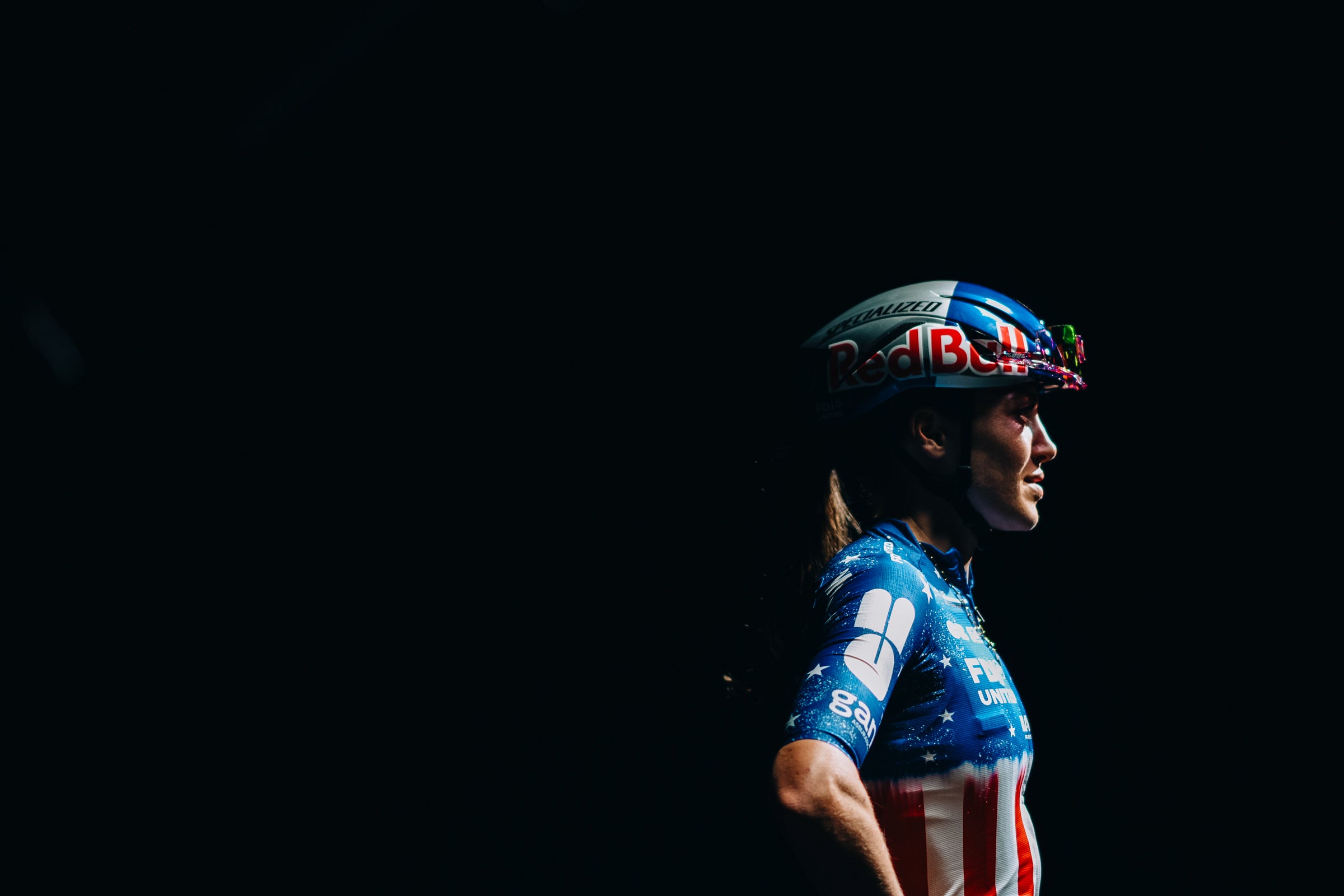 (Photo: FDJ United-Suez)
Velo: When did you start feeling the pull to try to do different things, and when did the dream for the WorldTour on the road materialize?
Kate Courtney: The unconstraining of my thinking began around this time last year, when I broke my wrist and ended up targeting Leadville instead of the World Cups that I had planned on my calendar. That race went well, but I think the experience of it was more impactful. Having a new, difficult challenge brought the best out of me. I felt like I performed on a level that I haven’t reached in several years.
Then in November, I got a call from Tanner Putt, who’s the National Road Team director for USA Cycling, and he asked if I’d consider doing a few races with the national team. That’s really what kicked off the curiosity on the road.
It’s almost crazy that I had never thought of competing on the road. In the US, the races are so far apart that it’s not as normal as it is in Europe to jump across many different disciplines. I had no background in road racing, but as soon as the idea was kind of planted, I got really excited about the possibility and started to cautiously explore what that could look like.
Velo: It seems like this is really accelerated over the last couple of months, because I remember when we talked in April at Sea Otter, it was very much like you were happy to be in the exploratory phase. All of a sudden, now, a couple of months later, you’re signed on to the team at the pinnacle of women’s cycling. How does that timeline feel now that one part of your journey from mountain biking to being a road cyclist has come to fruition?
Kate Courtney: In many ways, this is the very beginning of the journey, and I’m really excited to get to do the job. I’ll have to step up in my racing, but for me, a lot of the freedom that I’ve had in the last year came from not knowing exactly where I would go. And, to be honest, this was not on my bingo card at all—this wasn’t what I expected to happen.
I had the freedom to take it one race at a time, and I followed the feeling that I was looking for from racing. It became clear quickly that I was really excited about road racing. There’s a lot of potential to explore on the road, and it gives me the best opportunity to reach my potential as an athlete, while also having a unique, life-changing experience in the sport.
Velo: Talk to me a little bit more about the choice to go to FDJ because, obviously, you’re in a team with a lot of fantastic riders. Demi Vollering might be the best women’s rider in the world right now. Franzi Koch, the Paris-Roubaix winner, has made a huge stride this season. You also have a support apparatus that seems dialed with consistent and high-quality media output. Then again, it’s also like you’re coming into a team with some of the biggest stars in cycling as a new road racer. Why FDJ, why now?
Kate Courtney: It’s a good question, and it requires a bit of a multidimensional answer. First, the team has a really special environment. It’s something you can see from the outside, but now getting exposed a bit behind the scenes, it’s a culture of excellence, of teamwork, of wanting to win aggressively and fearlessly. That’s really what I was looking for in terms of culture.
Additionally, their high-performance team is the best in the world. It’s why you’re seeing the season they are producing. It’s been clear to me that every rider who’s joined this program has gotten better, and that’s not something you can say about many programs.
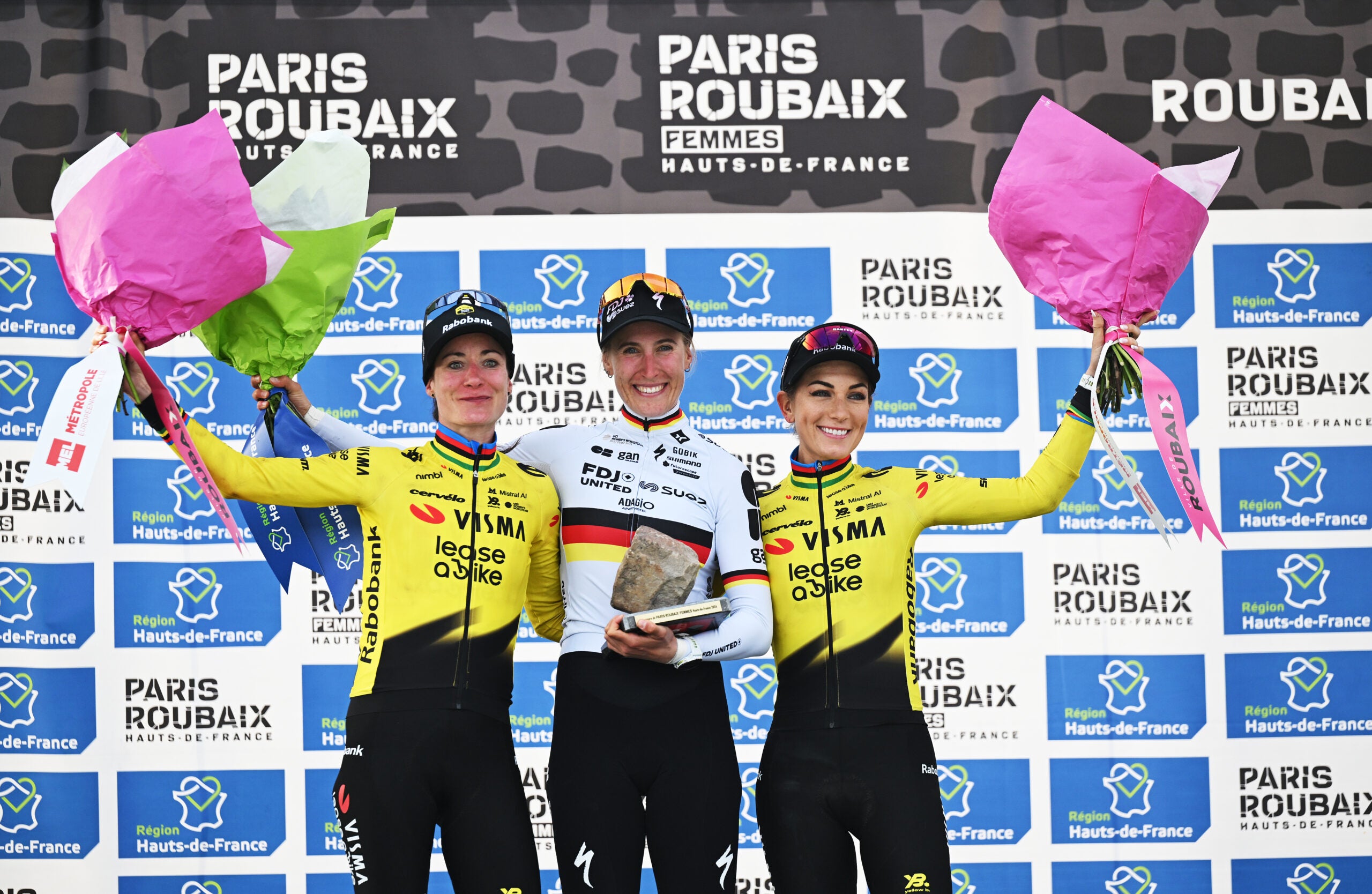 Courtney will be hoping her move to FDJ might produce some of the same success it has generated for Franzi Koch who has birst onto the scene in 2026, winning Paris-Roubaix in a head to head showdown with Pauline Ferrand-Prevot and Marianne Vos. (Photo: Getty Images)
At this stage in my career, the storytelling around the team is also really important. There are a lot of riders on this team, Demi included, who really appreciate and see the value in telling stories about the sport that can inspire the next generation. This team can inspire women and girls, especially with the way that we’re racing.
But in this phase of my life, the racing is at the center, and FDJ is a team that does it all right. There are trade-offs with going to a team where there are so many superstars. This will be the hardest team to make a Tour selection and to get opportunities at big races, but it’s also the place where I can learn the most from the riders around me and contribute the most to team success. I know that if I earn my spot, I will get the opportunities.
Velo: Speaking of the opportunity and the racing, what type of rider do you think you’ll be? Obviously, you’ve talked about the Olympics, but that’s two years down the road. How do you get there? How do you figure out what type of rider you’re going to be as a road racer?
Kate Courtney: The home Olympics was the one goal that was inspiring to me, and what got me thinking about road, but as I began exploring the discipline and thinking more about this possibility, I started to see the Olympics as the peak of the mountain. There’s a lot of side of the mountain.
I’ve watched road racing on TV since I was a little girl, so it’s really kind of remarkable to reflect on the fact that now there’s a possibility that I can work hard enough and race fast enough to be the one on that screen, and that’s something that I never would’ve thought was possible. But that’s the cool part of this chapter: everything will be a first, everything will be new, and we really don’t know what to expect.
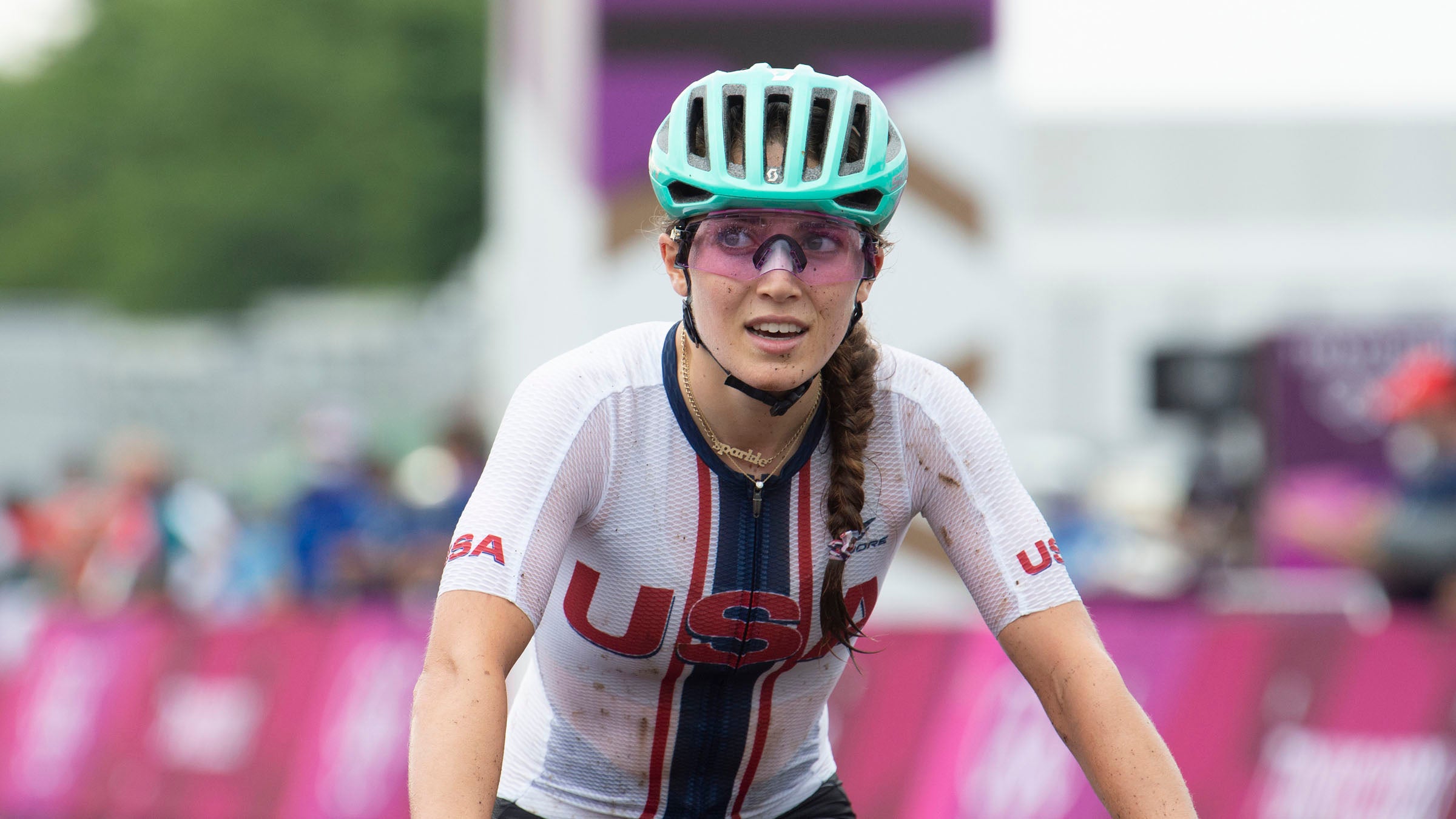 Kate Courtney is an Olympian already, racing the mountain bike event at Tokyo 2020. (Photo: Getty Images)
One of the early questions that I asked Stephen [Delcourt, FDJ’s General Manager] was, ‘What does success look like for me? What would success look like in your program?’ And he answered that the team didn’t know. It’s limitless.
The team will invest in my development and let it lead wherever it can go. I like that the team is not putting limitations on what I can achieve or on what type of rider I can be—that is a pretty exciting thing.
Velo: Where do you think you sit with your physiology? Are there aspects that you feel like you’re gonna step into and be able to be proficient at right away, or are there things you’re going to have to work on? How differently do you view this athletic challenge from these 20-minute and an hour-and-a-half-long efforts of XCO, to three, four, or five-hour road races on back-to-back days?
Kate Courtney: It is very different, and I’ve tried to be very clear about that. I completely respect the challenge I am taking on, and that’s part of why I need the best team around me to learn from and support that learning curve. There’s a lot that translates across disciplines in terms of physiology. Just being a professional cyclist for 10 years gives you a solid base, but there are a lot of areas that we haven’t explored.
I’m excited to see what transfers, but also what hasn’t necessarily been developed. I have a pretty good idea of what my two-minute power is after years of racing on the mountain bike World Cup, but I’ve only really done two stage races: Cape Epic in 2018 and earlier this year. So to see how my body responds, to benefit from the knowledge and expertise of such a world-class performance team, is exciting. It’s nice not to have to know yet what that exploration will reveal.
Velo: Was any part of this initiated by the effort at Leadville or Marathon Worlds, where you did a longer race, a quote-unquote mountain stage, and felt like you were able to give a really good effort?
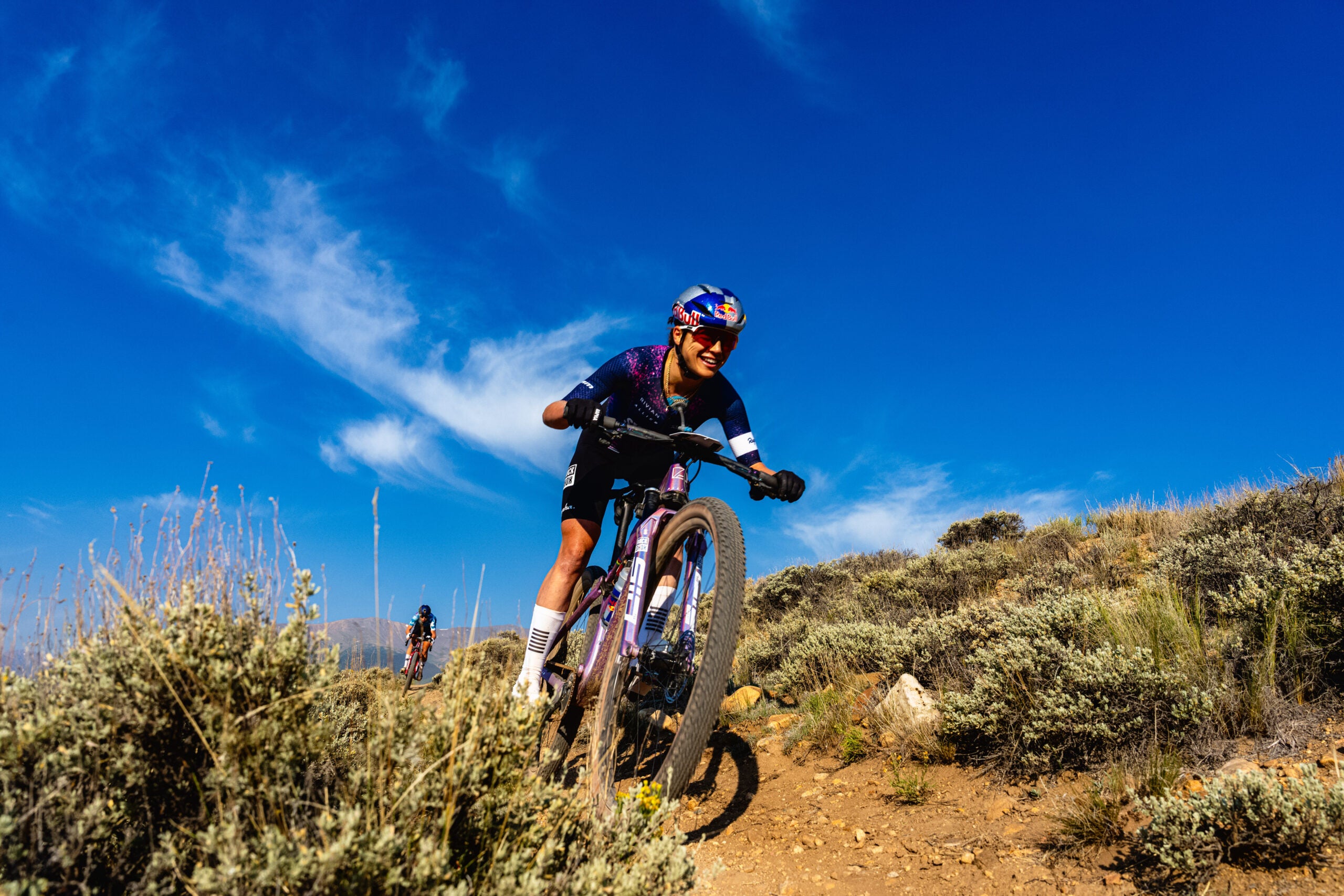 Kate Courtney at the 2025 Leadville Trail 100 MTB (Photo: Marc Arjol Rodriuguez)
Kate Courtney: Absolutely. At Leadville, Columbine starts at a super high altitude and is a full-hour climb. It’s also in the middle of a seven-hour race, and I think I was 13th in the men’s on that climb. That was a differentiating performance for me, and it got me thinking about how much I love these longer efforts.
I did well in a seven-hour race, and altitude climbing is something that is rewarded heavily in some of the biggest road races in the world, so that was kind of the first spark. I think it grew quite a bit at Cape Epic this year when I saw how my body responded to multi-day efforts and racing within a team. And, yeah, all of these things are, you know, things that I will be able to explore on the road and hopefully find that I’m well-suited to it.
Velo: How invigorating is that? You have been an elite athlete, a World Champion at 22, and, now that you’re 30, you’re finding a new avenue where your physiology is unlocked in new ways after all these years. How much does that bring new life into your training and intensity around the sport?
Kate Courtney: It’s exactly what I needed at this phase of my career. There was a long period where I was working really hard and didn’t necessarily feel like I was getting better. I think a lot of that was a limitation of maybe the environment or the mental side of racing after having done the same exact thing for so long.
When I raced Leadville, or when I came out this year and did my first road races, I felt like a junior in many ways, where everything was new and exciting. That motivated me to push harder on training and try new things, but it also pushed me to not necessarily have strong expectations of exactly how things had to unfold. That is really where I do my best work as an athlete, and it also makes it the most fun.
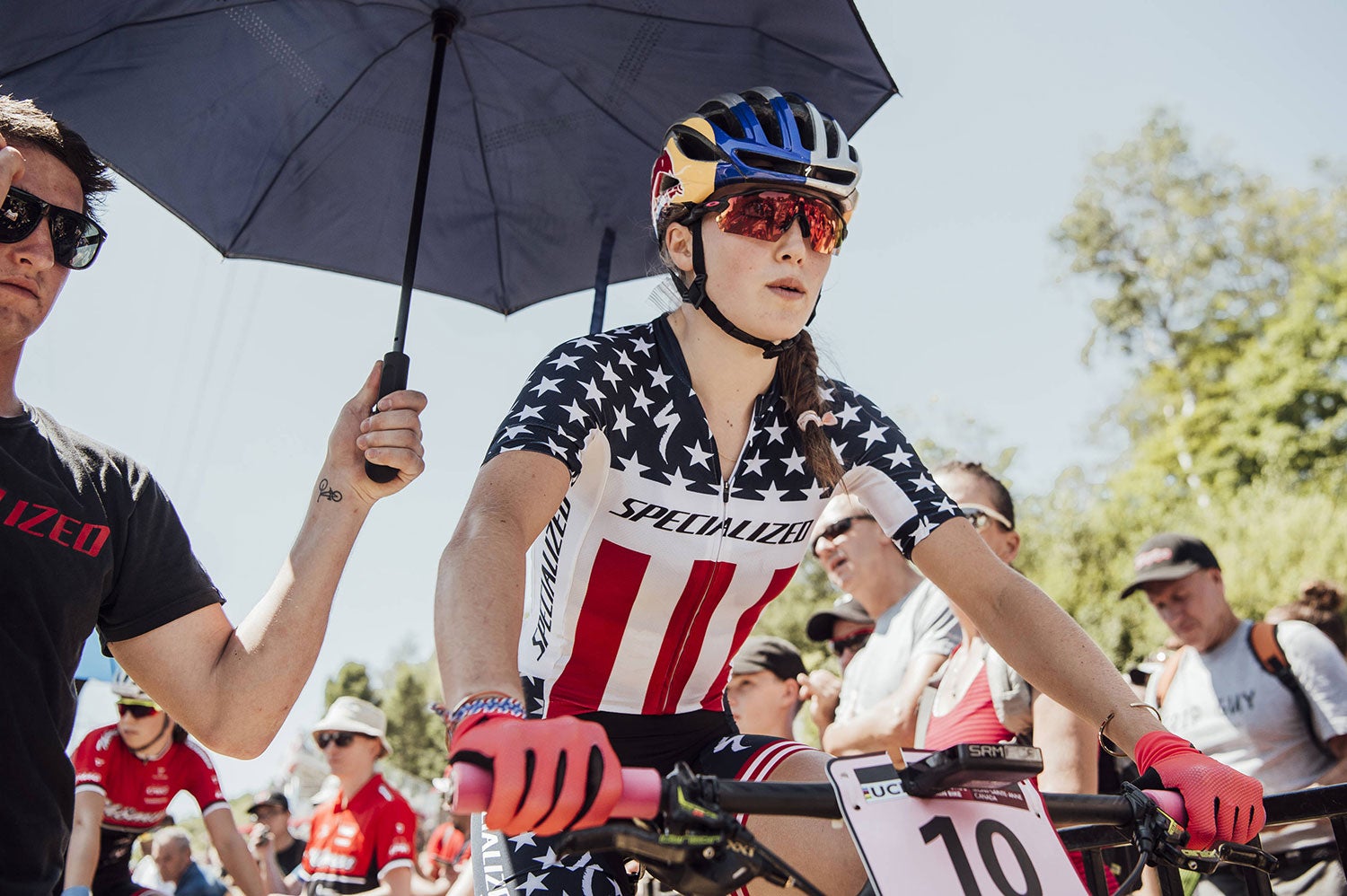
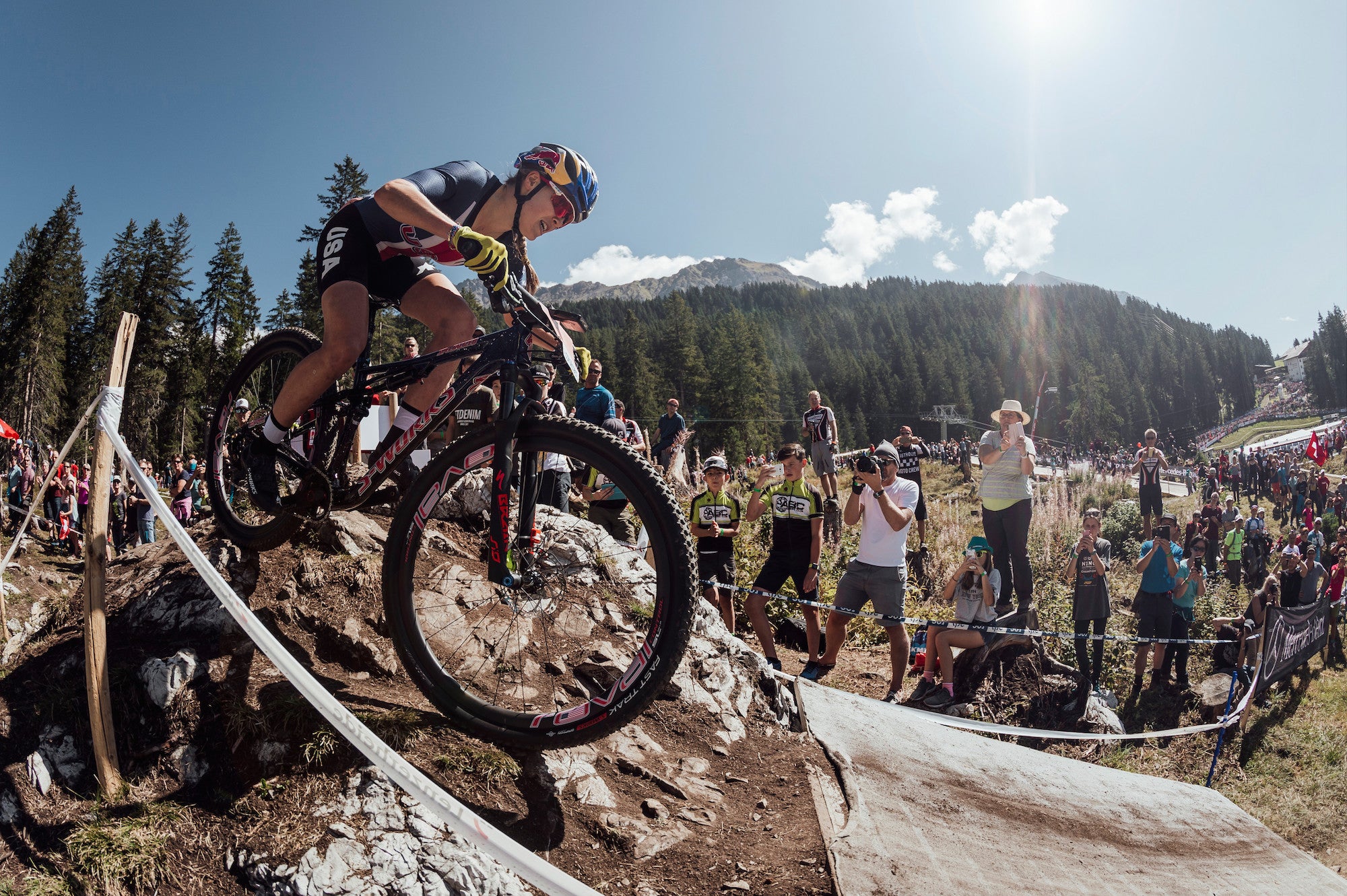 Kate Courtney rode to a brilliant world championship title in her debut season at the elite level. (Photo: Red Bull Content Pool)
Velo: Yeah, I can imagine that. I just started mountain biking a few years ago. I went from the road to gravel and then mountain biking. Even at my level, that transition has brought me so much enthusiasm. To do that at the highest possible level—to win Nationals—you must feel like you’re almost starting the process again of going past your own dreams and expectations like you’re a new elite athlete.
Kate Courtney: A lot of the value of this chapter in my career has been in just going for it. I think that’s really what I started to do again in my career when I started She Sends Racing. I was taking ownership of everything, I had the willingness to take risks, and do it very publicly.
What I found in that process was the spirit of being willing to go for it again. Like, that ability to attack and attack—to have it not work but to go again, and then it works. That’s really what makes cycling special to be a part of and to watch.
When I found that spirit off the bike, it started to translate back into my racing again. Now I am able to compete for a team like this at some of the most iconic races in the world, and that is the perfect arena to really go for it.
Velo: That is a good way of introducing the second aspect of your story that I find really interesting: the business side. With She Sends Racing, you really took a huge risk, striking out on your own in a system that is so dependent on factory teams. You kind of became an entrepreneur over the last two years. What was that process like, learning the business side of cycling? How did that help this transition away from being someone who is in a system to someone who’s crossed over systems?
Kate Courtney: It’s so interesting because I’ve been reflecting on that a lot. I’ve really worked harder than I’ve ever worked before, particularly off the bike. Every sponsor that we brought on was a personal call from me, right?
Every partnership was something that I was involved in and had ownership over. That was really special, but it was also really challenging. When I entered into that phase of my career, the thinking was that if I could gain control of my performance environment and also connect it to kind of this mission and purpose in sport, I would have more control of outcomes. There’s always that secret hope that you can kind of—things will go to plan.
What I found in the first six months is that nothing went to plan. Our kits didn’t come. I had the worst World Cup start of my career. I was just working too hard, honestly, to be able to perform at my best on the bike. And then I broke my wrist. To manage all of those things as an entrepreneur and not just an athlete was really challenging, but eventually I think I found that I could handle it.
She Sends Racing was a big step and a big risk, but with FDJ, I am doubling down massively at a time when I don’t necessarily have to take a risk. I think that process really taught me a lot and helped me believe in myself again.
Velo: Do you feel any sort of disappointment or sadness now that you’re saying goodbye to so many of those sponsors before you had a full journey with them? There were a lot of posts this week from sponsors wishing you well, and I’m sure they do, but it’s a difficult thing to break contracts, even if it is baked into what you were hoping to do.
Kate Courtney: It was very hard for me to make those decisions and have those conversations, and that’s also where the kind of ownership part of this comes in. Those are all direct calls from me, and that’s something that I wanted to make sure was done in the best way possible. I wanted it to be where we could all work together to find the right way to respond to this opportunity, which everyone could acknowledge is a once-in-a-lifetime opportunity.
For me, I still don’t see it as an ending. There will be grand plans for She Sends Foundation. I might need to take a moment to recover from this, but the foundation is absolutely alive, and I’m really proud of the work we’re doing. I want to continue to do more, but of course, the way that will look will be quite a bit different.
But this entire journey has been about sending it, right? All of these partners said yes to me at a time when, honestly, I wasn’t having the best race results, and I was asking them to do something completely non-standard—to bet on not just me as a racer, but on a vision that we can tell a really great story that we can use to inspire the next generation.
If I look back now, with a Leadville record, a Marathon World Championship, a Super Bowl commercial, a US Road National Championship—the breadth of those accomplishments and experiences could only be achieved with the willingness to expand our view of what success looks like. If I had only been allowed to race in the World Cup, none of those things would have been possible. I wouldn’t have been able to race across such a breadth of disciplines and different opportunities, and could really target those races.
Those partners continue to be a big part of this journey, and to me, the fact that we were able to make this happen just reflects the true values of all those companies and brands.
Velo: You mentioned doubling down on the risk. Is that doubling down on the financial risk? Is that doubling down on this journey you’ve been on athletically?
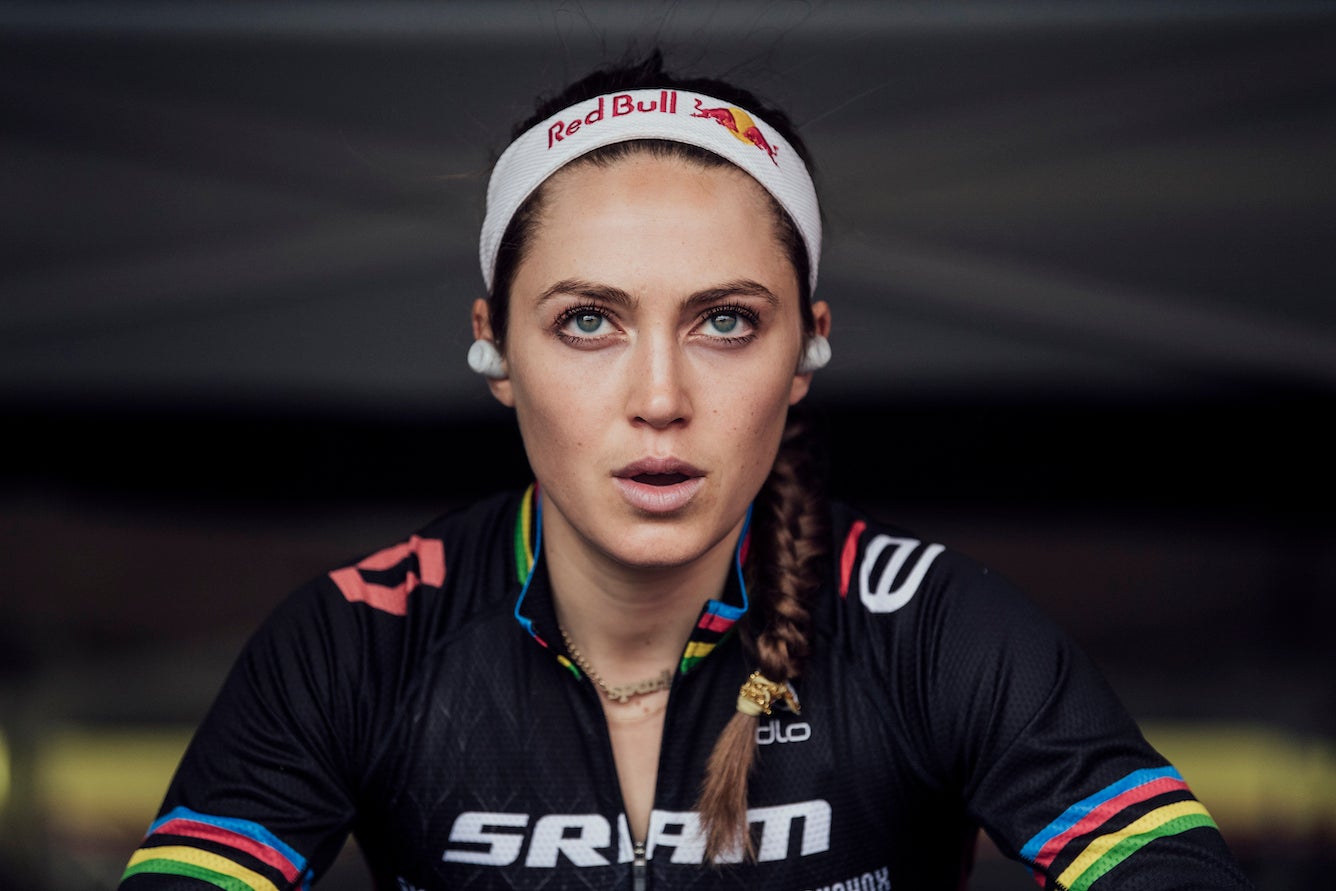 Red Bull remains her longest-lasting sponsor as the energy drink company is rumored to be joining FDJ United as one of the team’s title sponsors next year. (Photo: Bartek Wolinski)
Kate Courtney: There’s just a huge challenge built into this, and aside from the excitement and the story, this is a really hard challenge. This is the ultimate opportunity to bet on myself as a racer and to put what’s most important to me in this chapter. I’ve often put my desire to give back to the next generation, or my desire to give back to partners, at the very center of what I’ve done. Now I’m in a position to really push myself to the edge of what is achievable and to know that when I decide to end my career, I will have gotten the absolute most out of myself. And FDJ is obviously the best place to do that.
But the biggest risk is the emotional one of being willing to state so publicly such a big goal so early in the process. No one expected me to fall in love with road racing in three months, and then to sign with the best team in the world, and speak out loud the goal of competing in a home Olympics.
It is a big goal and a very public one. There is real risk in the willingness to go all in on something that has so much uncertainty, and in some ways feels like a destined journey, and in other ways feels like a huge long shot.
Velo: When you mentioned risk, there were a lot of ways you could have looked at it. I just wanted to specify, are you taking a pay cut? Are you talking about going further away in a different direction? From what it sounds like, it seems like you’re considering the venture a risk because road racing is hard, and there are many, many ways that it could go wrong.
Kate Courtney: That’s it, this is not the safe, expected path that guarantees success, but the amazing thing about this team is that there is so much infrastructure and support to accelerate that learning curve. That’s why we wanted to get started immediately. I wanted to be able to take all the pressure off this year, go into races, meet teammates, learn how the team operates, and understand the resources I can tap into to accelerate my process.
Velo: Let’s talk about that process, then. You’ve got, let’s say, three months left of the WorldTour racing calendar. Are there teammates that you have that are going to have similar programs to yours? Have you reached out to people outside of your community for some perspective? What does that sort of school of WorldTour racing look like for you over the next couple of months?
Kate Courtney: This year is all about getting into the equipment, getting used to the environment, and starting to explore my potential in some of these smaller races. That will be a really exciting process in the next few months.
Velo: Have you talked about Worlds? It’s in North America; it’s a circuit race that seems on paper to really suit your strengths.
Kate Courtney: Worlds is currently on paper. The National Championships should qualify me for the World Championships, so that’s definitely an event I’m planning on.
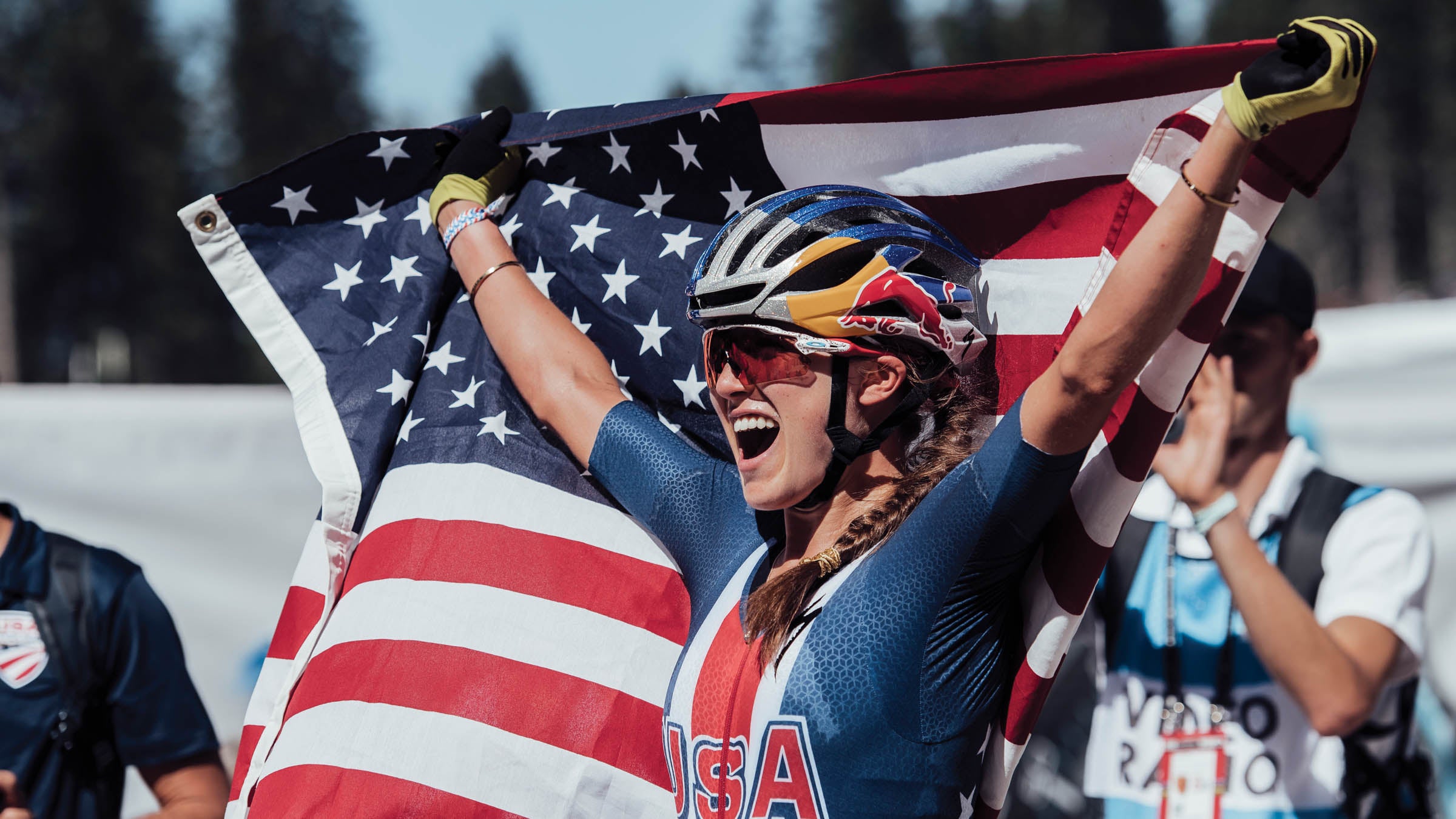 (Photo: Red Bull Content Pool)
I’ll spend the next few months in Europe, racing some smaller races like the Tour of Britain, and then I’ll get to go home and be there for a good three weeks before Worlds, so it just sets me up well to take what I’ve learned, do quite a good block of training at home, and see what’s possible. I think it’s exciting that it’ll be my first road Worlds, and as you mentioned, the course is one that definitely suits me, but I think also Worlds in general have some elements that make it a little easier for an outsider.
There’s no race radios, the team dynamics are different, so it’ll be a great event to kind of target the second half of the season.
Velo: FDJ will take you back to Specialized, the bike on which you won Worlds. Obviously, you’ve been on a couple of different bikes since then, but how does it feel to kind of go full circle with the big S?
Kate Courtney: Sometimes things are just meant to be, and I feel like that was one element in which this really worked out. I am excited to be back with Specialized. It’s a bit of a homecoming for me. I went down to get my bike fit at the wind tunnel, 45 minutes from my house, and I think it will be really special to share this journey with the brand, and end my career on the brand that I started it on.
 (Photo: Bartek Wolinski/Red Bull Content Pool)
Velo: Okay, lastly, are you pure roadie now? Is there room to go back to mountain biking? Or are you all in?
Kate Courtney: I am all in. The team is supportive of off-road goals, if they fit into my calendar, but, to be honest, I think I need all the time on the road that I can get. I’m still going to ride my mountain bike a lot, but my competitive aspirations right now are squarely on the road.
Velo: Is that indicative of who you are as a person? Are you someone who tends to go all in?
Kate Courtney: Haha, yeah…I do not have an intermediate setting.
Velo: I kind of knew the answer to that question. I just needed to ask it!
Kate Courtney: Yes, thank you for understanding me. It is true. I think as soon as my husband heard me talk about the road, he was like, ‘Oh no, it’s gone, it’s over, this is happening now.’
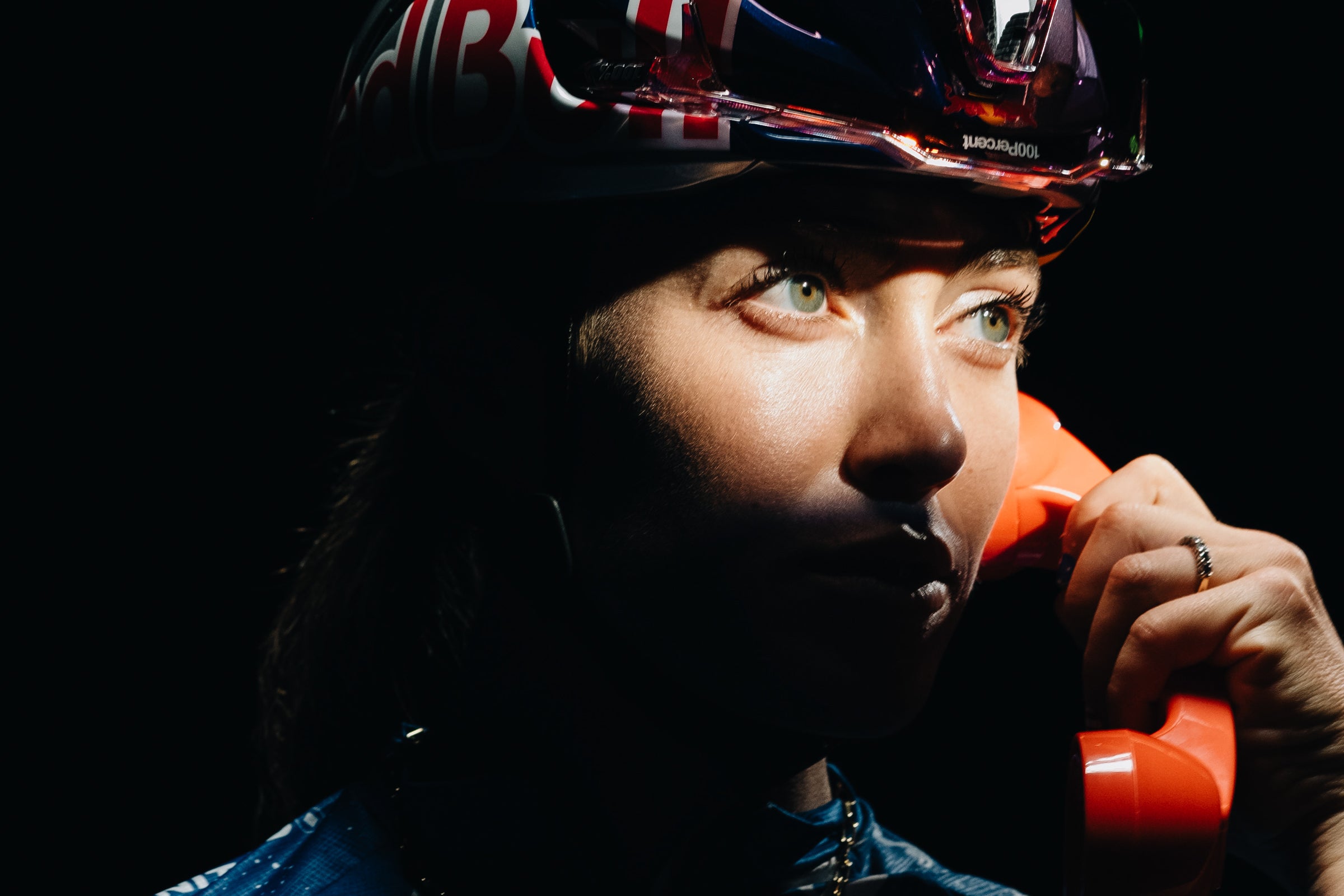 (Photo: FDJ United-Suez)