
New data from Oxford City Council shows that air quality across the city has continued to improve, with all sites of public exposure in 2025 recording nitrogen dioxide (NO₂) levels below the city’s annual mean target of 30 micrograms per cubic metre (µg/m³).
This marks the first time that every location where people are regularly exposed to air pollution has met the target, as outlined in the city’s Air Quality Action Plan for 2021–2025.
Anna Railton, Deputy Leader and Cabinet Member for Planning and a Zero Carbon Oxford, said: “This is a major milestone for Oxford and a really important moment for everyone who has worked so hard over many years to improve air quality in our city.
“For the first time, every site of relevant public exposure is below Oxford’s local NO₂ target of 30 µg/m³.
“That means we have achieved the ambitious target we set ourselves in our Air Quality Action Plan, and it shows that sustained local action can make a measurable difference.”
The 2025 Air Quality Annual Status Report covers data from 118 monitoring locations and notes that, on average, NO₂ levels fell by 5.6 per cent in 2025—down to 17 µg/m³ from 18 µg/m³ the previous year.
One of the key improvements was seen at St Clements, historically one of the city’s most polluted locations.
NO₂ levels there dropped from 34 µg/m³ to 28 µg/m³, a reduction of around 18 per cent.
No sites exceeded the UK legal limit of 40 µg/m³, and this marks the ninth consecutive year that no location breached the hourly mean objective for NO₂.
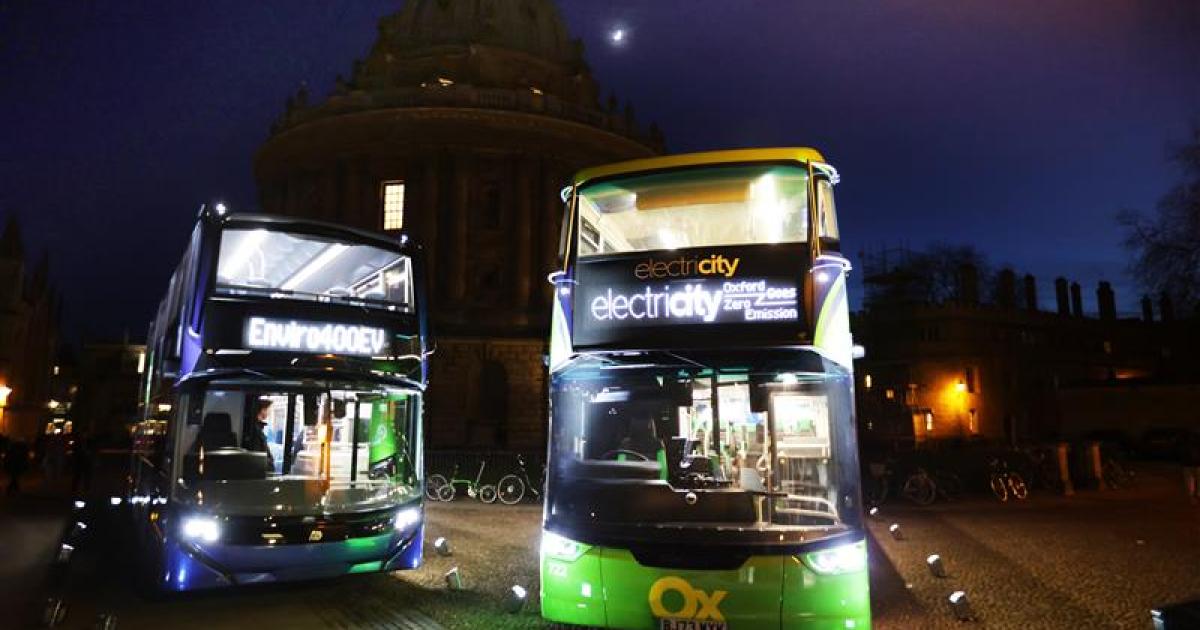
The introduction of 159 electric buses through the Zero Emission Bus Regional Areas (ZEBRA) scheme has contributed significantly to the improvement, resulting in a 14 per cent reduction in NO₂ levels along high bus routes such as High Street and St Aldates.
These electric buses now account for 69 per cent of total bus mileage in Oxford.
Particulate matter (PM10 and PM2.5) was also monitored, with all sites falling below UK legal limits.
However, the council warned that there is no completely safe level of air pollution.
In February 2026, Oxford City Council adopted a new Air Quality Action Plan for 2026–2030, setting a more ambitious target of reducing annual mean NO₂ levels to 20 µg/m³ citywide by 2030.
Ms Railton said: “The introduction of electric buses has played a particularly important role, especially in the city centre and on busy bus routes, and we are now seeing the benefits of that investment in cleaner air.
“Cleaner air is better for everyone, and we remain committed to working with our partners and communities to make Oxford a healthier city.
The latest report will be submitted to the government for ratification and is available to read on the council’s website.