

The rate of depression in parts of the Wirral is over double the national figure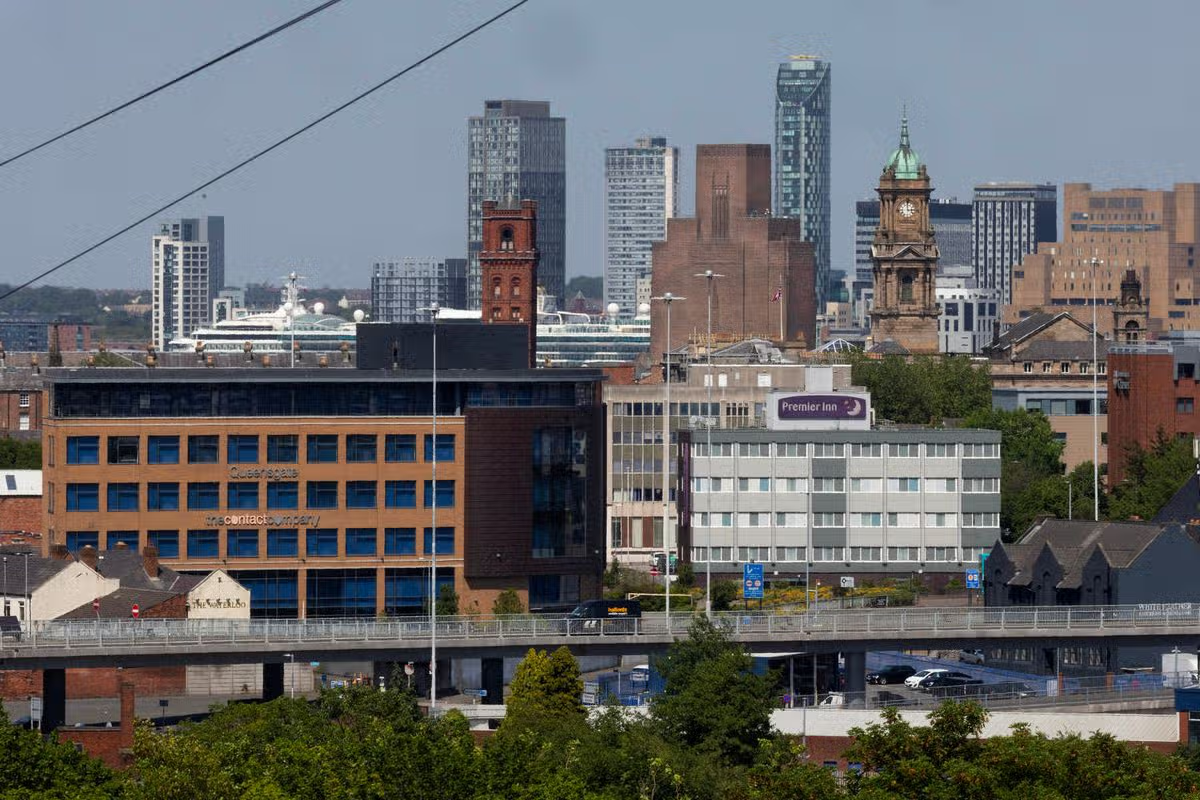
Birkenhead is home to some of the most depressed people in the UK (Image: Liverpool Echo)
With Wirral having recently been revealed to have some of the most depressed areas in the country, a professor from the University of Liverpool has spoken about why this might be the case.
Analysis of hyper-local health data from the House of Commons library found that seven of the country’s 10 most depressed areas are in Wirral. Birkenhead Central has a depression rate of 29.3%, which is over twice the rate across England as a whole. Shockingly, every area of the Birkenhead parliamentary constituency has a depression rate over 20%.
A spokesperson from Wirral Public Health has suggested that, while the high rates could indicate a “higher true need”, the rates could simply be down to the area having “GP practices that are exceptionally good at identifying and coding mental health issues.”
Professor Mark Gabbay from the University of Liverpool’s Institute of Population Health has given his view on why Wirral is experiencing such high rates of depression, and whether or not this could just be that GPs in the borough are better at identifying depression than in other areas in the country.

Professor Mark Gabbay from the University of Liverpool’s Institute of Population Health(Image: Professor Mark Gabbay)
Prof Gabbay told the ECHO: “This is unlikely to be straightforward, but we know for example the link between debt and depression is complex and interlinked, and we have been undertaking research into a programme providing debt advice for households facing debt and this is promisingly showing reductions in use of the NHS afterwards as well as suggestions of improvements in depression.”
When the ECHO went to Birkenhead to ask people for their thoughts on the data, many pointed to a lack of employment opportunities in the town which has been hit hard by deindustrialisation.
Prof Gabbay also spoke of a link between opportunities and depression. He said: “Other important factors will be a lack of access to paid or unpaid work, there is also a complex but known link between excess alcohol use and or substance misuse and mood disorders.
“A loss of optimism and hope for better future can be factors, and the breakdown of households and community cohesion.”
Addressing the idea that the data could be due to GPs being exceptional at identifying depression, Prof Gabbay said: “It is unlikely that these are false positives.” However he did say the high rates are due to “patients being more open to seeking help, and GPs actively looking for and recognising depression and reduced stigma about recording it as such.”
The professor did say that the higher rates of depression could prove to be “good for the future mental health of the Wirral” as it shows people are willing to come forward and speak about their struggles.
Responding to the ECHO’s reporting of the depression rates, the Wirral Public Health spokesperson added: “It is encouraging to read that Wirral’s residents see the link between mental health and employment and place, and that they are optimistic about the future.
“Regeneration and employment are key areas of work that the council is committed to in order to improve people’s life chances.”