
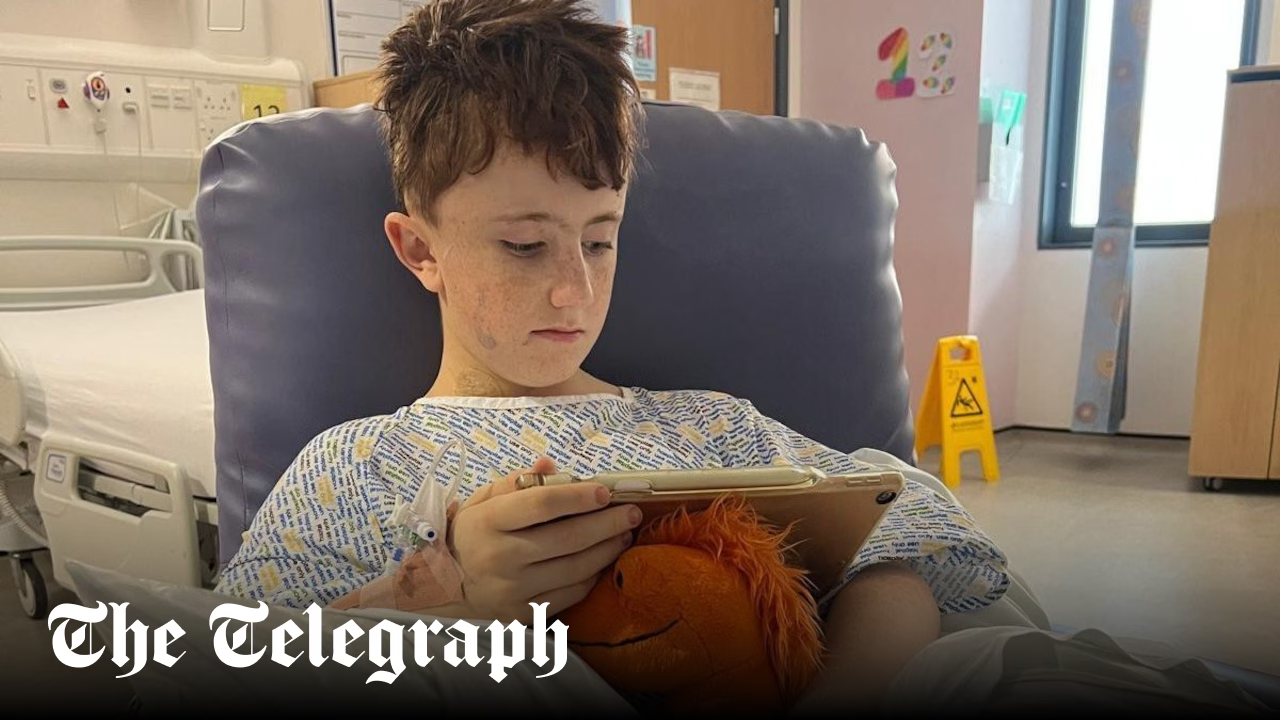
Mr Peart said: “A few days later, I woke up and saw him using his right hand to lift his left hand into the air.
“He looked at me and said, ‘Dad, quick, look, my fingers are doing finger things.’ It was one of the most remarkable moments of my life.
“Just a week after surgery, we were told he was ready to go home. Walking out of the hospital with Toby was an emotional moment and one we’ll never forget. We’re so grateful to [Roddy] O’Kane and the entire team who cared for him.”
Mr Peart and his wife, Adie, were told by the surgical team that their son could lose his sight or face paralysis following the surgery.
‘Enhanced visualisation’
The technology is designed to provide “exceptional” image quality, powerful illumination and enhanced depth perception.
Roddy O’Kane, the consultant neurosurgeon at NHS Greater Glasgow and Clyde, said: “Traditionally, neurosurgery meant working for hours with your eyes fixed to microscope eyepieces.
“This technology allows us to operate upright while gaining views and angles that simply aren’t possible with conventional microscopes.
“For children undergoing brain surgery, that enhanced visualisation can make a real difference.
“The ability to see more clearly and reach more effectively supports safer surgery and, ultimately, better outcomes.”
Emer Campbell, the clinical lead and consultant neurosurgeon at the health board, said: “We’re delighted to have this technology in place.
“Beyond the clear benefits for our patients, we’re already seeing how it enhances teamwork, workflow and training in theatre.”