
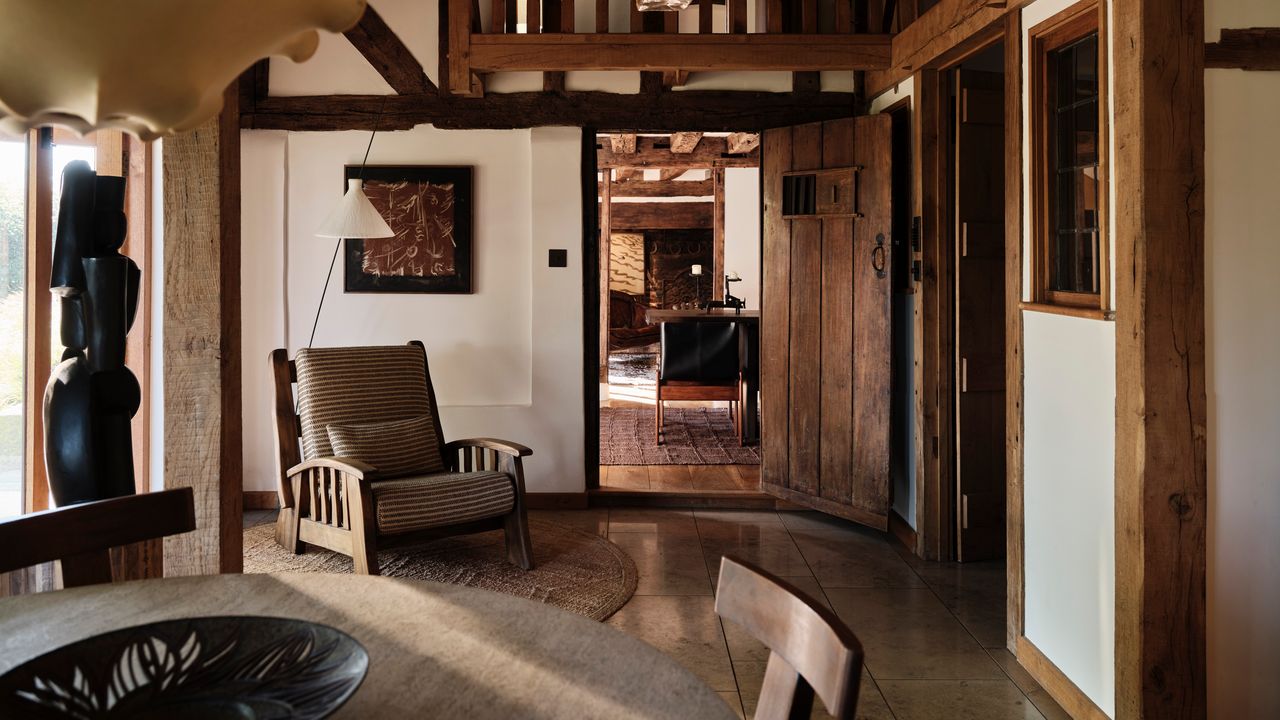
Joseph Stone and Stanley Quaia, the duo they picked to help them, turned out to be a particularly good choice. Joseph’s studio, Stone Design, is accustomed to delivering turnkey projects many times larger than this one, so he was unfazed about getting his clients in quickly. Stanley, meanwhile, had just launched Heavy Duty Services, an art and design consultancy connecting private clients to designers, artists, manufacturers, and galleries, and is also a director of the design gallery Béton Brut, which specialises in rare 20th-century pieces. The two have known each other for a long time and their personal styles overlap in appreciation for ‘Japanese & European mid-century design, with a leaning towards texture and patina,’ says Joseph. Their clients were sold.
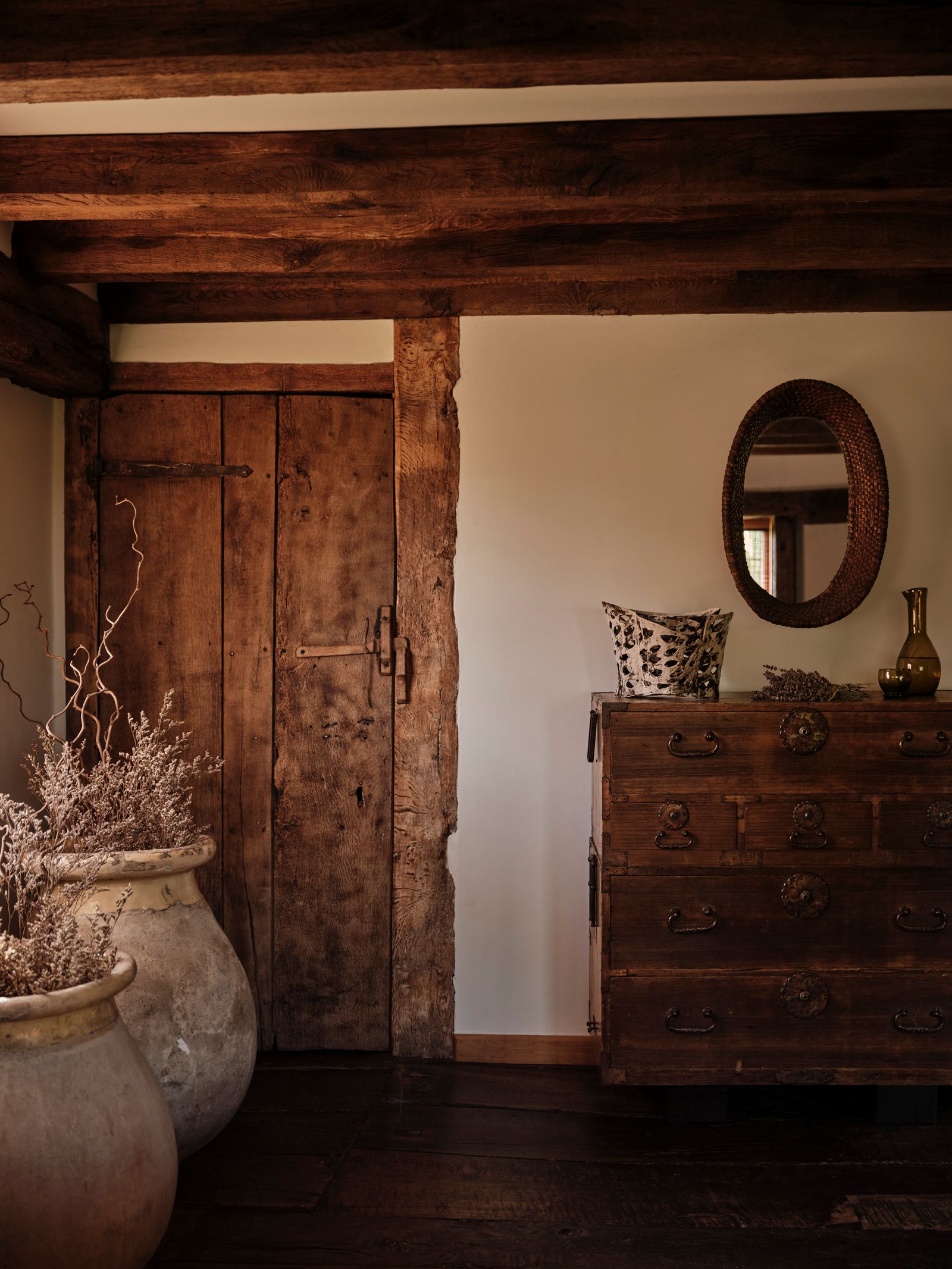
Before they could begin sourcing, though, there was the building itself to consider. The house had been added to in sections over the years, and some of the wooden beams in the newer parts jarred against the original centuries-old oak framework, complete with carvings believed to ward off evil spirits. Staining the newer wood darker, ‘made the whole place feel more cohesive,’ explains Joseph.
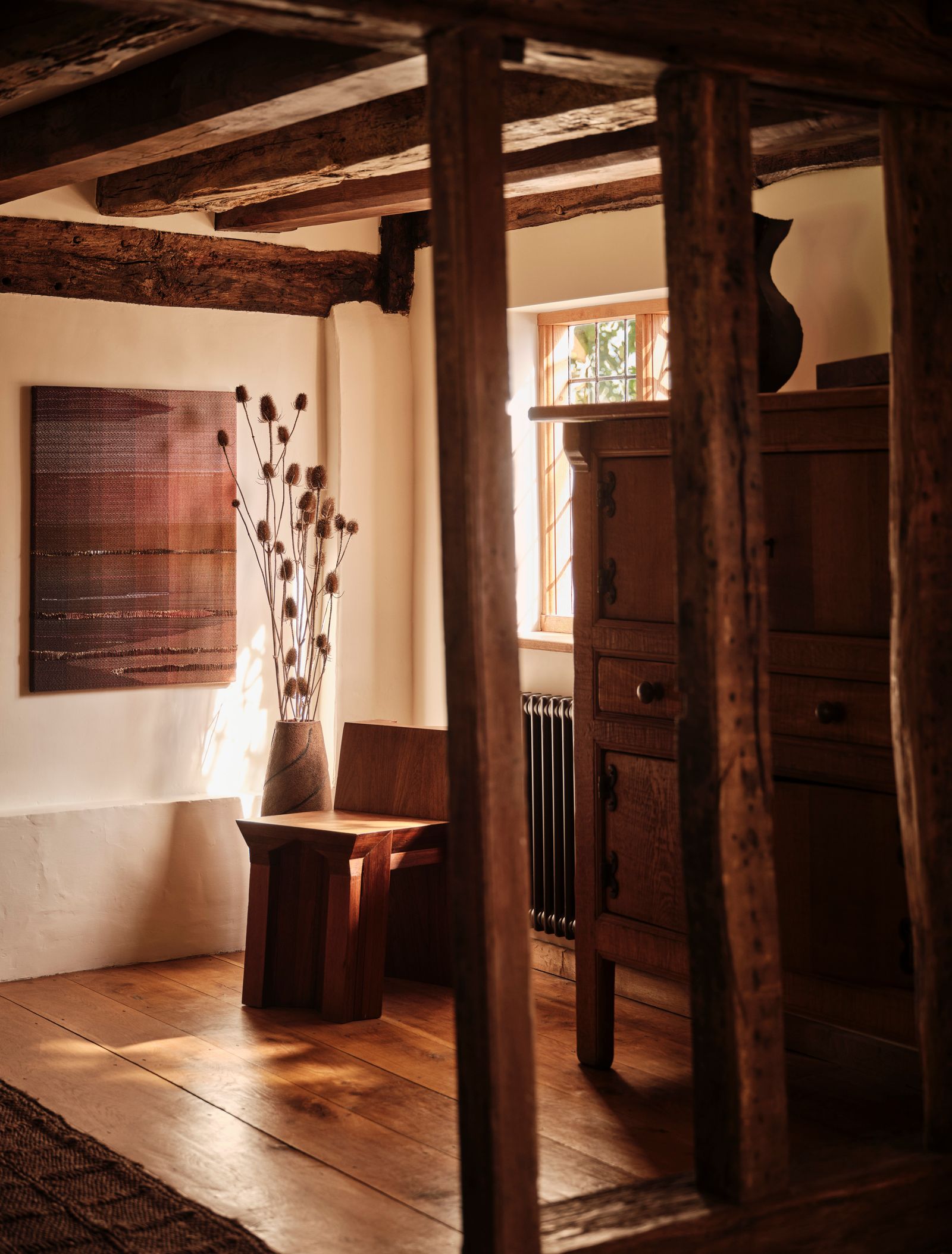
The Roots (2025), an artwork by Marta Pokojowczyk (b.1985) in handwoven linen yarn, organic cotton, jute and acrylic textile paint, on the wall, next to a Remembrance Chair by Subin Seol for Retrouvius.
Ben Anders
Against this ‘rough and rustic’ backdrop, the task became bringing in enough texture and pattern to complement and even soften it, while also ‘cutting through the existing architecture with some nice sharp lines,’ says Joseph. This balance is evident throughout the 400-year-old house, but particularly in the dining room, where a bespoke blackened oak dining table matches the beams in hue, but is more precise in form. Paired with Afra & Tobia Scarpa Monk chairs in walnut and black leather, and set against a brutalist French cabinet, the composition exemplifies what Joseph says was an intention to ‘find some kind of red thread back to the architecture, in which everything we added was complementary to the space.’ In the same room, a heavily patinated Italian leather armchair has the character ‘of something you might discover in a hunting lodge’, yet its silhouette is unmistakably mid-century.
Ben Anders