
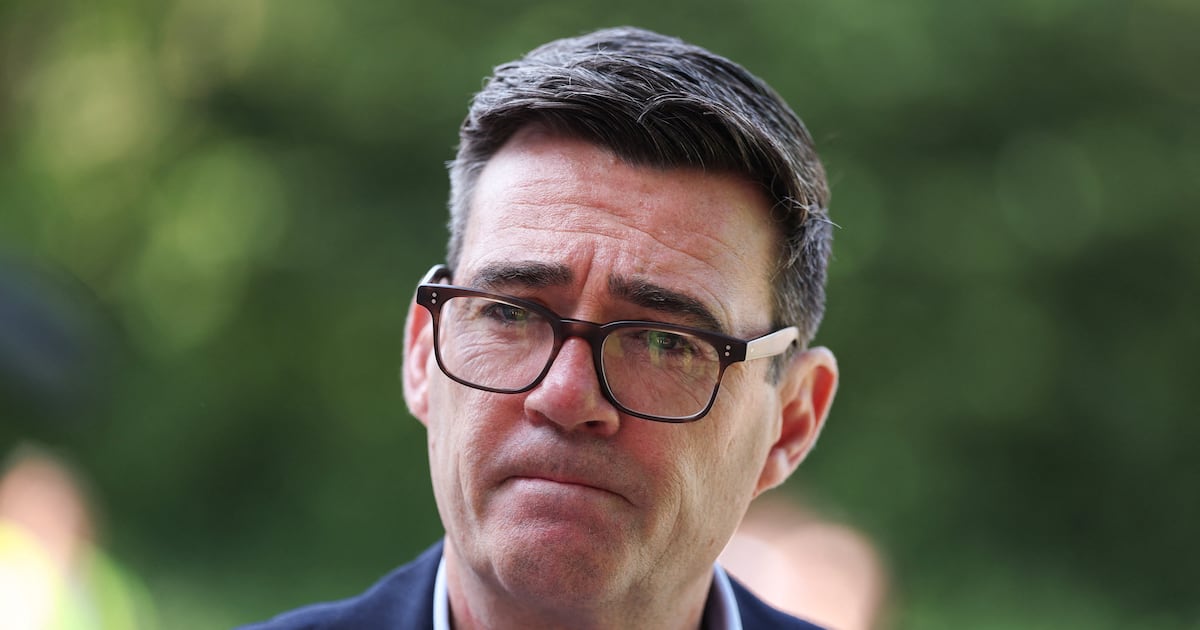
Andy Burnham is facing criticism after Northern Ireland was excluded from all three of the new Prime Minister’s flagship cost-of-living measures.
Mr Burnham has made “breathing space” for struggling households the centrepiece of his first week in Downing Street, moving at speed to remove VAT from domestic electricity bills, restore the £2 cap on single bus fares and cut business rates for pubs, clubs and live music venues.
But none of the three measures will apply in Northern Ireland with one blocked by post-Brexit trading arrangements and two by devolution.
Sinn Féin’s Economy Minister Caoimhe Archibald said the new Prime Minister was continuing a pattern set by his predecessors.

“Successive British governments have shown no interest in or concern for the people of the north of Ireland,” the MLA said.
“Andy Burnham has the opportunity to change direction but it is abundantly clear that the interests of the people of Ireland – north and south – are best served on the island of Ireland by political representatives elected by and accountable to the Irish people.”
The VAT cut, the Prime Minister’s first major policy decision, will remove the five per cent charge from domestic electricity bills in England, Scotland and Wales from October 1, saving the average household around £45 a year at a cost to the Treasury of approximately £850 million.
However, under the Windsor Framework, EU VAT rules continue to apply to electricity in Northern Ireland, meaning the cut cannot take effect here without agreement from Brussels.
On transport, the cap on single bus fares in England will fall from £3 back to £2 from January 1 2027, at an estimated cost of £500m. The cap applies only to participating operators in England outside London, with fares in the north remaining a matter for the Executive and Translink.
The third measure, announced on Thursday, will cut business rates by 20 per cent for around 32,000 pubs, social clubs and live music venues in England from next April, saving a typical pub an estimated £1,100 a year.
Rates are fully devolved, meaning the relief will not apply in Northern Ireland unless the Executive chooses to mirror it.
The government has said that Stormont may receive some funding through the Barnett formula, hoewever, any potential money is not ring-fenced and can be used for any other purpose.
Under the Barnett formula, Stormont receives a population-based share of any new spending on England-only services.
Claire Hanna, the leader of the SDLP – Labour’s sister party, admitted that the new PM’s “focus is on England” but said responsibility lay with Stormont.
“While the new Prime Minister has a long road ahead of him, and his focus is on England, he has shown in his first few days in office that governments can move quickly to deliver changes that make a real difference to people’s lives,” the South Belfast MP said.
“That stands in stark contrast to the Stormont Executive, which has too often presided over drift and failure while blaming everyone but themselves.
“Any Barnett consequentials arising from these measures must be used to deliver tangible benefits for people here, whether that’s making public transport more affordable, supporting local businesses or helping families with the cost of living.
“Too often additional funding disappears into Stormont’s financial black hole without people seeing any meaningful improvement in their daily lives. That cannot be allowed to continue.”
Mr Burnham is expected to meet the First Minister and deputy First Minister when he visits Northern Ireland as part of a UK-wide tour in August.
The Northern Ireland Office has been approached for comment.