
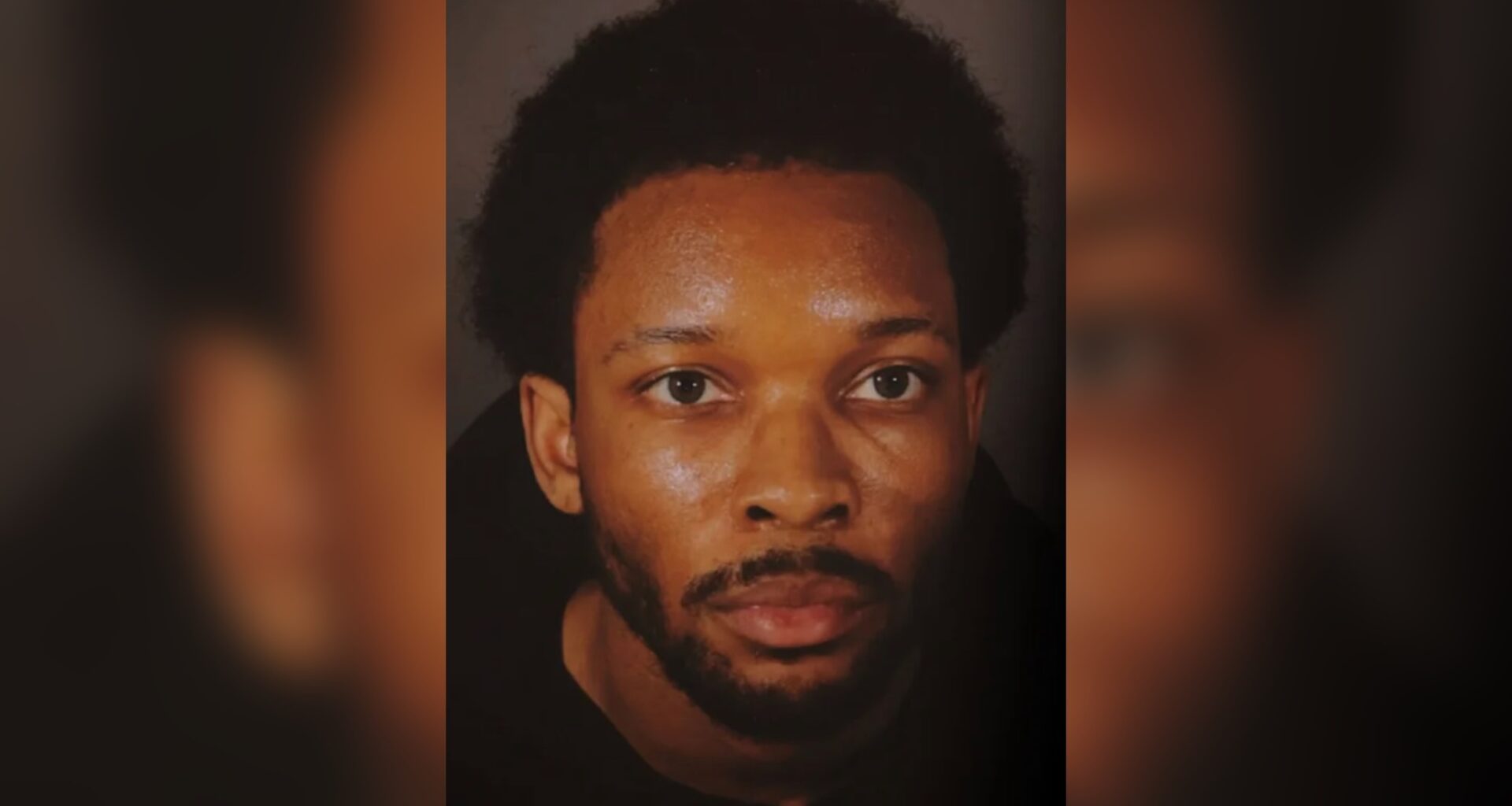
The preliminary hearing for singer D4vd entered its third day Thursday as prosecutors continued laying out an alleged methodical timeline leading up to the tragic death of 14-year-old Celeste Rivas Hernandez. Over the first two days, Judge Charlaine Olmedo heard testimony about search warrants, digital evidence, Amazon purchases, forensics and finances.
On Thursday, prosecutors resumed calling witnesses as they seek to establish probable cause for the embattled former gamer and singer to stand trial on charges including first-degree murder, lewd acts upon a child under 14 and unlawful mutilation of human remains.
Day three of singer D4vd’s preliminary hearing had a shaky start.
Before any witness testimony was heard, Judge Olmedo went on the record regarding an apparent violation of her media order after learning that a shared Google Docs file allegedly allowed a live transmission of the proceedings on Wednesday, despite the court’s strict position on live transmission from inside the courtroom. The reporter in question was asked to leave the proceeding for today only.
Prosecutor Beth Silverman then brought up a separate issue she wanted on the record, telling the court that a woman previously seated in the gallery had approached and made inappropriate comments to her. She also wanted a grand jury witness seated in the courtroom removed (Private Investigator Steve Fisher); she also claimed he had inappropriately interacted with attorney Patrick Steinfeld, who represents the family of 14-year-old Celeste Rivas Hernandez. Steinfeld clarified on Fisher’s behalf and told the judge that he approached Fisher, not the other way around. Fisher was instructed to leave the courtroom due to grand jury rules, which he did so with grace.
Scroll to continue reading
After the on-the-record discussion concluded, Silverman and Steinfield appeared to engage in a tense exchange in the courtroom, with Silverman overheard whispering (but loud enough), “Push me, you’ll see how far that goes,” and “I’ll pull your badge.”
Defense attorney Blair Berk then continued her cross-examination of LAPD criminalist Lauren Wallace by focusing on evidence that was either not collected or not tested during the investigation. Wallace testified that investigators did not swab the handles of the previously recovered two chainsaws for touch DNA because phenolphthalein testing was negative. She did note that certain other items were collected for reasons unrelated to biological evidence.
Berk also questioned Wallace about a third electric handheld saw found in a closet (some suspected this saw was ‘missing’) that was neither collected nor subjected to additional forensic analysis because investigators determined it lacked forensic value. Wallace further said she observed what appeared to be jugs of fake blood and trays in the garage; presumptive phenolphthalein testing was negative and was documented in her report. The fake blood was not collected or logged into evidence.
Berk also asked whether Wallace documented a large box containing a burn cage, to which Wallace responded she did not, adding that she was never instructed to search the second floor where the boxed burn cage was located.
On redirect, prosecutor Beth Silverman stated that investigators do not collect every item at a crime scene, only evidence deemed to have potential forensic value, and Wallace agreed. Wallace explained that sometimes even after evidence is collected, it is not automatically tested, as detectives and forensic analysts work together to determine which items are most likely to have useful DNA evidence.
The next witness for the People was LAPD Criminalist Lisa Lahendro, a 26-year veteran of the department who specializes in trace evidence analysis. Her examination centered on the inflatable pool and Celeste’s clothing recovered during the investigation.
With the inflatable pool, she identified hairs, fibers, plant material and possible foam-like flakes using a stereo microscope. Lahendro also documented four distinct areas of damage to the pool, describing a combination of straight and irregular cuts, some of which penetrated completely through the material. In one of the prosecution’s exhibits, Lahendro testified that several blue plastic fragments submitted by the Los Angeles County Medical Examiner’s Office physically fit into a missing section of the pool “like a puzzle piece.” She also said several additional blue fragments shared the same characteristics as the pool material and could have originated from it, but she could not definitively conclude they were physical matches because portions of those fragments were missing.
Lahendro then testified about her examination of Celeste’s clothing, with brutal photographs displayed of the garments. The clothing was in poor condition, with a strong odor and significant deterioration, and heavy soiling. The clothing, which included a pair of Sketchers socks, a Victoria’s Secret thong, a heavily soiled Forever 21 tube top that may have originally been yellow, and black leggings that appeared to have been cut in half. All were wet, covered in dirt and insects.
Lahendro explained that the heavy soiling prevented her from performing some of the comparison testing she had been asked to conduct. While examining the leggings, she recovered dark blue and medium blue plastic fragments that were visually similar to those submitted by the Los Angeles County Medical Examiner’s Office. A. Exhibits also showed a separate black fragment that Lahendro compared to the leggings. She testified that she collected hairs, fibers, other trace particles and two yellowish stains from the black fragment using sterile swabs, but could not complete the analysis because of the deteriorated condition of the clothing.
During cross-examination, defense attorney Blair Berk questioned the scope of Lahendro’s analysis, pointing out that her fragment comparisons were based on physical characteristics and were not exhaustive. Berk also asked about the hairs, plant debris and other trace material recovered from the inflatable pool, with Lahendro explaining that some debris naturally fell onto examination paper during her inspection while other material was manually collected. Berk pushed on her previous testimony regarding possible footwear impressions observed on the pool. The criminalist testified that her attempt to lift the impressions using an electrostatic dust print lifter was unsuccessful, explaining that the pool’s uneven, thick surface, or the possibility that the impressions were not made in dust could all have prevented the recovery.
Lahendro also confirmed that investigators never provided her with any shoes for comparison to the possible impressions.
Silvernan’s next witness was LAPD Detective William Roecker, a nine-year veteran assigned to the Robbery-Homicide Division’s investigative support unit who specializes in cellular records analysis. Roecker (who also serves on an FBI violent crime and cellular analysis task force and previously worked for Verizon Wireless’ law enforcement division), testified that he was asked by lead detective Joshua Byers to analyze two identifiers: one associated with David Anthony Burke’s cellphone and another tied to Burke’s Tesla’s IMSI, or International Mobile Subscriber Identity.
Using historical cellular records and Tesla connectivity data, Roecker mapped the movements of both devices over several dates in April and May 2025. According to his analysis, Burke’s phone and the Tesla appeared to travel together from the Doheny Drive residence toward a remote area off State Route 154 in Santa Barbara County, near where investigators later recovered evidence. Roecker testified that on April 24, 2025, an outgoing call from Burke’s phone to Celeste Rivas Hernandez was routed to voicemail while the vehicle was traveling north, indicating her phone was either turned off, in airplane mode or outside network coverage.
He also identified additional trips in early and late May in which both the cellphone and Tesla data showed the devices traveling in tandem between Burke’s home and the same general Santa Barbara area before returning to Los Angeles. The court was also shown maps of the cell tower data, a Tesla charging station in Santa Ynez that matched the vehicle’s infotainment records, and the location where Celeste’s passport was later recovered.
Roecker testified that the cellphone records consistently corroborated the Tesla data, showing the two devices traveling in unison during the relevant time periods. His testimony will continue on Thursday afternoon.