

The RIBA’s third survey of its members into attitudes towards AI has revealed a significant jump in practices using the technology, from 59 per cent in 2025 to 74 per cent.
However, 59 per cent now believe that job losses are on the horizon and 61 per cent think that AI will take opportunities away from young architects.
The findings align with the AJ’s ongoing investigations into the state of the profession for young people. As reported last month, AI has been at least partially blamed for the lack of Part 1 positions available where any opportunities that do exist are massively oversubscribed. JTP received 2,600 applicants for just nine Part 1 positions last year.
RIBA president Chris Williamson, said: ‘The research suggests AI adoption is likely to have its greatest – and potentially most detrimental – impact on entry-level and early-career roles.
‘If that proves to be the case, what are the long-term implications for the profession? If fewer people have the opportunity to develop foundational skills through early-career experience, how will practices support the next generation of architects.’
The RIBA also reported that only 17 per cent of practices say that their designs are better because of AI.
Cas Esbach, architecture professor at the Savannah College of Art and Design and formerly of MVRDV, raised similar concerns, arguing that a reduction in the potential work for those at the start of their careers, and the lowering cost of AI-produced ideas, risked eliminating the stages necessary for young architects to gain the experience needed to make appropriate judgements.
Esbach told the AJ: ‘The 61 per cent figure is the one that should stop practices in their tracks.
‘The production tasks AI is absorbing – the drawing sets, the schedules, the coordination – are exactly the ones through which young architects learn how drawings, decisions and buildings come together.
‘If practices automate the apprenticeship without deliberately replacing that learning, they will find in ten years that they have a generation fluent in prompting but short on judgement. And judgement is the one thing this report says cannot be automated.’
Other findings from the RIBA’s survey included that, despite widespread adoption of AI, fewer than one in six (17 per cent) of respondents agreed their designs were better because of AI.
Even so, three-quarters of respondents reported observing an increase in productivity in their workplace attributable to AI and 57 per cent said that they had seen a positive return on investment.
Williamson continued: ‘Organisations are increasingly implementing AI in day-to-day operations, and architects, like many other professionals, are already seeing benefits in productivity and efficiency.
‘On the other hand, this research makes it clear that the profession does not see AI as a replacement for human creativity and judgement, which remains at the core of architecture. Professional oversight of design remains essential if tomorrow’s buildings are going to be safe and sustainable.’
The RIBA said that the findings reinforce the organisation’s previous calls for a ‘competence-led approach’ to the regulation of the built environment, adding: ‘Those responsible for critical decisions in the delivery of buildings should possess the specific skills, competencies and professional judgement required for the task.’
Warnings of job cuts due to AI allowing fewer employees to work more quickly and swallowing up easier, entry-level tasks have been circulating since the tool was in its infancy. The AJ reported in 2024 that the House of Lords warned of disruption and change on a similar scale to the introduction of the internet, but also argued that predictions of an ‘AI apocalypse’ were exaggerated.
Although the RIBA found that a majority of members were anticipating staff reductions, it noted that there has been ‘no clear evidence of sector-wide AI-induced staff cuts yet’.
The profession ‘remains sceptical’ of the technology, according to the data, with just 21 per cent agreeing that AI makes them more optimistic about the future of their organisation, and 77 per cent believing that it can ‘never replace human creativity’.
The RIBA’s working group on AI, generative design and data will continue to monitor the development of AI and is drawing up a an AI best practice policy to be revealed later this year.
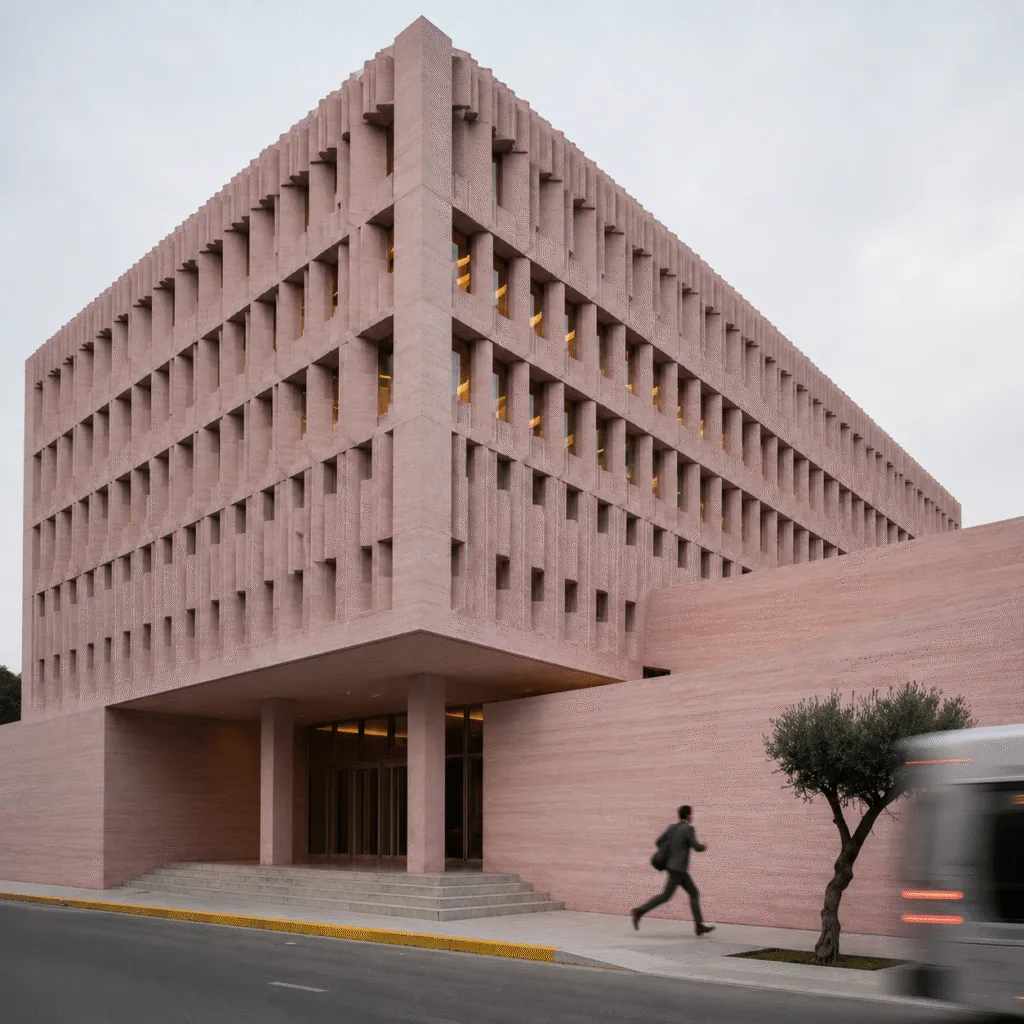
Designed by Cas Esbach using an AI model called Z-Image-Base Int8
Source: Cas Esbach using Z-Image-Base Int8
Comment
Cas Esbach, architecture professor at the Savannah College of Art and Design and formerly of MVRDV
The findings match what I see in daily use. AI has collapsed the cost of producing and testing ideas, but speed is not quality. I’m not surprised so few think their designs are better. In truth, how would we know? Design quality has never been measurable, and it resists measurement for the same reason it resists automation.
What has clearly changed is that making images is now cheap and judging them is not. That judgement was always learned through the slow work we are now automating, and rebuilding how young architects acquire it is the profession’s real task.
The 61 per cent figure [who agree it will make it more difficult for early-career professionals to acquire essential skills and experience] is the one that should stop practices in their tracks. The production tasks AI is absorbing, the drawing sets, the schedules, the coordination, are exactly the ones through which young architects learn how drawings, decisions and buildings come together.
If practices automate the apprenticeship without deliberately replacing that learning, they will find in ten years that they have a generation fluent in prompting but short on judgement, and judgement is the one thing this report says cannot be automated. That is not an argument against the tools. It is an argument for redesigning how we train.
It is striking that a profession adopting a technology this quickly remains this sceptical about it. Three-quarters of practices report productivity gains, yet only one in five feel more optimistic and six in ten expect staff reductions. I don’t read that as resistance. Architects are perfectly capable of holding both thoughts: the tools genuinely work, and the ways they are deployed will shape jobs, training and the resilience of the profession for decades. The scepticism in this report is not fear of technology. It is a profession taking responsibility for the choices around it.

Designed by Cas Esbach using an AI model called Z-Image-Base Int8
Source: Cas Esbach using Z-Image-Base Int8
The answer is not keeping students away from AI, which they will meet throughout their careers. AI literacy is not prompt writing. It is understanding the architectural problem underneath, interrogating the output, and recognising when something persuasive is spatially, technically or ethically wrong. That is what schools and practices now have to teach.
Going from 59 per cent to 74 per cent in a single year tells you we are moving from experimentation, to infrastructure. The adoption question is settled. The open questions are harder ones about trust, oversight and training, and it is encouraging that the profession is asking them now rather than after something goes wrong.
AI is making architecture faster but not yet better, and the profession clearly knows the difference. Speed is measurable. Judgement is not, and judgement is still where architecture happens.
We have reached a tipping point in AI use but not in AI literacy. The next phase is about how architects evaluate, direct and take responsibility for what these tools produce.
The work AI automates is the work young architects learned through. The real test of this transition is whether we can rebuild that apprenticeship before we lose it.