
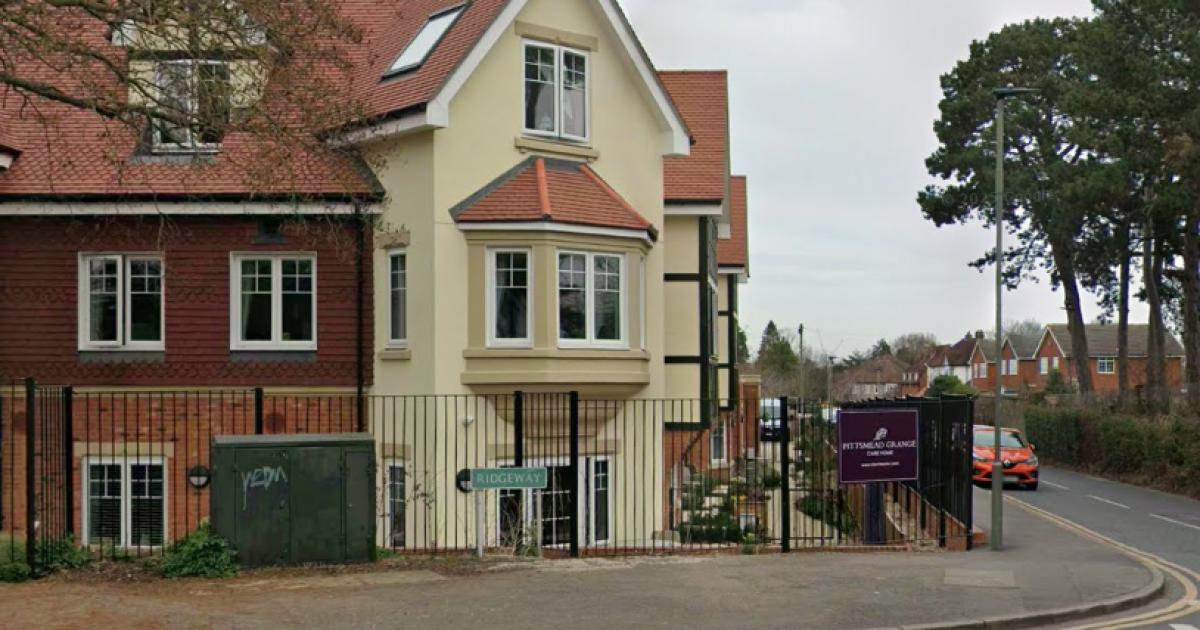
The Care Quality Commission (CQC) rated Pittsmead Grange Care Home as “Requires Improvement” following an assessment published on July 17.
The regulator said there were significant concerns around medication management, risk assessments and care planning, staffing levels, medicines administration and governance.
The service scored 50 out of 100 in the Safe category.
READ MORE: Bromley mum fears no help for disabled kids after horror Ofsted report
The care home has since issued a response to the findings (Image: Stock image)
The inspection found the service to be in breach of legal regulations relating to medicines management and safe care and treatment.
This resulted in the CQC issuing a warning notice to provider Barchester Healthcare Homes Limited on March 26, 2026, for failing to ensure good governance at the home.
The watchdog said medicines were “not always managed” or “administered safely” in line with best practice, with multiple errors reported to the CQC in November 2025.
Inspectors found that several residents had not received medicines as prescribed, while further medication errors were identified during the assessment and in the weeks that followed.
The CQC also raised concerns over delays in reporting medicine mistakes, delays in checking residents’ wellbeing after missed doses, and poor record keeping relating to medicines administration.
Inspectors also found one resident’s care records incorrectly stated they required medicines to be given covertly – hidden in food or drink without their knowledge – despite staff confirming this was no longer necessary.
Inspectors wrote: “Whilst we found no evidence that people had been harmed, the provider had failed to ensure the safe management and administration of medicines.”
Inspectors said risk management was a significant concern, with residents not always involved in planning their care and some assessments lacking important detail.
The CQC found that risks were not always properly identified, assessed or reviewed, while some care records contained contradictory information which could affect the quality and safety of care provided.
Inspectors wrote: “Risks to people were not always identified, assessed, documented and reviewed within their plan of care.”
One resident assessed as being at high risk of falls, did not have detailed guidance in place for staff on how to support them safely, while another record incorrectly stated they had no history of falls.
CQC also identified gaps in assessments relating to long-term health conditions. In one case, a resident’s asthma had been recorded as a risk, but there was no detailed guidance on how staff should respond if the person became breathless or suffered an asthma attack.
Choking risks were another concern raised during the inspection. Inspectors found one resident required thickened fluids to reduce the risk of choking, but no choking risk assessment had been completed and there was no guidance for staff on how to respond in an emergency.
Inspectors also raised concerns around catheter care. One resident with a catheter did not have a specific care plan in place and no hydration monitoring records were being maintained.
Staffing levels were also criticised, with both residents and employees raising concerns about whether there were enough staff on duty.
Inspectors said staffing levels were minimal and did not always reflect the needs of people living in the home.
One resident told the CQC: “I don’t think there are enough staff. They are so busy and are on their feet the whole time.”
Another said: “There are definitely not enough staff on any part of this floor.”
A third resident added: “If you ring the bell after teatime, staff are scarce and it would take a long time for someone to come.”
Concerns about staffing were also shared by some employees. One staff member said: “There are not enough staff to meet people’s needs, we need more staff on the floor.”
Another added: “I feel overworked, I feel burnt out.”
The report said concerns were raised with management during the inspection and staffing levels were increased by the third day of the assessment.
Inspectors also found weaknesses in the home’s approach to safety and incident management.
Although policies were in place, the CQC said they were not always followed effectively and follow-up actions after incidents were inconsistent.
One example highlighted by inspectors involved an unwitnessed fall.
The report stated: “Post-fall observations were not carried out for 48 hours following an unwitnessed fall.” Record keeping and communication were also identified as areas for improvement.
The CQC found care plans were not always up to date and some records contained conflicting information, raising concerns about whether healthcare professionals had access to accurate information.
One healthcare professional told inspectors they were “not confident processes would be followed when attending to administer and manage one person’s medicines”.
The home was also criticised for inconsistencies in its application of the Mental Capacity Act and Deprivation of Liberty Safeguards ( DoLS).
Inspectors wrote: “Some people had not been appropriately assessed where they lacked capacity to consent to aspects of their care.”
However, the CQC noted the provider had already identified some of the issues and was working through an action plan to address them.
Despite the concerns, the inspection was not wholly negative.
Inspectors praised the cleanliness of the home, its dementia-friendly environment and infection control arrangements.
Many residents also said they felt safe living at the home.
One resident told inspectors: “I do feel safe here with the staff working here.”
Another said: “The carers who I have dealt with here have always been attentive.”
A further resident added: “Those who are here are wonderful.”
As a result of the findings, the CQC said the home was in breach of regulations relating to safe care and treatment and medicines management, with the watchdog issuing a warning notice to the provider.
The provider told CQC it had begun taking action to address the concerns, including increasing staffing levels, improving medicines oversight, updating care records and strengthening governance systems.
A spokesperson for Barchester Healthcare said: “The safety, wellbeing and dignity of our residents is always our highest priority, and we take the findings of the Care Quality Commission extremely seriously.
“We recognise that the inspection identified areas where improvements were required and we have been working at pace to address the concerns raised.
“We have developed a comprehensive action plan to strengthen governance arrangements, further improve care quality, support our colleagues and ensure robust monitoring across all aspects of the service.
“Many improvements have already been implemented including enhanced auditing processes, increased oversight of medication management, care planning reviews, staffing assessments and strengthened incident monitoring arrangements.
“We remain fully committed to working closely with the CQC, local partners, residents, relatives and our colleagues to ensure sustained improvement and to deliver the safe, high-quality, person-centred care that residents and families have the right to expect.
“We would like to thank residents and their families for their continued support and feedback as we continue this work.”