
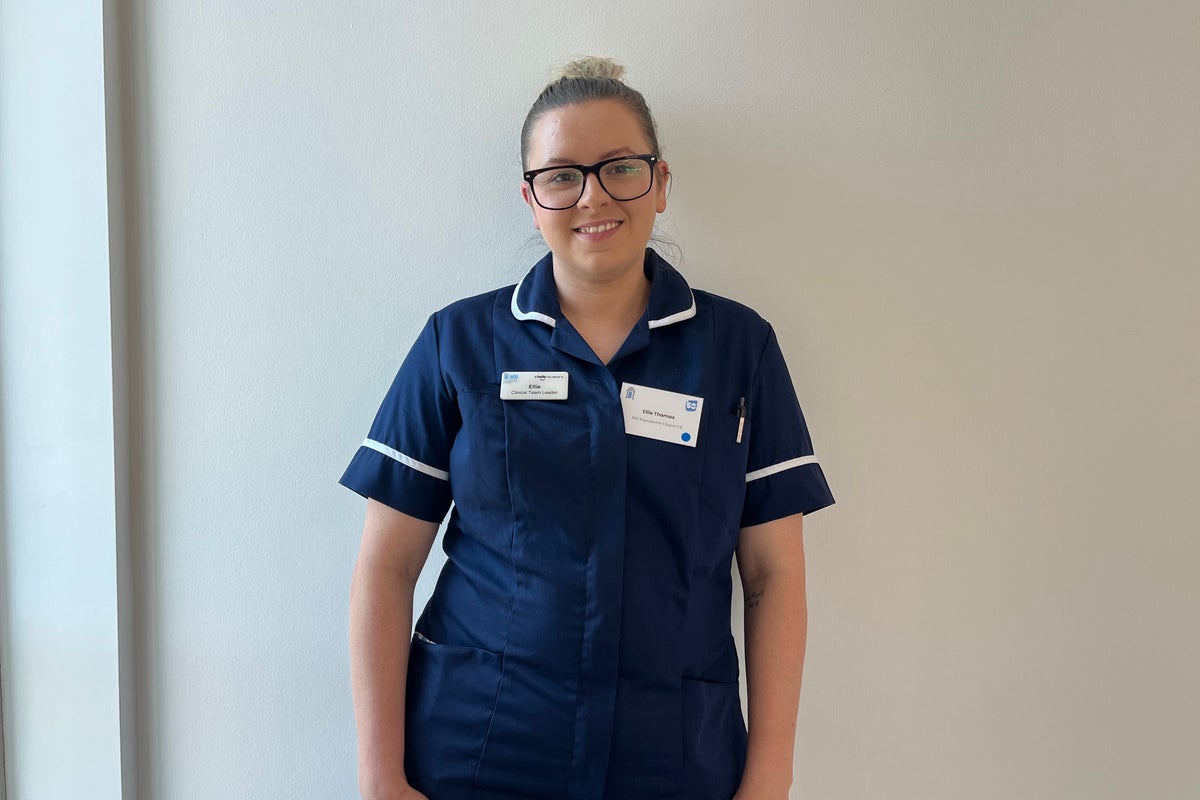
Abortion care shouldn’t feel like something that only happens in back alleys,” says former midwife Ellie Thomas. “It’s a healthcare right that everyone is entitled to – it shouldn’t be something we shy away from.”
Thomas, who left the NHS last year, is now a clinical team leader at the UK’s first purpose-built abortion clinic, on the outskirts of Birmingham. And while most abortion clinics are tucked away in the back of faceless commercial buildings or converted old houses, you can’t miss this one.
The three-storey glass-fronted building has a huge sign across the outside declaring it is the West Midlands regional treatment centre of the charity MSI Reproductive Choices, one of the biggest providers of NHS-funded abortions in the country.
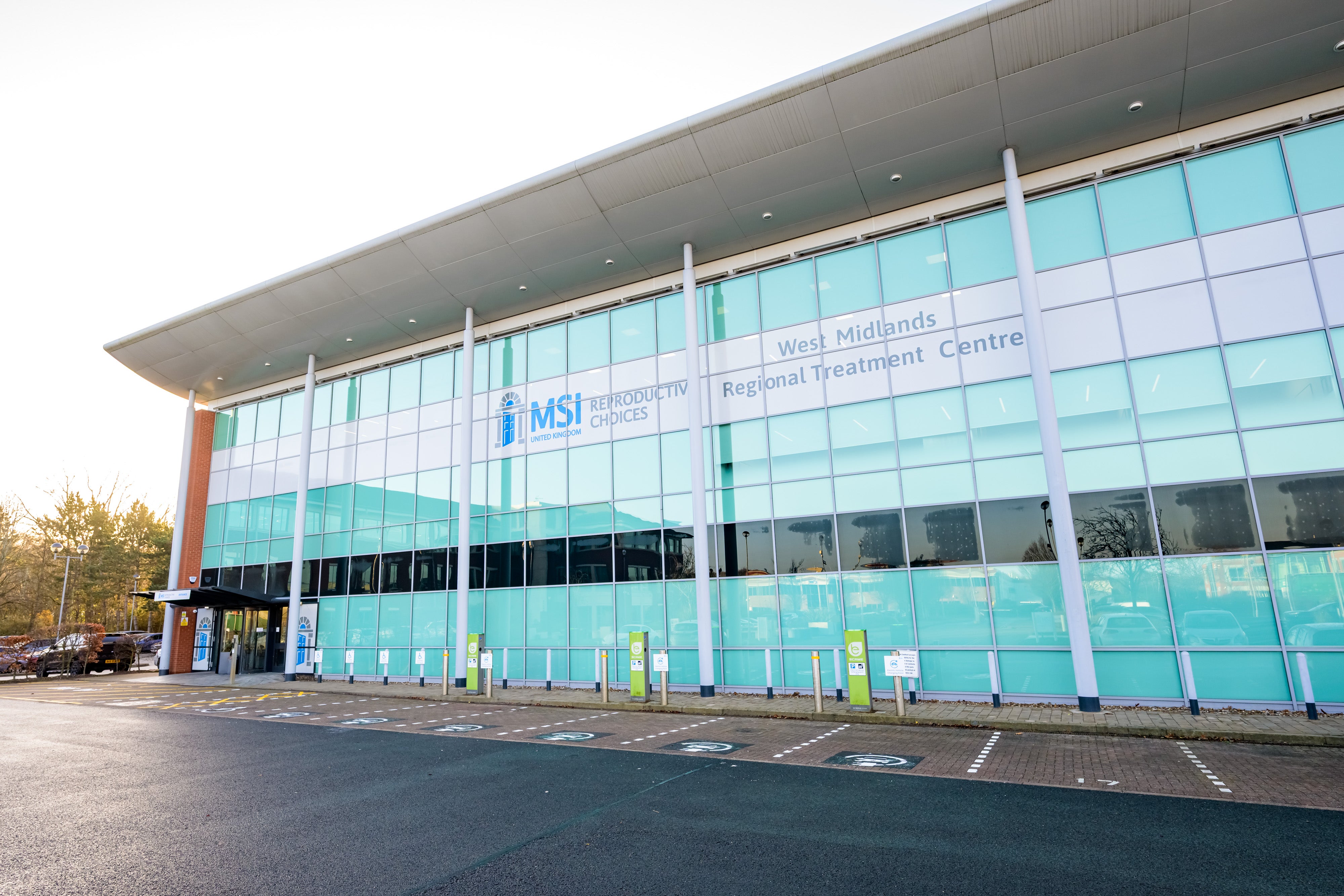 Most abortion clinics are set away from prying eyes; MSI is the opposite – while also protecting women from anti-choice protestors (MSI)
“It’s about destigmatising abortion care,” explains Thomas. “You can’t miss this building – we’re open about what we do. There’s nothing about [coming here] that feels like a ‘dirty secret’.”
But women remain protected from any anti-choice protestors by its clever positioning. The legal 150-metre “buffer zone” around abortion clinics means any protestors have to stand beside a busy dual carriageway around the corner (and there are none in sight on the day I visit). Women can drive or get a taxi straight into its car park – well inside the buffer zone – or catch a short bus from the nearby train station or Birmingham International Airport.
The centre, which started operating at the beginning of this year, is designed specifically to cut waiting times (for women seeking an abortion, time is never on their side) and to improve the quality of care and experience for patients. They travel from all over the country for abortion care here – which is largely paid for by the NHS.
Being able to see women quickly is critical with abortion care, which requires more complex treatment and carries a greater risk of complications the longer a pregnancy goes on. While there are no official national figures on abortion waiting times in England, MSI’s data shows women wait an average of five days for an appointment at its clinics nationwide. At the new purpose-built clinic, average waiting times are 40 per cent lower, at just three days.
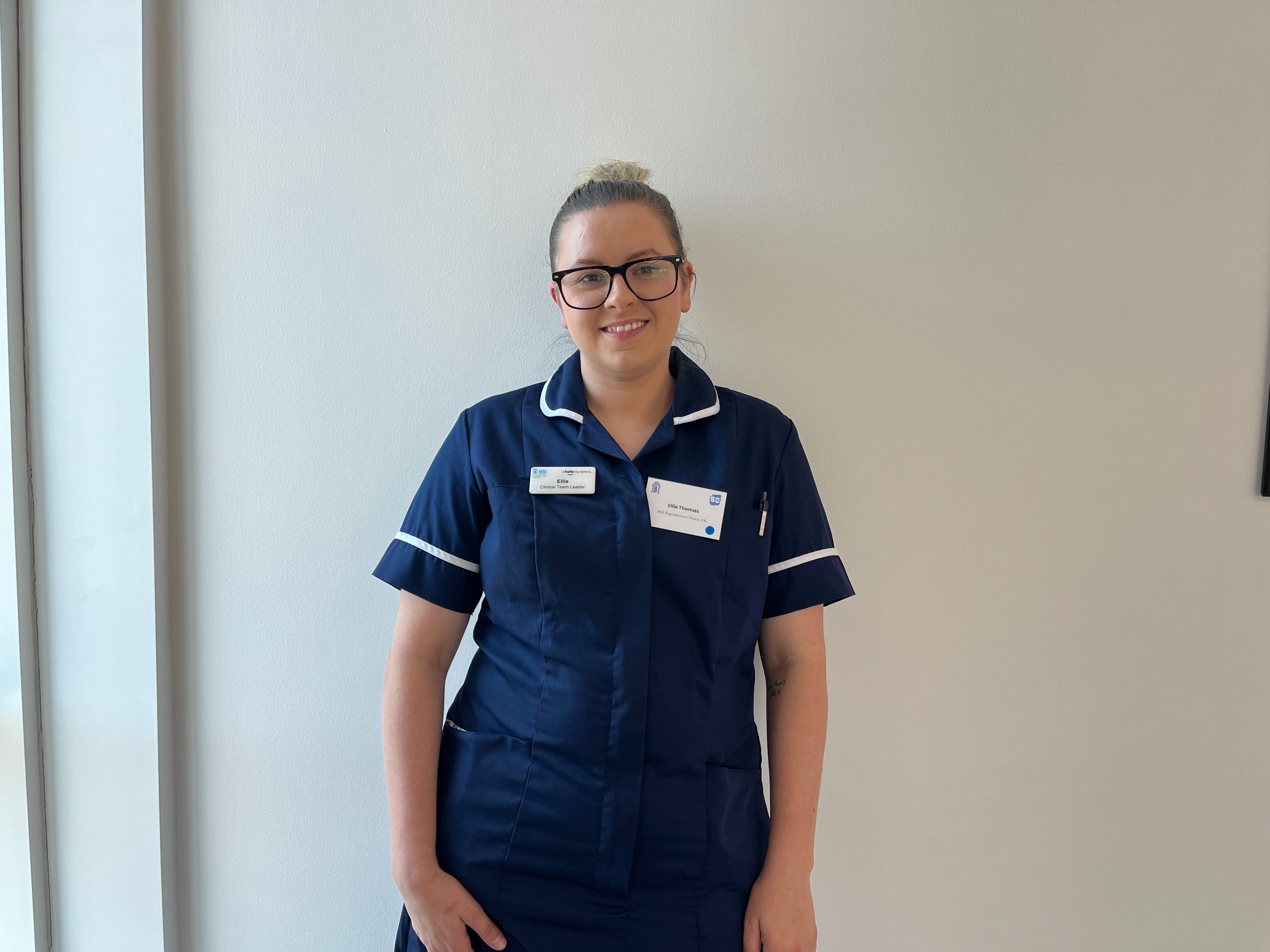 ‘You can’t miss us’: MSI’s clinical team leader, Ellie Thomas, says they are destigmatising abortion care (MSI)
That is because it is the first clinic in the UK to have two separate state-of-the-art operating theatres, both wholly dedicated to providing abortions and which can run daytime, evenings and weekends. It means the team can provide up to 36 surgical abortions every day.
This figure astonishes a group of NHS gynaecologists who visit the clinic with me for its official opening in early July. “We’re lucky if we get two or three slots a week,” explains one doctor working at an NHS hospital in the north of England, who says she has to fit in surgical abortions around other procedures like hysterectomies.
“We try not to cancel them because we know how time-dependent they are, but it can be so hard to fight for the time,” she adds.
And with demand rising sharply, it’s vital we find more capacity to provide timely abortion care. A record 277,970 abortions were performed in England and Wales in 2023, up by 11 per cent on the previous year and up by 30 per cent on 2021, according to the latest official government figures. In 2020, MSI treated 60,000 women across the UK. Next year, it expects to treat 110,000.
Economic pressure and the rising cost of living are shaping women’s reproductive choices
Dr Alison Wright, president, Royal College of Obstetricians and Gynaecologists
Dr Alison Wright, president of the Royal College of Obstetricians and Gynaecologists, believes factors driving the increase include difficulties accessing GP and sexual health clinic appointments for contraception and financial strain on families. “Economic pressure and the rising cost of living are shaping women’s reproductive choices,” she adds.
Financial struggles were the reason mother-of-two Jade*, 36, had an abortion at the new clinic earlier this year. When she discovered she was pregnant, she knew she and her long-term partner would not be able to afford to have another child. “We were struggling financially and having our baby would have put us into further poverty. We couldn’t do that to our family – it broke our hearts,” she said.
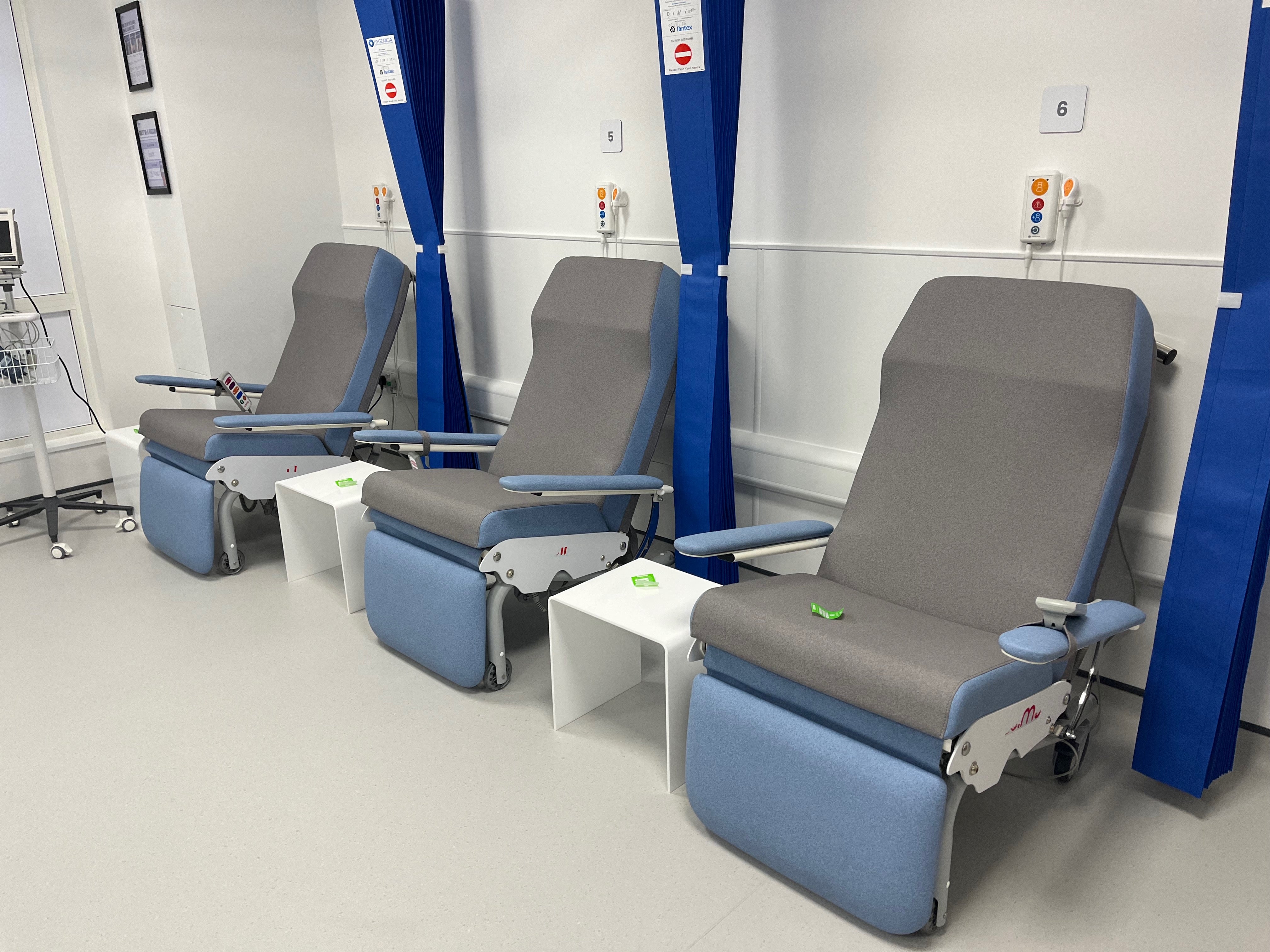 MSI’s post-surgery rest area where women can recover in privacy or talk with others (MSI)
Having made her decision, she followed a friend’s recommendation and contacted MSI via its online self-referral form. “I went in for my first appointment the next day and booked in for the surgical abortion within the same week,” she says.
When any woman from anywhere in the country contacts MSI or another abortion provider, such as BPAS or NUPAS, they will be referred to whichever provider has a contract with their local NHS health board, which will fund the abortion.
Only around 2 per cent of MSI’s clients pay privately – mainly those who have travelled from overseas, often from Ireland, the USA or Dubai.
I went in for my first appointment the next day and booked in for the surgical abortion within the same week
Jade*
Jade says the care she received at the clinic made her feel less upset. “The staff were absolutely lovely. They were kind, caring, and had no judgement at all,” she adds. “While I wish I wasn’t in this position, I can hand on heart say I’m so glad I chose MSI for this procedure.”
Like Jade, many women seeking abortion are in their late thirties or forties who already have families. Official statistics show the rate of abortions in women aged 35 and older was 12.3 per 1,000 women in 2023, up from 10.5 two years previously. The rates of abortions in under-18s have declined over the last decade, dropping from 12.8 per 1,000 women in 2012 to 7.6 by 2022.
It’s a pattern which Thomas sees reflected at the clinic. “A lot of our clients have children already and feel their families are complete, or they just can’t afford to have more children,” she says. “Some are women who thought they were in menopause, or whose husbands had a vasectomy but it didn’t work.” The centre also sees victims of domestic abuse and people with substance addiction.
Around eight women had surgery at the clinic that morning but when I visited in the afternoon – when it was closed to patients – it’s so spotless it looks like it has never been used. We walk through the lobby, which is designed to feel more like a luxury hotel than a hospital, into the waiting area for surgical abortion care.
Inside, it is just like any other hospital clinic. But Ivari Kare, who was part of the team overseeing the build, shows me separate quiet waiting areas with dimmed lights and noise-reducing headphones, where people with neurodiversity or who are having a termination for medical reasons can wait in private.
“There was a lot of back-and-forth with clinicians to make sure all the facilities worked for everyone,” he explains.
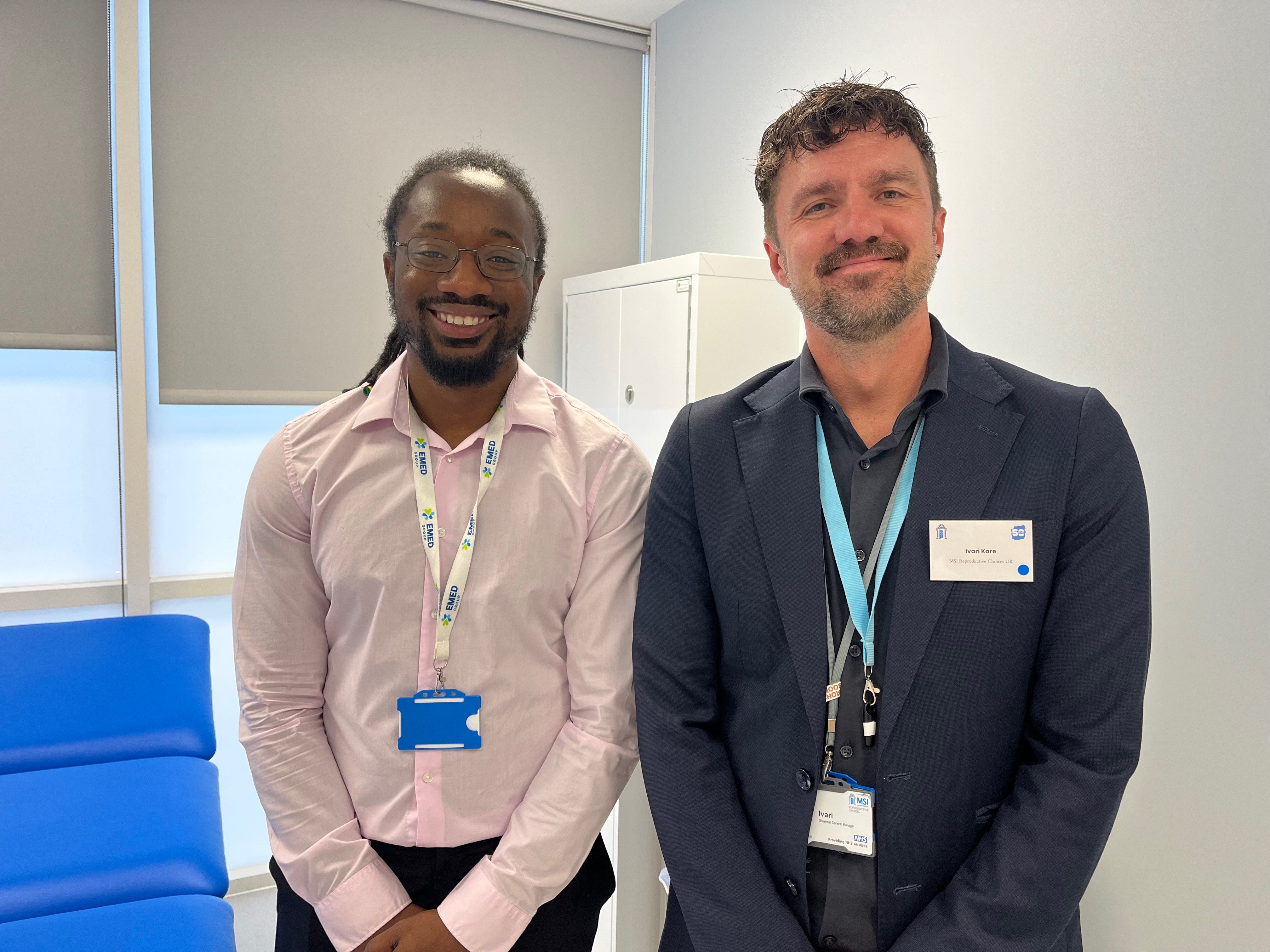 Kelvin Arkoh-Zwennes and Ivari Kare, who helped oversee MSI’s development (MSI)
Upstairs, a separate clinic provides medical abortions in private consultation rooms. Here, women are given health checks and guided through the process. They will usually take initial medication at the clinic and then be given a second medication to take at home, where the abortion will take place – but they can call a 24-hour support line or have an in-person follow-up if needed. On some days, the upstairs clinic is closed to women and only treats men having vasectomies in a specialist treatment room.
Back on the secure ground floor, we walk from the waiting room through to a changing area and then into the operating theatre, where women are usually put under general anaesthetic for surgery. Afterwards, in a recovery room next door, they are given pain relief and long-term contraception like an implant, if they choose.
Then, they rest on reclining chairs in a communal area with a TV for at least an hour until they feel well enough to leave. While there are curtains for privacy, Thomas says many women prefer to chat. “They find it reassuring there’s someone who knows what they have gone through,” she says. “Sometimes they even swap phone numbers to stay in touch.”
Sarah*, 34, from North Yorkshire, wishes she had been able to attend a clinic like this for her medical abortion. Instead, she was told by a different local abortion care provider that her only option was to be sent medication to use at home.
“Telemedicine” abortions were introduced in the UK during the Covid-19 pandemic and mean women who are less than 10 weeks pregnant can be sent drugs to take at home. While many women prefer this, Sarah – who already has a three-year-old son – felt isolated and struggled without pain relief.
“I felt worried doing something that felt so medical on my own at home,” she says. “After I’d been in unbearable pain for 12 hours I went to A&E, where I had to sit under bright lights for seven hours during such a vulnerable time. It really felt inhumane.
“I would have loved to have been able to go into a clinic and have someone to guide me through it – if I had been given the option to go in, even if I had to travel, I would have taken it.”
*Names have been changed