
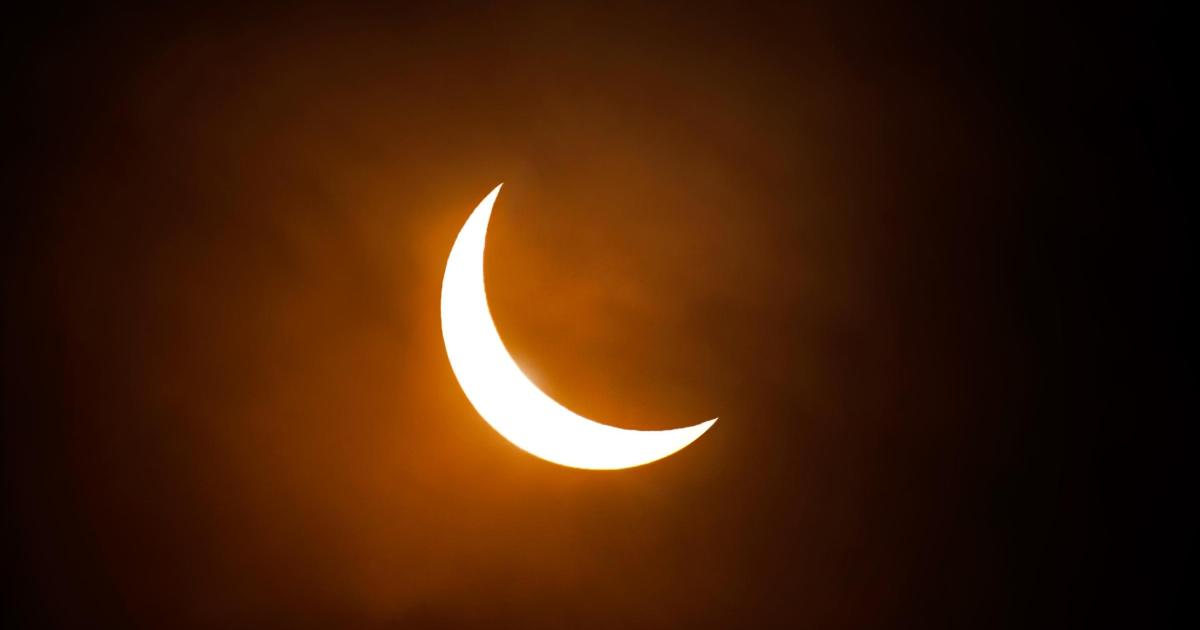
Millions across the UK will witness a partial solar eclipse this summer, which will be visible in just a few weeks.
Here is when it will take place and some of the best parts of Cornwall to go to see it.
Cornwall is among UK’s best places to see 2026 solar eclipse
The Independent shared its picks for the best places in the country to see the upcoming spectacle.
Included on the list was Cornwall, with the publisher writing: “Summer crowds in Cornwall are likely to see up to a 95% solar eclipse from 6.18pm, with a maximum sun coverage at 7.16pm.
“Watch from open-sky spots from The Lizard peninsula to Land’s End.”
With its coastal setting and low light pollution, Cornwall offers ideal conditions for stargazing and astrophotography.
Two areas stand out in particular: Bodmin Moor and West Penwith.
Both are designated International Dark Sky Parks, with Bodmin Moor receiving its designation in 2017 and West Penwith following in 2021.
West Penwith stretches from the outskirts of St Ives around the Tin Coast, Land’s End, and down to Mousehole.
Meanwhile, Bodmin Moor covers 434 square kilometres, and its wild, isolated terrain provides some of the lowest light pollution in the UK
Lanyon Quoit is a Neolithic dolmen in the West Penwith dark sky site (Image: Getty Images)
The International Dark Sky Places Conservation Programme was founded in 2001 to “encourage communities, parks and protected areas around the world to preserve and protect dark sites through initiatives including responsible lighting policies and public education”, the Cornish Secrets website explains.
Both locations offer naturally dark skies with minimal light interference, making them some of the best places in the world to view star-studded skies.
Colliford Lake and Carnewas at Bedruthan Steps are among the most accessible spots in Cornwall for viewing the eclipse.
Other top places include St Agnes Head and Godrevy.
When is the 2026 solar eclipse in the UK?
The partial solar eclipse will take place on Wednesday, August 12.
Although the UK will miss out on the path of totality, where the Sun is completely covered, much of the country will still experience dramatic partial darkness.
In London, the eclipse will begin around 6.17pm, reach maximum coverage at 7.13pm, and end at 8.06pm with 91% of the Sun covered.
The effect will be similar across the country, with an eerie twilight falling over much of Britain during the eclipse.
Astronomers have advised people to never look directly at the Sun without certified eclipse glasses or proper solar filters, stressing that this rule applies even when most of the Sun is hidden.
Anyone planning to watch the event is advised to find a location far from streetlights and to allow their eyes about 20 minutes to adjust to the darkness.
Astronomers also reminded the public never to look directly at the Sun, even during an eclipse, without certified eclipse glasses or a suitable solar filter.
Will you be watching the solar eclipse next month? Let us know in the comments.