
In recent weeks, shorelines around Wales have been littered with unaccustomed visitors, from Mediterranean sea hares to swarms of purple By-the-wind sailors (Velella).
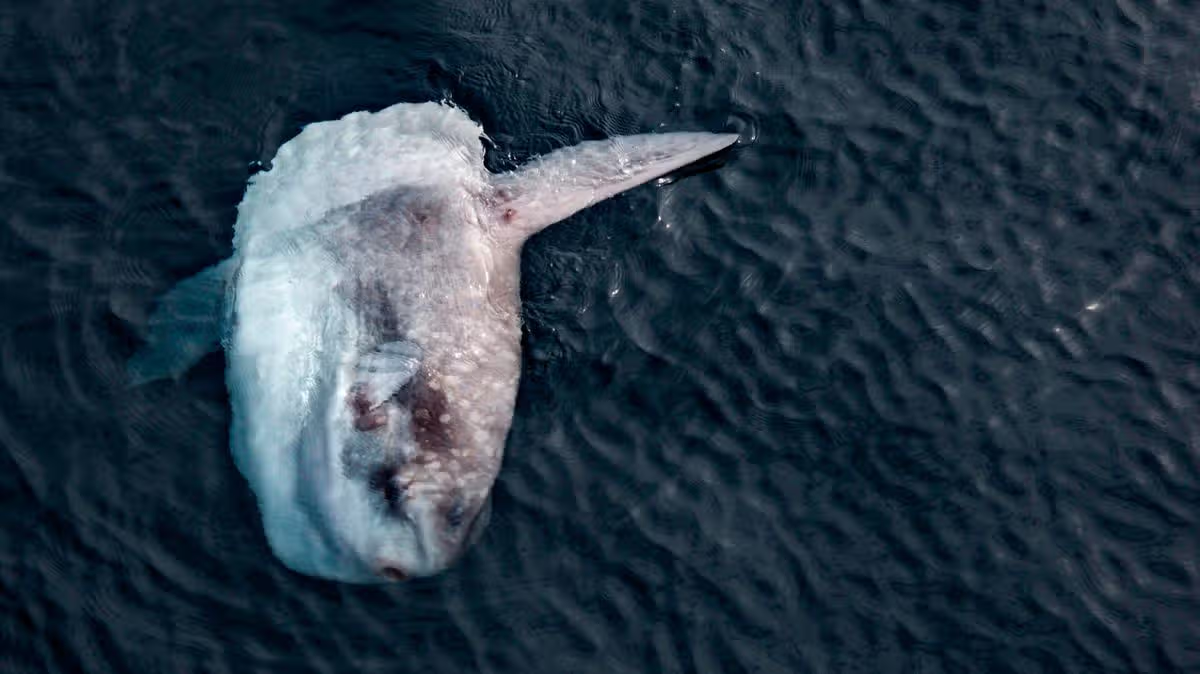
A Minke whale was seen off the Ceredigion coast and a Grey Triggerfish was snared by crab potters off Anglesey. Most remarkably of all, multiple sightings have been made of Ocean Sunfish, the world’s second largest bony fish. It resembles a real-life Pokémon.
During this summer of heatwaves, the seas have turned brown with algal blooms and rivers supplying them have dried up. Marine bioluminescence displays have been particularly impressive.
At Anglesey Sea Zoo (ASZ), chillers were turned on a month earlier than in 2022 to cool the incoming sea water that’s used to display its exhibits. Sign up for the North Wales Live newsletter sent twice daily to your inbox
The UK’s seas are in the grip of a record marine heatwave that, in the months and years to come, could have far-reaching consequences. Increasingly, exotic creatures are arriving and the warming seas are threatening Cod, the fish-and-chip staple.
Throw into the mix an El Niño year, a natural climate pattern triggering extreme weather events, and it “could be that worse is yet to come”, according to Frankie Hobro, ASZ owner and director.
She said: “If the marine heatwave which started in spring persists through the summer, after so little time with reduced temperatures, it may have implications for sealife across the planet, also affecting seafood production and fishing stocks – which feed three billion people.”
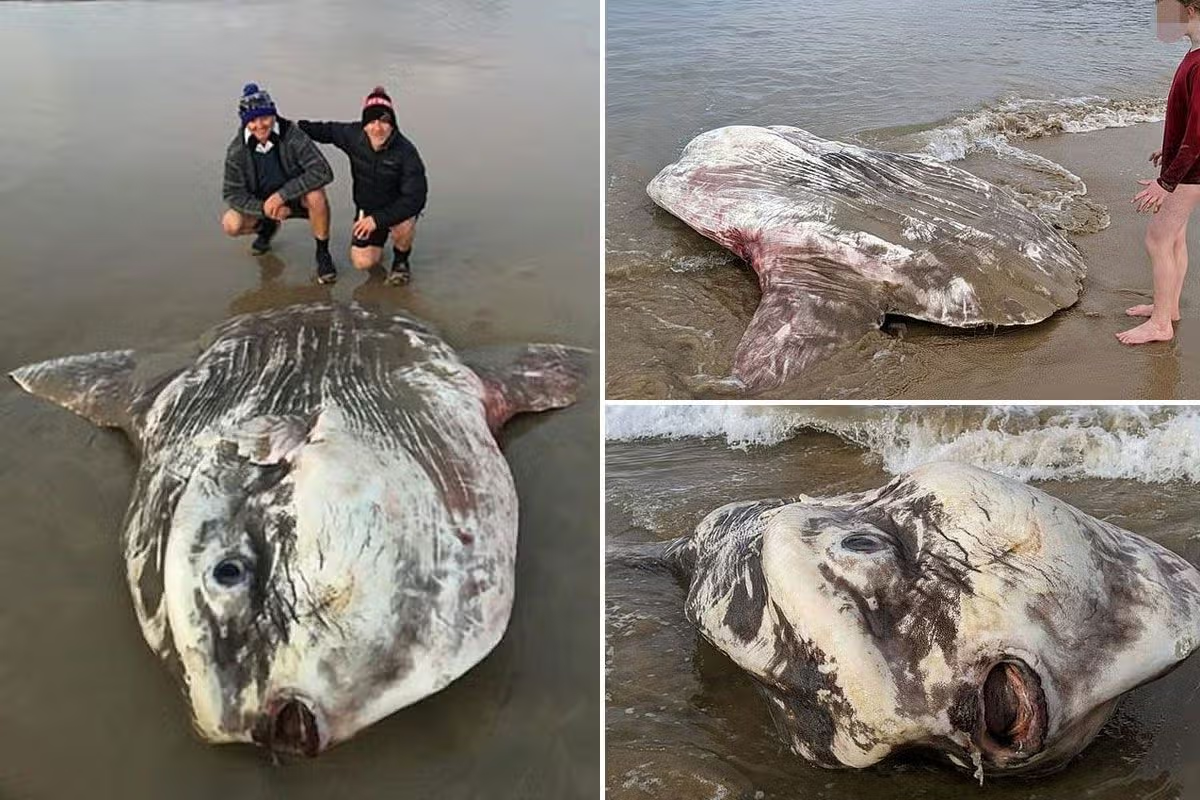
A giant Ocean sunfish washed up on a popular Australian beach on Victoria’s south-west coast(Image: BBC)
So far this summer, perhaps the most striking example of this warming trend is the Ocean Sunfish. These are relatively widespread in temperate and tropical seas, but they spend much of their time in deeper water between 200-600 metres.
They will come to the surface to bask and warm up, looking ungainly and otherworldly: with a flattened, almost circular body and a tall dorsal fin and no true tail, they’ve been likened to a “swimming dinner‑plate”.
Occasionally seen off the Welsh coast, sightings have suddenly become more prolific. In late June, two were spotted at Mwnt, Ceredigion, and Dinas Head, Pembrokeshire. Ten days later, another was sighted off Aberporth.
Soon after, a Sunfish was seen lolling in the water in Anglesey’s Porth Llechog (Bull Bay). A week later came a sighting from Abermenai Point, the island’ southernmost spot.
They can grow to colossal sizes – the largest on record was a Sunfish washed ashore in New Zealand measuring almost 11ft and weighing 2,300kg. Those seen in UK waters tend to range in size from dinner plate to dustbin lid.
Frankie said it was “amazingly rare” to see them, adding: “They’ve most likely risen to the surface due to the heat, as they feed on the Moon jellyfish.” That’s the other thing about warming seas – lots of jellies.
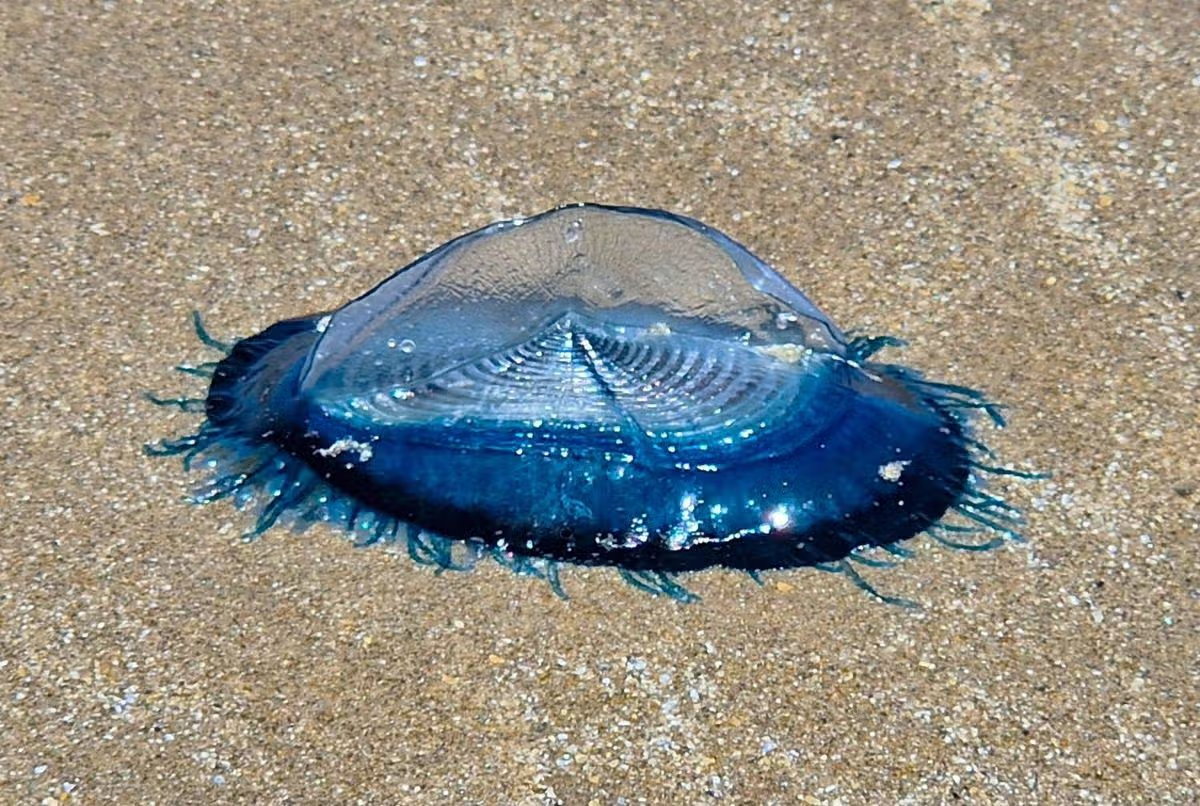
A By-the-wind Sailor washed up near Rhosneigr, Anglesey, in late June(Image: Curt Anstey)
UK waters charging up ‘like battery’
According to the Met Office scientists, last year’s marine heatwave was “particularly exceptional”, persisting for more than three-quarters of the year. Currently sea temperatures are on average 2C warmer than usual, with 5C anomalies recorded on parts of the Welsh and English coasts.
At the same time, cold marine conditions have become increasingly rare – the last cold spell in UK waters occurred during the Beast from the East in 2018. This trend is luring exotic species to move north. A classic example is the octopus, now an increasingly common sight.
It’s also affecting the weather, driving heavier rain, more powerful storms and destructive coastal flooding. According to the Met Office, UK seas are particularly vulnerable to rising air temperatures.
The forecaster said: “The waters surrounding the UK are relatively shallow compared with many parts of the world’s oceans. Much of the North Sea, for example, is shallower than the height of the Eiffel Tower.”
Combined with strong tidal currents, this enables heat to be trapped and mixed from surface to seabed, storing energy for longer like a giant battery.
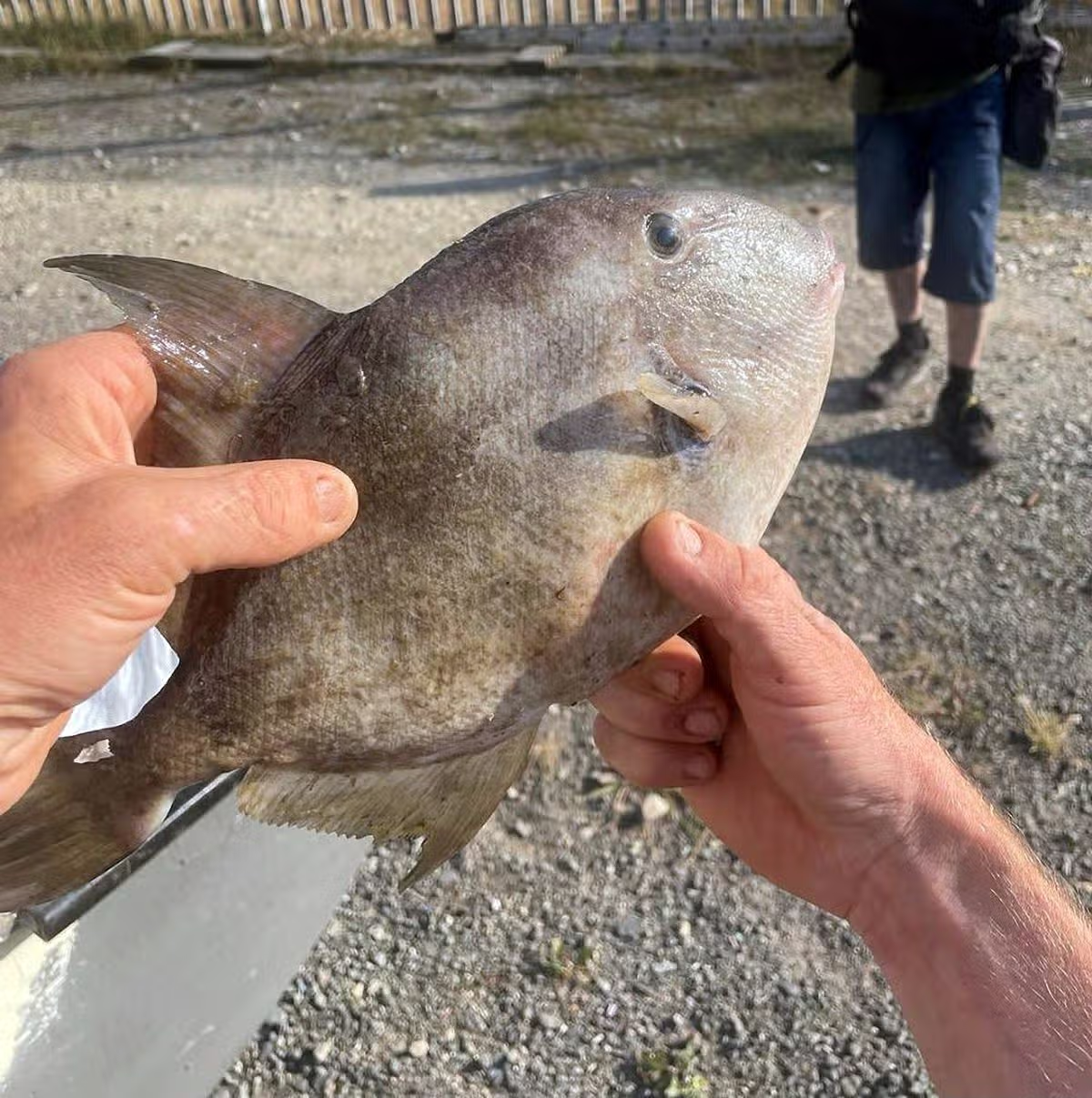
Grey Triggerfish at Porthdafarch caught by crab fishermen off the north coast of Anglesey last week(Image: Licence To Grill)
Frankie expects warming seas to bring rarer marine creatures to Welsh shores, such as the tiny rainbow sea slug found for the first time in UK waters in 2024.
Already, species like trigger fish, pufferfish and Loggerhead turtles are being spotted more regularly. It’s said that trigger fish were once common near Anglesey’s nuclear power station at Wylfa, attracted by warmed water from its outflow.
Other warm water species becoming regular visitors to our shores include Bluefin tuna and Shortfin mako, the world’s fastest swimming shark. New – and still rare arrivals – have included non-aggressive smalltooth sand tiger sharks, normally warm water species.
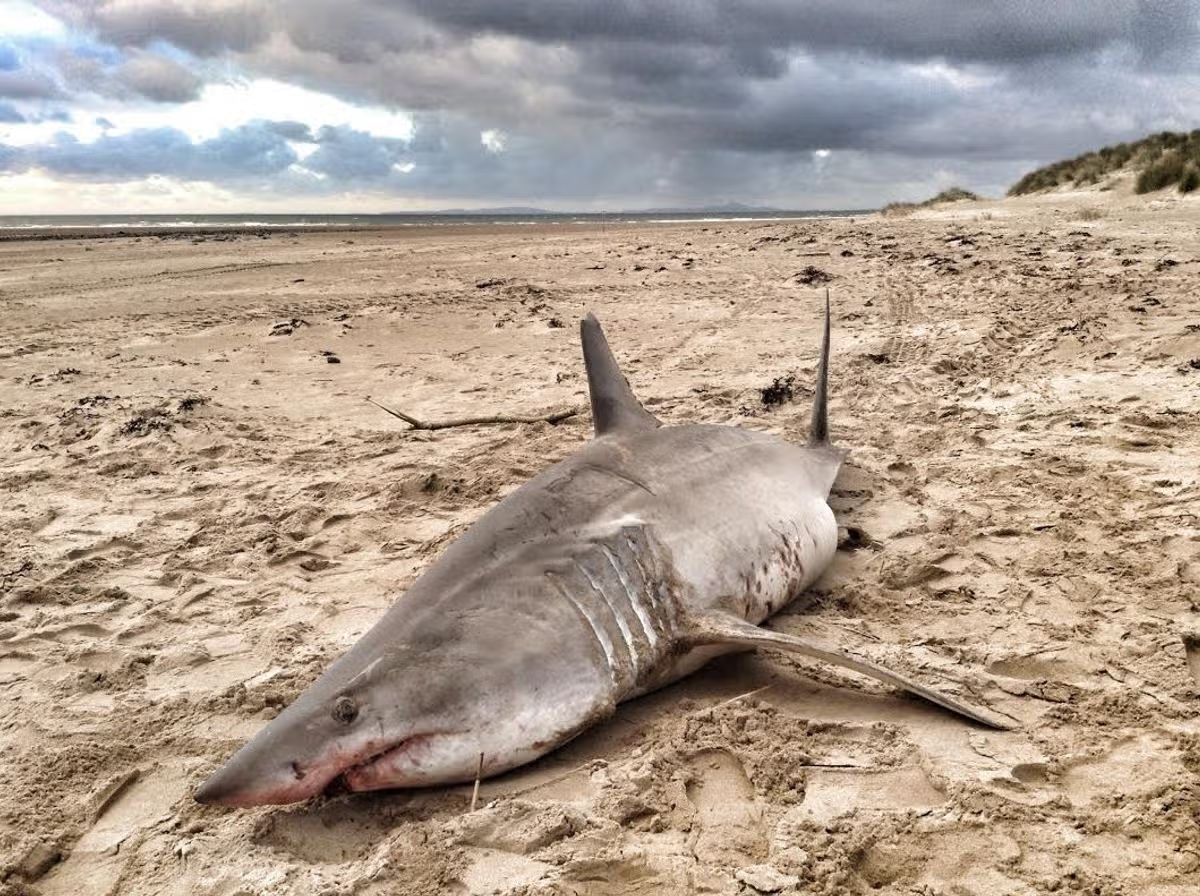
A Mako shark washed up on Barmouth beach a few years ago(Image: Daniel RG Griffith )
Nasties heading our way
As well as the “desirable ones”, some incomers are likely to be venomous, said Frankie. The classic example is Portuguese Man O’ War whose sting causes excruciating whip-like weals.
She said: “These creatures used to be occasional vagrants as juveniles but they will become much more common. Many more, much larger individuals should be expected…. their tentacles can grow up to 160ft long, equivalent to the size of five double-decker buses.”
Another creature to watch out for is the weever fish, the UK’s only venomous fish. They may look innocent but they are masters of disguise and their stings are beyond painful, sometimes requiring hospital treatment.
Mercifully, sting reports on the Welsh coast have been lower than usual this year, so far. Perhaps this is because weever fish messaging is working – to wear beach shoes such as flip flops or Crocs.
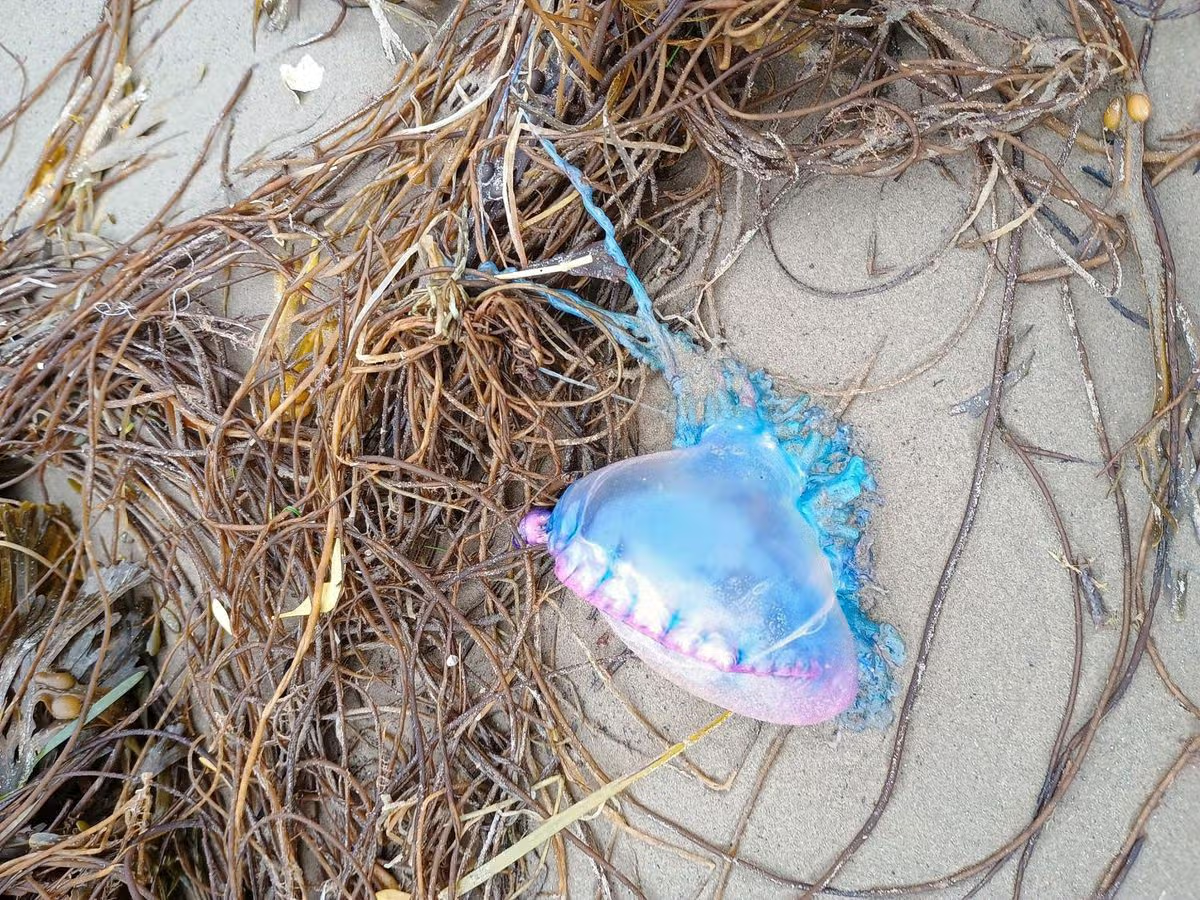
Juvenile Portugese man o’ war washed up in Gwynedd last year(Image: Cyngor Gwynedd)
Cold shock threat
A consequence of warming seas is the potential for cold shock when conditions suddenly change. Severe Atlantic storms in autumn are becoming more common, trapping warm water species that have ventured further north.
These include turtles, and in recent years Anglesey Sea Zoo has brought several back from the brink of death before releasing them back in warmer waters. It’s a process that can take a year or longer.
Due to the increased number of cold-stunned turtles washing up on UK shores, the zoo is fundraising to build the country’s first dedicated turtle rescue and rehabilitation centre.
Frankie added: “Ocean heatwaves have caused mass mortalities of marine plants and animals in other parts of the world. Here in the UK, our cold-infused waters have long been thought to be much less vulnerable.
“Marine biologists don’t believe temperatures have reached lethal levels off Britain’s coasts yet, but should they continue to rise, that may change. For the sea creatures within, there will be no escape from the heat.”