
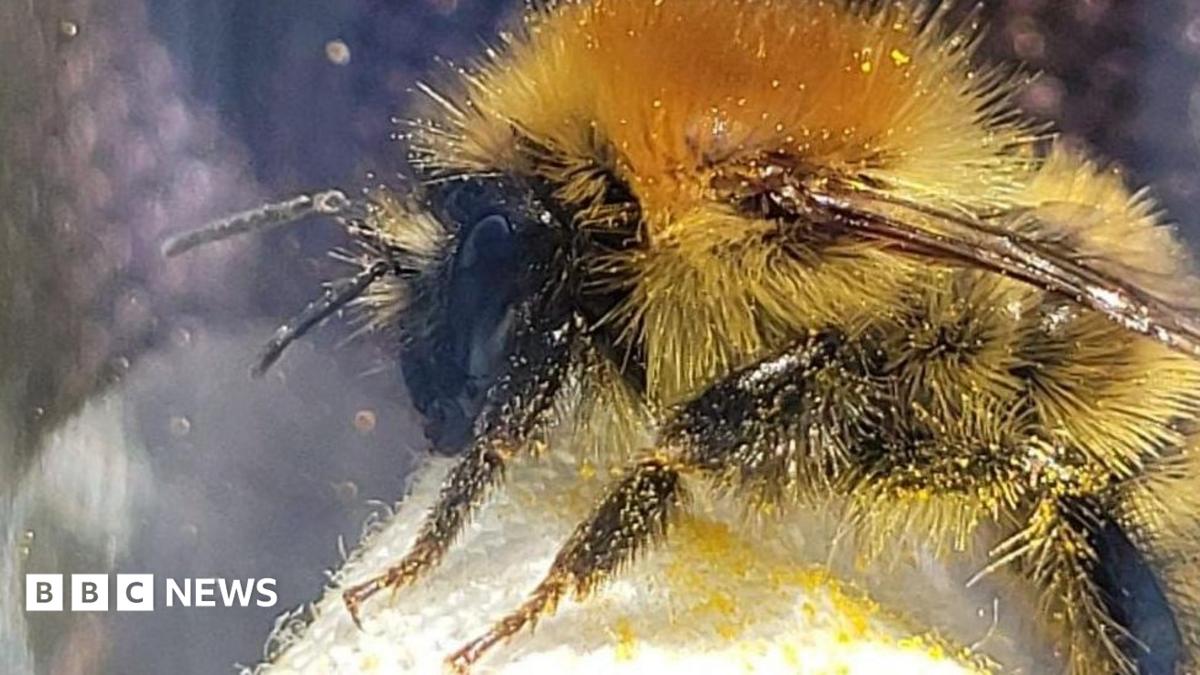
Cook said the Moss Carder relied on areas with “plentiful wildflowers and little intensive farming”.
She said: “They are really important pollinators of our wild landscapes.
“They have longer tongues than a lot of other bees, so they can reach parts that other bees can’t and they go to flowers that other bees don’t bother with.”
Laura Larkin, assistant England manager for Buglife, based in Plymouth, said bumblebees were facing a range of pressures.
She said: “Since the 1940s, we’ve lost more than 97% of our flower-rich habitat.
“The places that do remain are isolated from each other and you’ve not got that connectivity.”
Larkin said people could also help struggling pollinators.
“Anybody can make a difference. By doing lots of small actions, putting more flowers in your garden and not using chemicals, every little thing will help.”
Follow BBC Cornwall on X, external, Facebook, external and Instagram, external. Send your story ideas to spotlight@bbc.co.uk, external.