
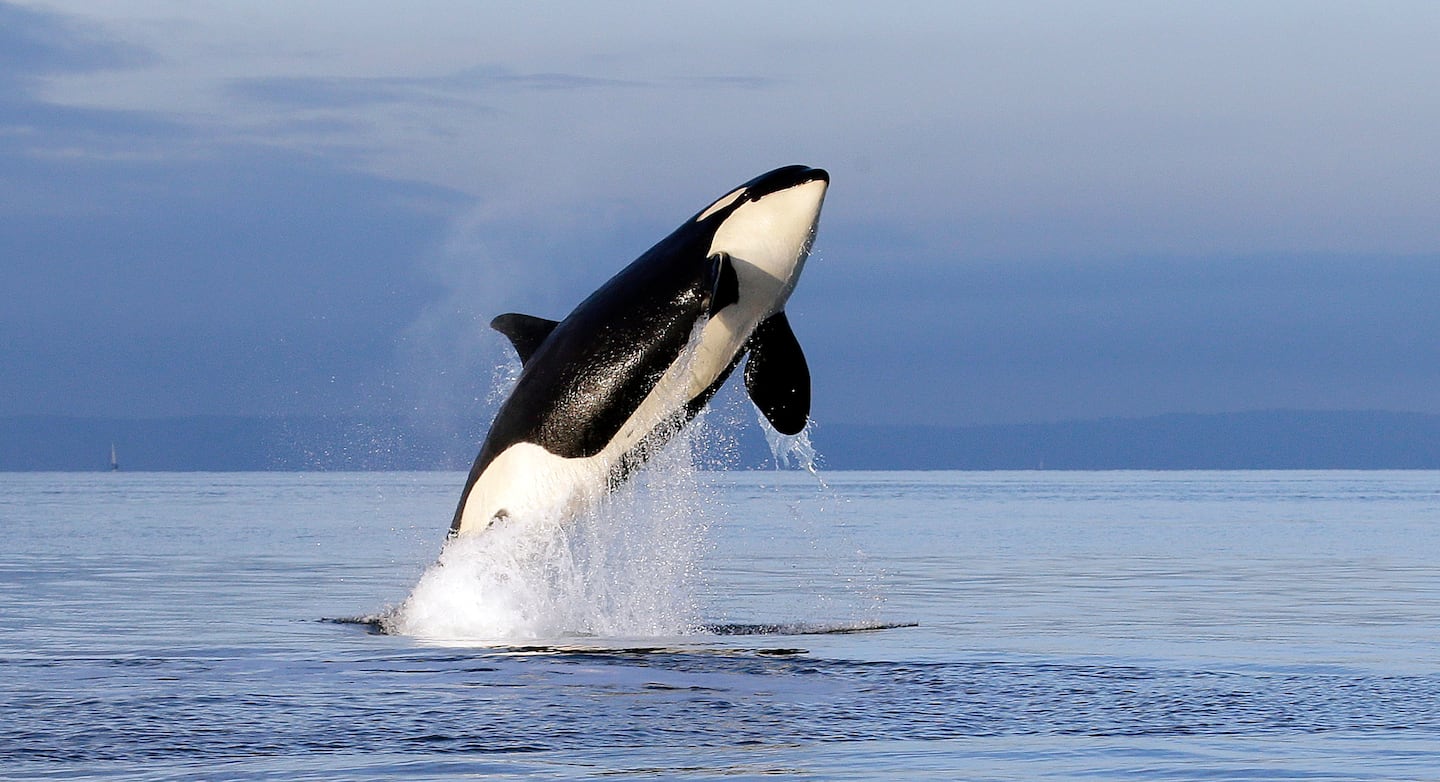
The video, captured in 2024 by research scientist Kathryn Ayres off the coast of Baja California Sur in Mexico, was included in a research paper posted Wednesday and quickly went viral, as people marveled at the orcas’ merciless teamwork, either for feeding efficiency or, perhaps, a bit of fun.
Another video taken last year by tour operator Héctor Franz, of Creatures of Baja, showed a similar attack in the channel of Isla Cerralvo and was included in the study as well.
The orca, or killer whale, is not a whale at all but the largest species of dolphin. It was given its nickname by Basque whalers who observed the species frequently feasting on the carcass of hunted whales, said John Durban, a senior scientist with the Anderson Cabot Center for Ocean Life at the New England Aquarium.
Durban, who has been studying orcas for 35 years, is at once “amazed” by the video yet “not surprised.”
“They’re incredibly capable,” Durban said. “They learn from each other and do these cooperative behaviors to eat things that are difficult to eat.”
Dr. Deborah Giles, a whale scientist at the SeaDoc Society in Washington state who specializes in orcas, said the ramming technique is a sure way to take out the prey without being vulnerable to a counterattack.
“We see ramming, this type of foraging technique, typically with larger animals with teeth,” she said
Sunfish do not have large teeth to fight back against an orca, Giles said. What they do have is very tough skin.
Killer whale attacks sunfish
Killer whale rams into a sunfish so hard that it explodes.
“One of the ways they (sunfish) remain buoyant is to have this tough gel and collagen structure,” Durban said. “So they’re really tough to break into.”
Done the old-fashioned way, the attack might have taken a toll on the orca’s teeth.
“It may be that these whales are very cognizant of not grinding down their teeth on their prey, so they find other ways to open them up,” Durban said.
Hence the high-speed ramming.
“For all living things, getting a nourishing meal with the least amount of effort is a key to survival,” said Peter Girguis, a professor of organismic and evolutionary biology at Harvard University.
Much of the sunfish’s outer layer is likely not consumed by the orcas at all, according to Durban. They are breaking through the sunfish’s skin to get to the good stuff.
“They’re eating the bits that are really giving them a lot of nutrients and are easy to eat,” Durban said.
To Girguis, the sunfish is the real hero of the story.
“I’m impressed by how resilient sunfish are,” Girguis said. “They’re bad asses.”
Videos show sunfish surviving attacks from sea lions, swimming away after their predator grows weary of trying to break through the tough skin.
“In the ocean, creatures eat one another, and often when they take a bite out of a creature, that’s the end for them,” Girguis said. “But I think sunfish are so durable and so resilient that they just keep on swimming.”
Perhaps the ramming method was simply the most efficient way for the orcas to take out the hardy sunfish.
“It’d be hard for some alien to describe our behavior, and in a way that’s how I think about killer whales,” Giles said. “They’re curious animals. They love to interact with things in their environment.”
Giles said the orcas most likely vaporized the sunfish “because they can.”
As to whether or not the orcas were having a bit of fun with their food, that would be an “embarrassingly presumptuous” conclusion, Girguis said.
“They’re not playing with it,” said Durban, “they’re processing it.”
Jane Miller can be reached at jane.miller@globe.com.