
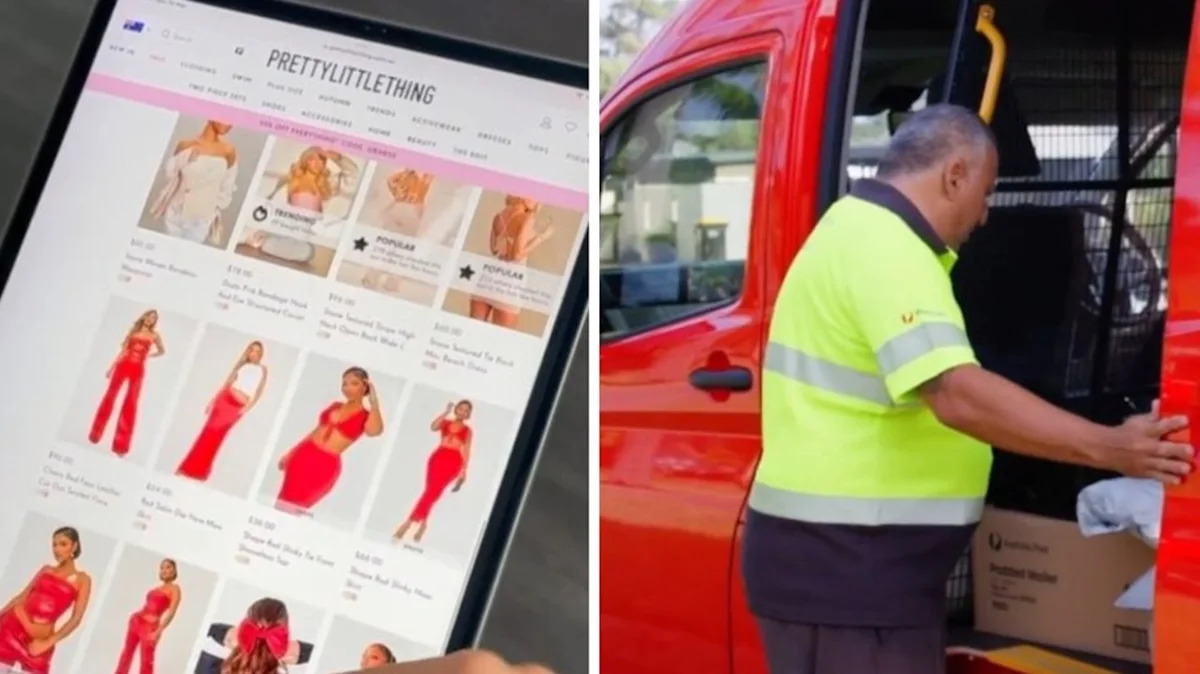
 Millennials spend the most on eCommerce.
Australians spent $21.9bn online in just three months as a key trend emerged.
The latest Australia Post Quarterly eCommerce Report found online spending rose 14 per cent year on year in the quarter, helped by end of financial year sales and a continued shift towards deal-driven shopping.
About 9.3 million Australian households bought online over the period, underlining the scale of eCommerce as household budget pressure continued to shape spending decisions.
Australians spent $21.9bn online in the final quarter of FY26, up 14 per cent year on year. Picture: Australia Post
Australia Post general manager parcel, post and eCommerce services Chelsea O’Reilly said Australian consumers were “becoming more deliberate with every dollar”.
“Shoppers are thinking more carefully about every purchase. They’re comparing options, chasing value, waiting for the right offer and expecting convenience at every step,” Ms O’Reilly said.
That shift was reflected in checkout totals, with average basket sizes falling to a low of $90.
“Average basket sizes have fallen to a record low, showing consumers remain willing to spend, but they’re becoming far more deliberate about how they do it,” Ms O’Reilly said.
The trend is also showing up in how Australians approach sales. Nearly six in 10 consumers said they never bought at full price anymore, while 58 per cent said they enjoyed the anticipation of major sale events.
The figures suggest discount periods are increasingly becoming a planned part of household spending rather than an occasional opportunity.
About 9.3 million Australian households shopped online during the quarter. Picture: Australia Post
Online marketplaces attracted the largest share of spending during the quarter, taking in $5.1bn and accounting for 42 per cent of all online purchases. Food and liquor followed with $4.4bn in online spend, while fashion reached $3.1bn.
The report also points to the continued rise of the “Lipstick Effect”, a retail pattern where shoppers cut back on larger discretionary items while continuing to spend on smaller, lower-cost indulgences.
In practical terms, that means consumers may be postponing bigger purchases while still buying affordable treats or everyday items that feel manageable within tighter budgets.
The generational breakdown shows millennials remained the biggest online spenders, contributing $7.8bn during the quarter.
Gen X followed at $6bn, while Gen Z spent $3.8bn.
Older Australians born before 1946 recorded the largest annual increase in spending of any generation, up 18 per cent year on year.
Millennials contributed $7.8bn in online spending, the largest share of any generation. Picture: Australia Post
Taken together, the figures suggest there is still strong demand in online retail, but that demand is becoming more price-conscious and strategic.
Shoppers appear to be comparing options more closely, holding out for discounts and expecting a smoother experience when they do decide to buy.