
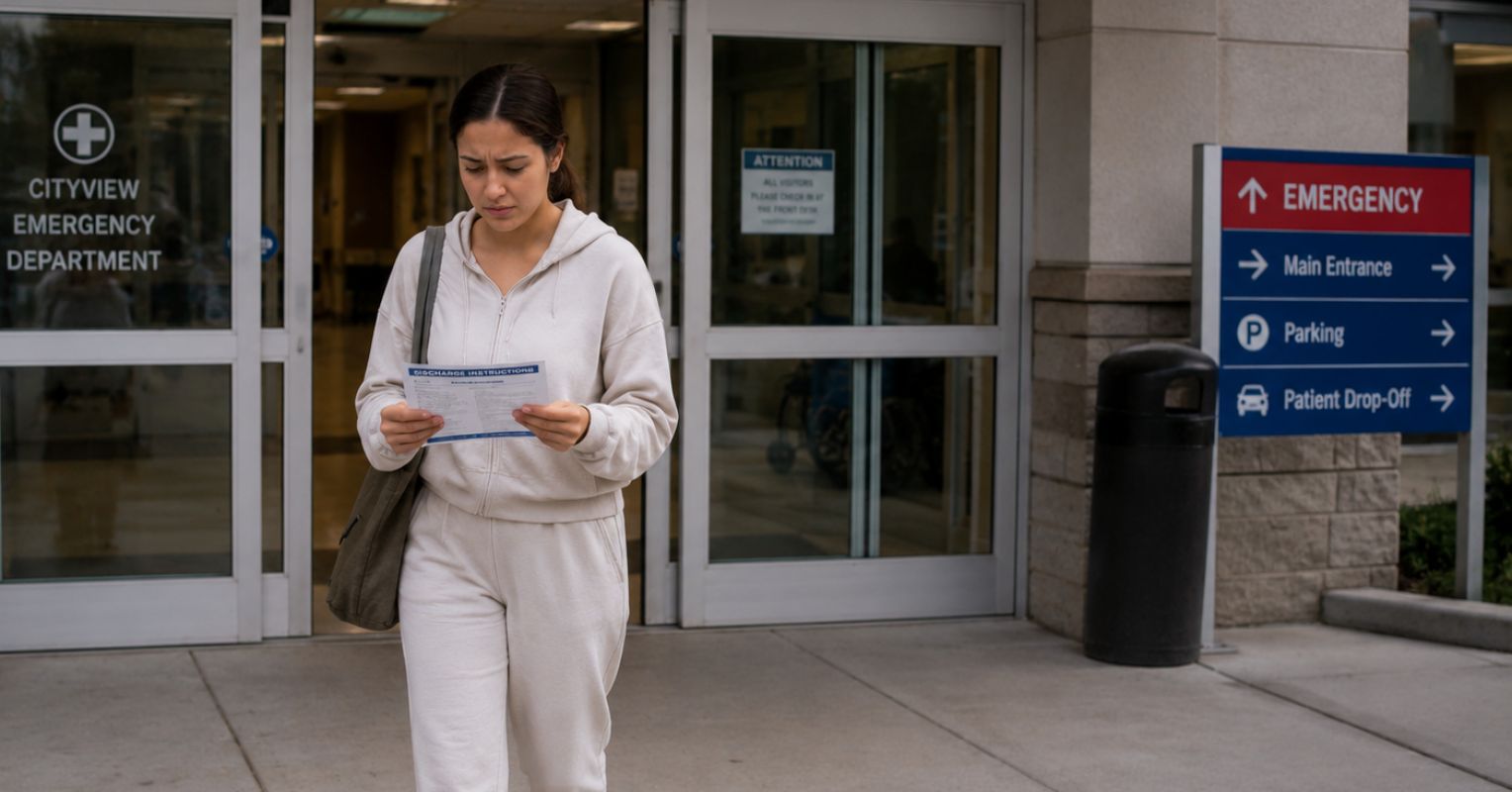
There is no real guide for when you leave the emergency room after a mental health crisis. I spent over two decades on the other side of that discharge desk. There is a reason you don’t get a discharge guide; it is because we didn’t have one to give you.
Our discharge instructions are often a few sheets of paper with some phone numbers to call for follow-up. There may be a prescription to fill at the pharmacy. The recommendation for the follow-up appointment is now for you to make.
What the ER Is Built For
The ER is very good at treating acute problems and crises. That is the part doctors train for obsessively. We stabilize patients but do not have a protocol for what happens after. You are released, and you’re on your own. This is when recovery actually begins. It is the next 24 hours, the first 2 weeks, and the following months that matter. This is when the path becomes unclear for the patients, families, and loved ones.
I watched this happen to my patients, their families, and supporting friends. Patients were sent home into the same environment that played a role in causing the crisis. I told myself the referrals would work out, and people would follow up. I had to keep moving to the next patient.
I Became a Patient
My depression didn’t start with lights and sirens; there wasn’t an admitting crisis. It was slower than that, like a constant fade of my emotions, happiness, and myself. I was able to easily rationalize away these losses because I was still showing up to work, still functioning, and still making decisions under pressure. I knew all the signs of clinical depression and could have diagnosed it in anyone else in a few minutes. Yet I ignored them all in myself until I couldn’t anymore.
I was sitting in a hospital parking lot after a long shift and just couldn’t make myself start the car. Not because something dramatic had happened. I just was exhausted and had no energy left to continue this way. The weight of going home and pretending to be present was now more than I had left in me.
That’s when I understood what my patients had been trying to tell me for years. I learned that knowing what’s wrong and being able to do something about it are not the same thing. The distance between those two things is where people fall and need help.
The First 48 Hours
If you are the patient or the person who is caring for someone, it is important to get one name and one direct phone number specifically for this next 48-hour timeframe. You need a specific person who knows what happened and who you can reach if things get worse before the first appointment. This could be a family member who’s been briefed, a primary care nurse line, or somebody with this context.
Your discharge sheet covers the basics. You need a contact for this specific situation when urgent cares are closed, family physician offices are not open, or call lines only offer automation.
There is much more to discuss regarding the gap between stabilization and recovery.
What was the hardest part of that first week that no one prepared you for?