
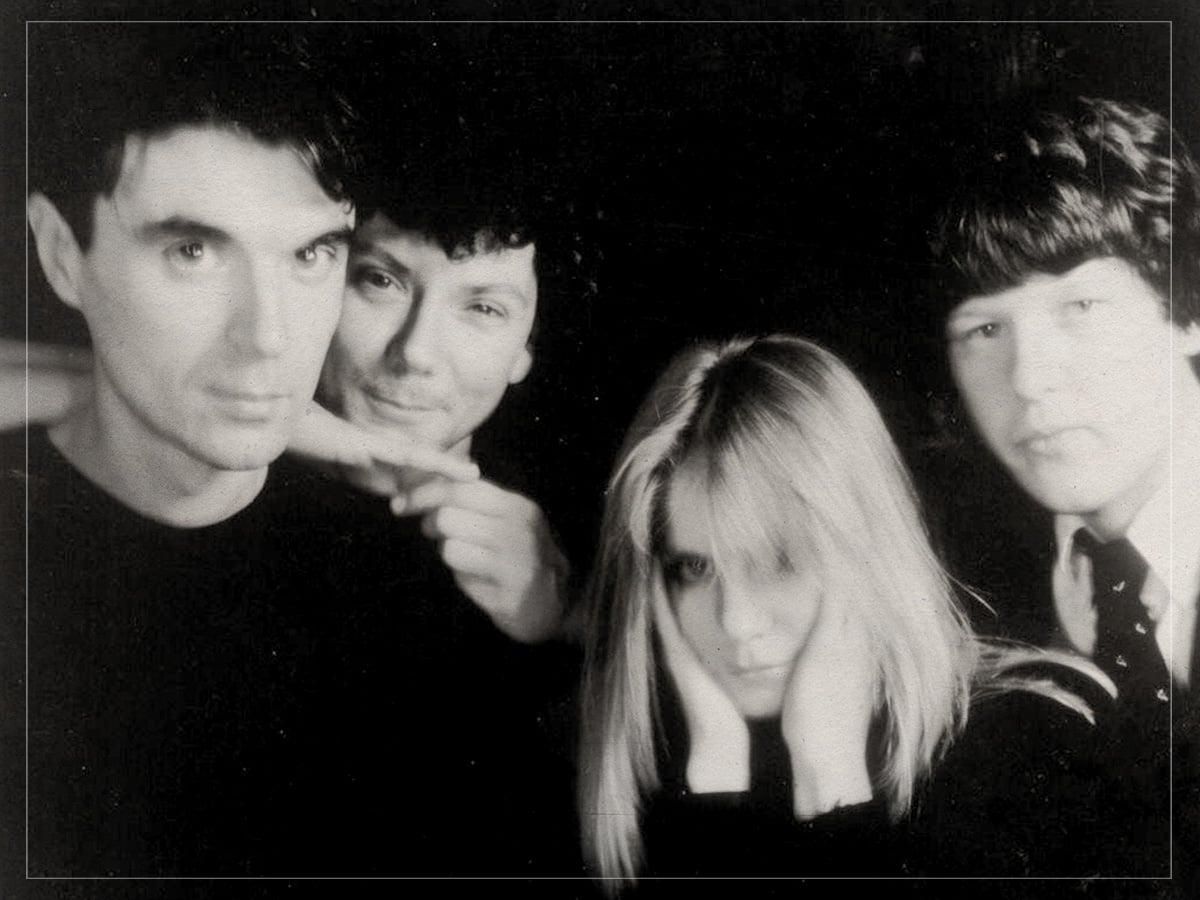
Credit: Far Out / Sire Records
Wed 29 July 2026 21:00, UK
The further you dive into the career of seminal New York art rock outfit Talking Heads, the harder it gets to describe exactly where they were coming from artistically, and the more varied their pool of influences seemed to get.
Having formed in 1973 after the dissolution of frontman David Byrne and drummer Chris Frantz’s previous project, The Artistics, Talking Heads essentially began life as a proto-punk outfit, playing with a reasonable amount of aggression while also injecting a certain sense of jankiness that would go on to become a defining characteristic of the band. However, in spite of this being their origin, things would rapidly move in a more creatively fluid direction, particularly under the mentorship and production guidance of Brian Eno.
Songs became increasingly abstract in their presentation, forming around single repeated grooves and intense rhythmic interplay, while the lyrics became considerably more obtuse. Never the sort of person to want to make things obvious, Byrne would frequently obfuscate meaning through mixing the surreal and the banal, and even in the more earnest moments, he was still known for having made things sit on the more peculiar side.
With all of this in mind, and the very obviously experimental leanings, it would probably come as a surprise to learn that Byrne was brought up on the regimented blues worship of guitarists like Eric Clapton, and not something more freeform. However, by the time the band were coming together, there were a handful of important touchstones that he, Frantz, Tina Weymouth, and Jerry Harrison all bonded over and evidently wanted to turn into their main influences.
During a 2025 interview with Louis Theroux for an episode of The Louis Theroux Podcast, he explained how his early reverence for Clapton was not the sort of territory that he felt he ought to be playing with, and went on to divulge some of the music that helped shape the band’s early successes. “We’re not going to do that,” he said of the Cream and Blind Faith guitarist. “They do that, and they do it really well, but no, I’m not going to do that.”
He continued, listing five disparate acts who each individually offered some form of influence to the foursome. “Our record collections were a mix of things like Roxy Music, Iggy Pop, James Brown and Hamilton Bohannon, O’Jays,” he remarked, before noting the strangeness of the combination. “If you can imagine conceptually those things being put together. At the same time, we had a few rules; we wouldn’t do long indulgent guitar solos, which we associated with the kind of big rock bands.”
Shifting from the British art school glam rock of Roxy Music, the very band and scene where their long-time producer and collaborator Brian Eno hailed from, moving into funk and soul icons and fusing it with the raw precursor to garage punk that Iggy Pop and The Stooges proffered, it makes sense that Talking Heads would emerge as something as heady yet captivating, and never shied away from utilising these influences in their own special way.
Further reading: From The Vault
“I mean, we like a lot of funk music,” Byrne explained, “But then we’re kind of mixing it in with art rock. We felt that any kind of funky stuff we did, we had to do in our own kind of nerdy white person way.”
Talking Heads were undoubtedly a one-of-a-kind act, filled with artistic ambition and a desire to push boundaries, but if you’re digesting such a varied spread of music in the first place, should it be so surprising that the influences come from all sorts of sources that seem alien to one another? To be frank, this is how they were always destined to sound, and they somehow managed to make it land in a way that felt agreeable to wider audiences.
ADD AS A PREFERRED SOURCE ON GOOGLE  The Far Out Post-Punk Newsletter
All the latest Post-Punk content from the independent voice of culture.
Straight to your inbox.