
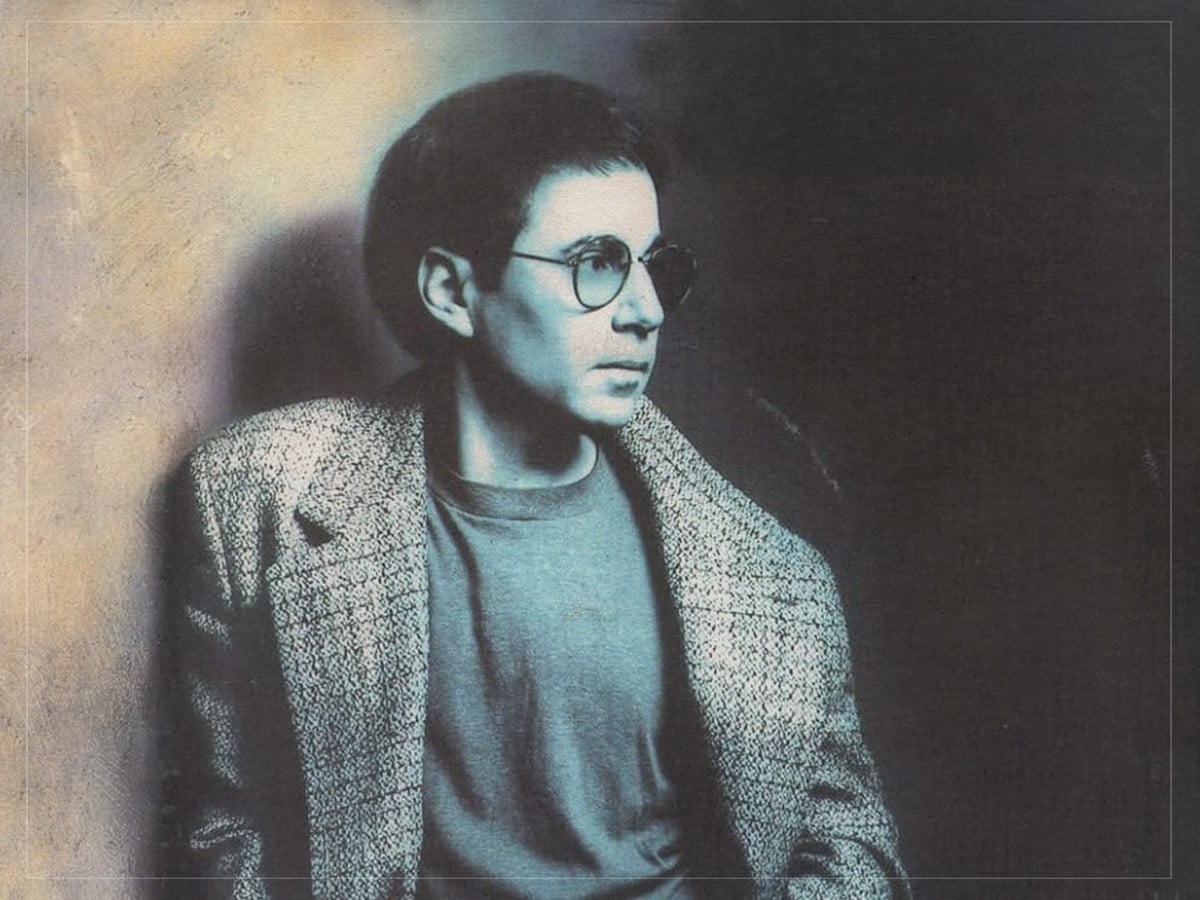
Credit: Far Out / Record Sleeve
Thu 30 July 2026 18:17, UK
Paul Simon’s ability to weave words with melody is as seamless as rain into a river. He’s a natural songwriter, never straining to rhyme or struggling to strum suitable chords.
He defined part of this himself when he said, “I sound sincere every time.” As José Saramago once wrote: “If I’m sincere today, what does it matter if I regret it tomorrow?” Simon’s art thrives on that honest tenet.
His tracks are dripping with wrung-out experience. It is hard to find a more truthful writer anywhere. He has extolled his life story in the songs he has written. In ‘America’, you feel like you’re practically on the bus seat next to him.
Every anthem hints at his wandering path through life, the people he has spent it with, and all the potholes on his memory lane along the way. It is a beautiful ride, and long may it continue. Along that ride, Simon figured he had perfectly captured his experience in song on one glorious occasion back in 1966.
Though it might not seem that way now, Simon’s career was nearly over before it began. His debut alongside Art Garfunkel flopped despite the adulation it has since received, and Simon had to return to the drawing board. “There was no place to play in New York City,” he would later bemoan. “They wouldn’t have me.” The Greenwich Village scene that he called home was full of folk singers, and he was no longer one of them.
He absconded away from the damning failure of their first album and focused on remedying it. He insulated himself from the cruel music industry with the art and poetry that inspired him in the first place, living a life like the protagonist in ‘I Am a Rock’. Feeling like an outsider but unperturbed, he was an island that would soon send out ships of influence, nevertheless.
If folk was a genre to comfort the downtrodden, then he was perfectly placed to propagate it with veracity. He endeavoured to write about his life. He just needed a fresh page. Given that he was borne from the days of Jack Kerouac, chasing such pages down on the road seemed viable.
So, determined to pursue the arts, he headed over to England to peruse the burgeoning folk scene of Bond Street. “I had a lot of friends there and a girlfriend there. I could play music there,” he later said of his happy time in Old Blighty. However, the wind-whipped Isle can be harsh, and as he toured, he noted his experiences on the road.
‘Homeward Bound’ tells the tale of a man finding out that life on the road, even with growing success, can be filled with a yearning for home, yet that yearning itself can be “idyllic“ in its own kind of way. “That was written in Liverpool when I was travelling. What I like about that is that it has a very clear memory of Liverpool station and the streets of Liverpool and the club I played at and me at age 22,“ he recalled of the 1966 song.
“It’s like a snapshot, a photograph of a long time ago. I like that about it,” he later said of the song. “That’s my memory of that time: it was just about idyllic. It was just the best time of my life.” In love, in a fresh new land, and gathering up fans, after flopping, Simon seemed to be back on his rhyming feet.
“Home, where my thought’s escaping
Home, where my music’s playing
Home, where my love lies waiting
Silently for me…”
Paul Simon, ‘Homeward Bound’
‘Homeward Bound’ gave him further reason to be happy. He had tapped into a universal feeling and had a hit on his hands. It peaked at fifth in the US and remained in the charts for 12 weeks. Simon and Garfunkel were now on their way.
The beauty is that it is not just a snapshot for Simon, the song resonates with all of us. It captures the vivified sentiment of home and the scenes it entails. It’s a song that feels like rounding the bend onto your old street. It conjures memories and feelings way beyond what is contained within the few sweet minutes, and that is what Simon’s writing does at its very best.
