
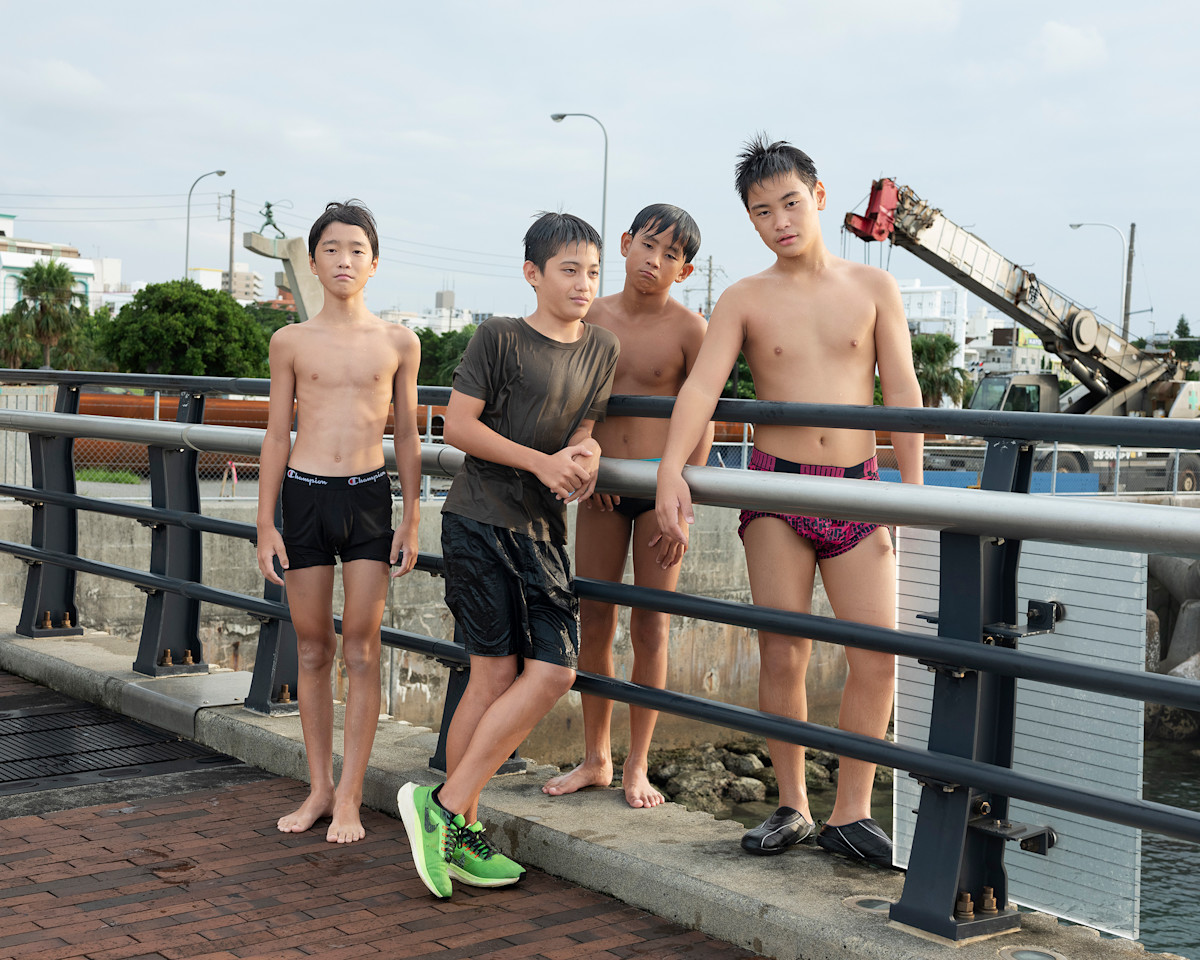
Over the next three years she returned for months at a time, traveling all the way from the southernmost to the northernmost parts of the Okinawa mainland, as well as Tokashiki Island to the west, Hamahiga Island to the east, and Ishigaki in the south. Piece by piece, she built a collection of over 1000 images, photographing a huge range of people from students at Okinawa’s AmerAsian School for children of mixed heritage, to everyday Okinawans she encountered by chance. The resulting work is titled “Big Bang,” a self-published book set to be released later this year.
Her initial intention was similar to previous portrait projects: to build a record of a certain group of people. Her 2019 work “Strangers” for example, is a collection of over 400 portraits of millennials in Seoul. “It felt like building a kind of botanical specimen book, but with people, like collecting samples,” she says. After that came “Boomers,” a project about middle-aged men who are known as “ajusshi” in Korean. “The word carries a very flat, stereotyped image,” explains Lee, describing out of touch men grumbling around the street in an old t-shirt and plastic sliders. But when she started shooting, she met many men who were stylish, energetic, and full of personality. “I realized I’d carried a negative bias,” she says. “Working on this project broke down my preconceptions.”