
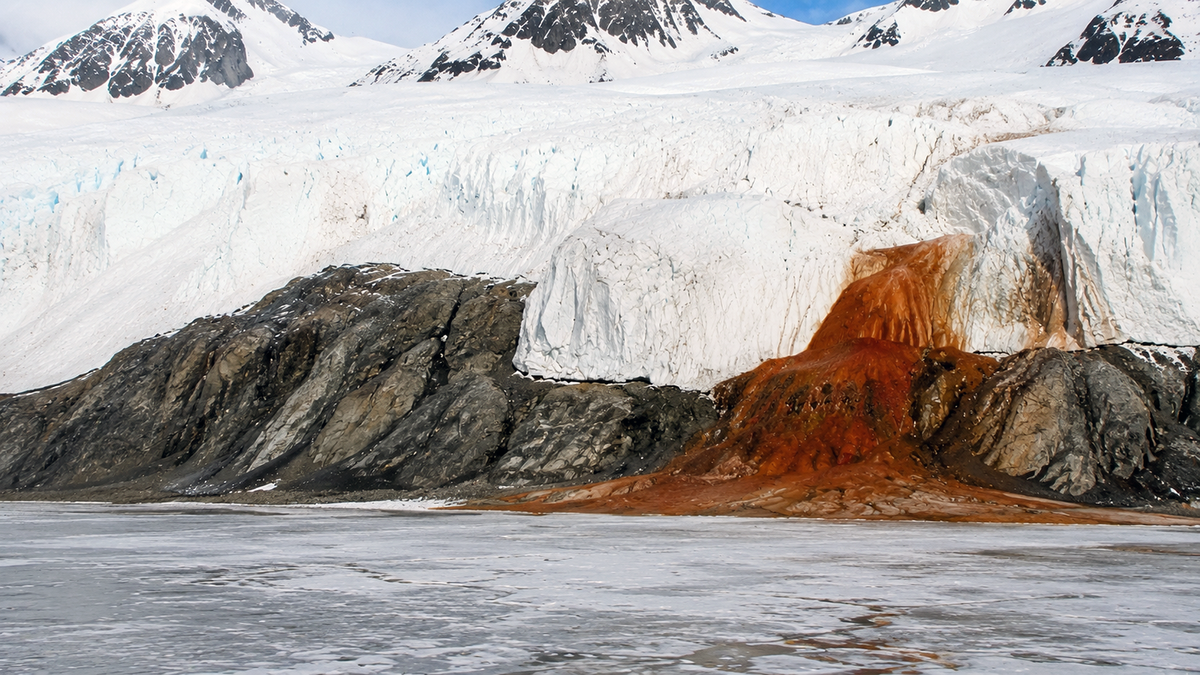
Blood Falls has become one of Antarctica’s most valuable natural laboratories. Its unusual chemistry and hidden plumbing system have improved scientists’ understanding of glacier dynamics, showing how liquid water can move through ice even under extreme conditions. Studies of the subglacial rivers and brine reservoirs also help explain how glaciers transport water beneath their surfaces.
The site has broader significance as well. Because the microbes survive without sunlight in an isolated, iron-rich environment, Blood Falls serves as an important analog for possible life on Mars or beneath the icy crusts of moons elsewhere in the solar system.
Supported by organizations including the National Science Foundation, ongoing research continues to examine the glacier’s hidden waterways, microbial ecosystems and ancient chemistry. More than a century after Australian geologist Griffith Taylor first described the unusual waterfall, Blood Falls continues to reshape scientists’ understanding of life at Earth’s limits.
We created this article in conjunction with AI technology, then made sure it was fact-checked and edited by a HowStuffWorks editor.