
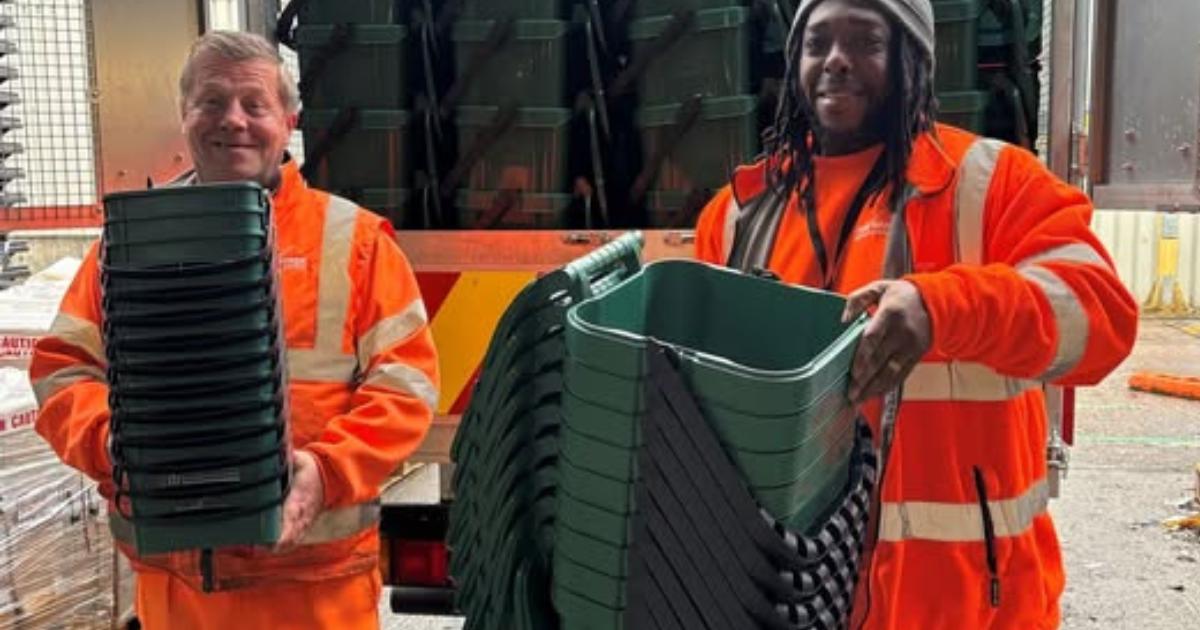
When the new service was launched in March, it had been estimated that around 200 tons would be collected each month, but Rob Broom, cabinet member for environment, told councillors at a meeting last week (Wednesday, July 22) that 220 tons of food waste were collected in June.
In the first month of the new weekly service, 170 tons were collected, and the amount has increased since then.
Cllr Broom said it is “a positive indication that residents are adapting to the new service [and] helping to divert more food waste from residual waste”.
The council conducted a two-week monitoring programme in June to find out how many households were using the new food waste service, and concluded that around 52% were doing so.
Cllr Broom said: “Research by the Waste and Resources Action Programme indicates that an average participation rate for food waste collection services is between 35% and 55%, with participation above 55% considered to be good.
“The current participation rate therefore compares favourably with the national benchmarks, and demonstrates encouraging early resident engagement with the service.
“It’s early days, but we’re going in the right direction.”
The government has introduced a requirement for councils to run separate food waste collections, with funding provided to pay for set-up costs, including new caddies and collection vehicles.
In 2020, an audit of waste in Stevenage found that around 35% of the average rubbish bin was made up of food waste.