
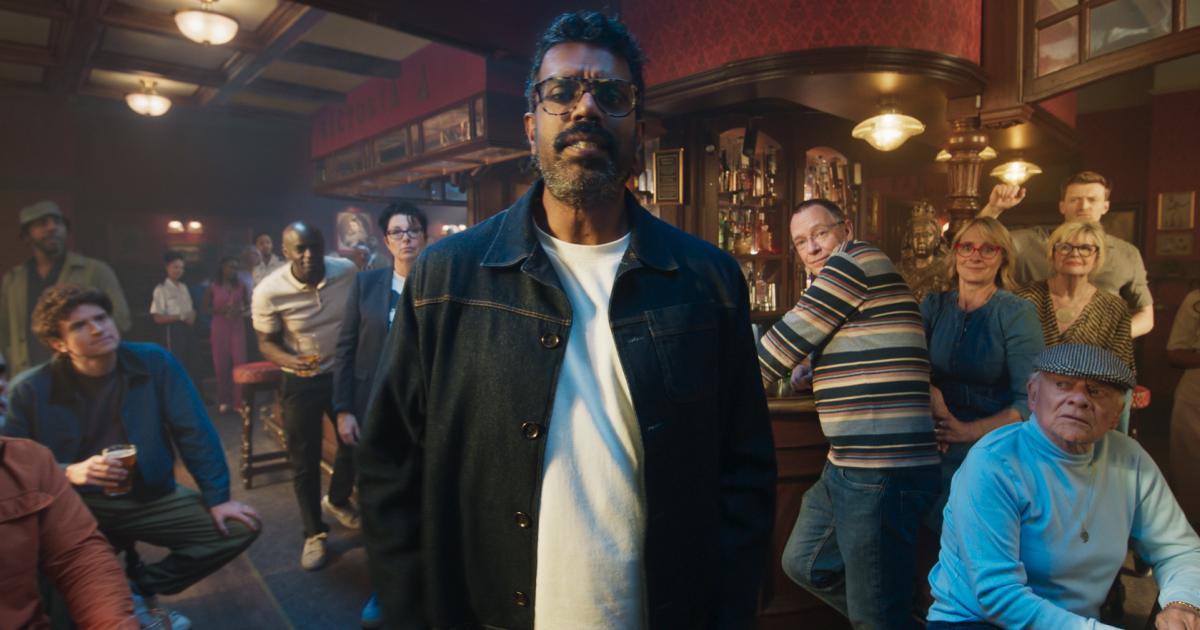
Hello and welcome to Funding Challenges, a new show with a terrible title but lots of surprises, most of them bad. Each week, players will compete to predict where the BBC axe will fall next. This time, Celebrity Mastermind, Blankety Blank, and Live at the Apollo went the way of The World Tonight. Next time, who knows? Not even Bargain Hunt is safe.
The loss of a Mastermind spin-off is not just a matter of regret for anyone who enjoyed besting celebs in general knowledge. The announcement follows a pattern that has become increasingly apparent since the arrival of Matt Brittin as the corporation’s Director-General. It is less official policy and more of a shared understanding, as is the BBC management way.
In its bid to save £500 million over the next three years, the BBC has adopted a strategy of trying to stay ahead of bad news. It is like a cartoon character on a runaway train, frantically laying track just ahead of the wheels. As long as it keeps up, the train carries on. Meanwhile, staff and shows are pieces of track sacrificed for the wider cause.
It has not been the best of weeks for the BBC for lots of reasons, but best to limit them to two or we will be here all night. First came the news that Netflix is now the button an increasing number of us press when deciding what to watch. An Ofcom survey found that some 26% go for the red on white button first, 25% for the BBC and 15% for ITV. Coming up fast is YouTube, with viewing up from 33 minutes a day in 2022 to 41 today. It is not just youngsters driving the growth; people over 75 are increasingly enthusiastic adopters.
There was some good news for the BBC. In the top ten most watched shows of last year, eight came from the BBC, with Celebrity Traitors watched by 14.9 million viewers across BBC One and iPlayer. England’s semi-final against Argentina in the World Cup was watched by 24 million at its peak – that’s close to Morecambe and Wise Christmas special levels.
Kate Davies, group director for strategy and research at Ofcom, said: “To thrive and survive in the current media landscape, it is more important than ever for companies to continue to understand changing audience habits and adapt their strategies to meet people where they are.”
“Where they are” is an interesting phrase. We know from the Ofcom survey that people are still with the BBC for the big shows and landmark events, but day-to-day viewers go where they please. One night it is Netflix and Disney for I Will Find You and The Devil Wears Prada 2, the next HBO Max to see what’s happening with Dr Robby in The Pitt.
Read more
In my house, I’ll tell you where viewers are definitely not venturing: the BBC Scotland channel. Launched in 2019, it was supposed to cost £35 million a year. This had crept up to £40 million by 2023-24, with the total spend more than £200 million since inception.
There have been many signs that all is not well, including viewing figures of just 200 for an edition of The Seven and 1700 for The Nine. Both were axed in 2024. Contrast those with the 750,000 who watched the channel’s launch.
It was something else, though, that brought home to me how far the channel had slipped from the heady days of its beginning. It was the day I opened the Radio Times to find the BBC Scotland listings, usually in a spread with the main channels, had been relegated to the following page with ITV3 and the like (no offence). Channel 5 had taken BBC Scotland’s place.
It is not difficult to see why. Look at the listings any day, and you will find repeat after repeat. There are so many they don’t even bother putting an “R” next to them. One of the rare new offerings is River City, and that is disappearing come autumn.
As part of the savings drive, 1,800-2,000 jobs will be lost across the board, with 60 expected to go in Scotland. Given the already deep cuts forced by a plunge in the number of people paying the licence fee – down from 90% in the 2010s to 80% today – these are worrying times for staff.
Among Scotland’s political parties, only Reform UK has openly raised the closure of the BBC Scotland channel. No surprise there since it wants to see the back of the entire corporation. That said, £40 million a year is a fair old chunk of change.
It would be curious indeed if London did not have its eye on the elephant in the room that is the BBC Scotland channel. Politically, it would be a hot-button issue, and London may opt to steer clear, particularly with the corporation charter up for renewal next year.
But what do viewers in Scotland think? To paraphrase that lethally smug BBC ad, what has the BBC Scotland channel ever done for us? How hard would you fight to keep a channel that’s a Betamax in a VHS world? Has it led to news more tailored to Scottish viewers, or is the BBC News at six still awash with A Level results and English housing policy?
The speed at which the cuts are coming at the BBC suggests major decisions are on the way. Doing nothing about the BBC Scotland channel is an option, but not a feasible one. It would be better to get out ahead of that runaway train. Which brings us back to the second reason this has been a bad week for the BBC.
You were probably wise enough to steer clear of Holly Willoughby’s new YouTube show, Together on Tuesday, in which the former This Morning presenter played host to Stanley Tucci. On a scale of one to ten, it was pigging awful. Ramshackle and vacuous, how is this not turning the clock backwards? There are slicker shows on YouTube, but we are not there yet. By the time it catches up, the main channels could be even more shadows of themselves, and there will be no going back, no matter how many buttons you press on the remote.