
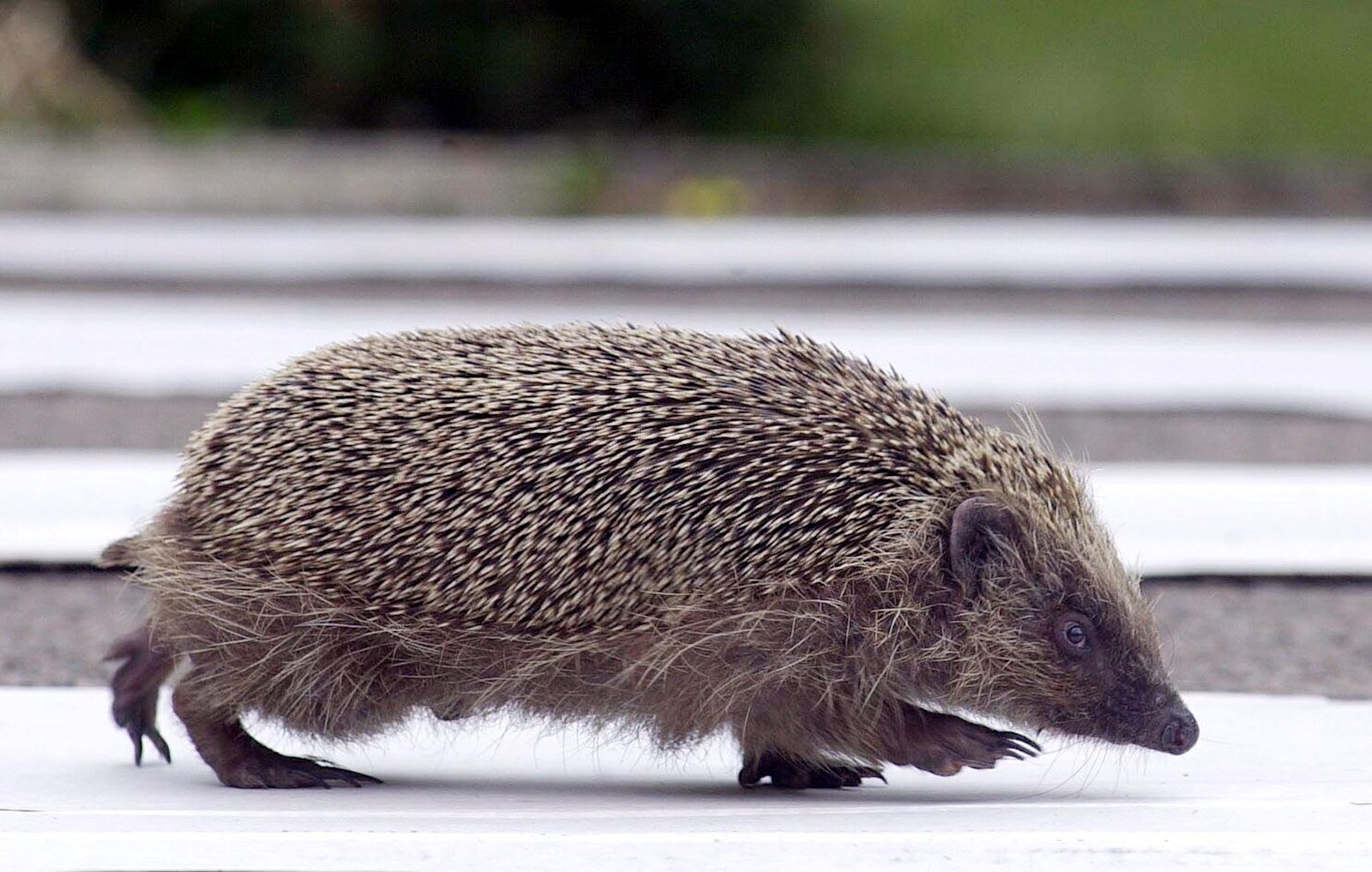
Road traffic can kill almost a third of hedgehogs – and could push smaller populations towards local extinction, a study led by Nottingham Trent University has shown.
A team studied four local hedgehog populations of varying sizes in Nottinghamshire to see what the effect of road kills were on the animals’ numbers.
The study found that road traffic killed between 15% and 29% of hedgehogs in local populations each year, and was the main cause of recorded hedgehog deaths, responsible for around two fifths (38-41%) of all identified mortality.
But while larger hedgehog populations – despite having more traffic-related deaths – were able to offset their losses, even a small amount of roadkill each year could have a significant impact on smaller populations, potentially pushing them to be wiped out.
The conservation scientists, whose research was funded by the British Hedgehog Preservation Society and People’s Trust for Endangered Species, said their research showed the importance of bolstering smaller populations so they can better withstand traffic deaths.
The research found road traffic was the main cause of their deaths Credit: ITV News
Conservationists warn hedgehogs in Britain have undergone long term declines.
A range of factors are affecting their survival, from an impoverished landscape with a loss of habitat and invertebrates to issues such as predation by badgers and foxes, poisoning by insecticides and injury from farming and garden machinery and road vehicles.
Rural hedgehogs have seen numbers fall by an estimated 30-75% since 2000, although the picture for urban animals is one of a population that has stabilised and may be recovering.
For their study, published in the journal Animal Conservation, the scientists studied four hedgehog populations in villages and towns in Nottinghamshire, surrounded by arable fields and pastures, which were selected to be representative of habitat and road deaths.
Nottingham Trent University Credit: Simon Cooper/Press Association Images
The researchers walked 838km of survey routes (520 miles), measuring population size, as well as reproductive rates and adult and juvenile hedgehog survival rates.
They also completed 269 roadkill surveys over 18 months, in which they aimed to find every hedgehog killed on the roads within and between the study sites, recording the location and sex of those found.
The data were used to estimate how road deaths could affect the survival of hedgehog populations, particularly with expected rising levels of UK traffic.
The study found that larger populations had more traffic-related deaths, but were able to offset these with higher reproductive rates and the fact that most of those killed were males rather than females.
But with smaller populations that had fewer than 15 individual hedgehogs, even a low number of deaths could have a significant impact, pushing them faster towards local extinction.
Lead researcher Dr Lauren Moore, who was based in Nottingham Trent University’s School of Animal, Rural and Environmental Sciences at the time of the study, said: “Hedgehogs are declining in the UK and we have found how even a small amount of roadkill – perhaps just one or two individuals a year – could have devastating effects on an already small population.
“In the past, research has assumed that high roadkill rates have a large and negative impact on hedgehog populations and that a small amount does little harm.
“This does not tell us the full picture and in fact populations vary a lot in terms of size, reproductive rates, other causes of death and food availability.
“We need to better support hedgehog populations until there are tried and tested ways to reduce collisions happening in the first place.”
Want a quick and expert briefing on the biggest news stories? Listen to our latest podcasts to find out What You Need To Know…