
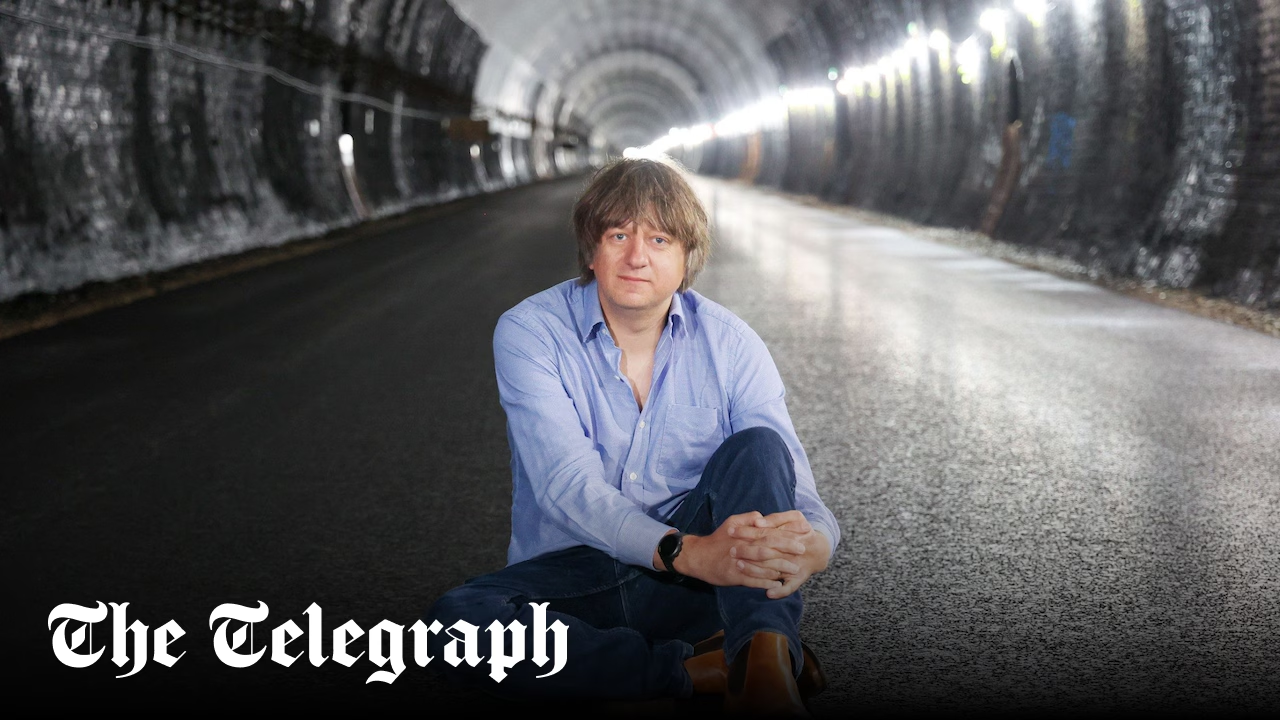
The next step was to create a state-of-the-art wind tunnel, but realising that building one from scratch would cost at least £100m, Lewis embarked on a hunt for the next best thing: a disused railway tunnel. An online search showed him various possibilities in Wales and the Pennines, but it soon became clear that the ideal option was 15 miles from the company’s office in Brackley.
His initial encounter with the Catesby Tunnel was sobering. “It was overgrown, and it was flooded,” Lewis recalls. “I think the gravel had been taken for the Daventry bypass, and the drains were smashed. But we decided we could risk some money on it and see how far we could get.”
In spite of its abandonment, structurally the tunnel was in solid fettle. “I’m not an expert on tunnels,” Lewis adds, “but when I did an inspection with the engineer for the British Railways Board (Residuary), he said that it was as good a tunnel as you can find in the country. It was one of the later ones to be constructed, and it was in great condition.”
Aerodynamic excellence
Two decades later, the vision has come to fruition – although the journey was not without bumps. Planning permission was granted in February 2017, but the pandemic, issues with fire regulations – and the unexpected ecological side-issue of the colony of bats that now largely lives in a sealed compartment at the north end of the tunnel – meant that it was almost six years before the facility was operational.
Still, the drains were fixed, a flawless tarmac road was laid, and as of the end of 2022, Lewis runs the tunnel as an aerodynamic test centre where luxury car manufacturers can gauge the effectiveness of their vehicles, and professional cycling teams can compare skinsuits and wheel configurations in the pursuit of “marginal gains”.