
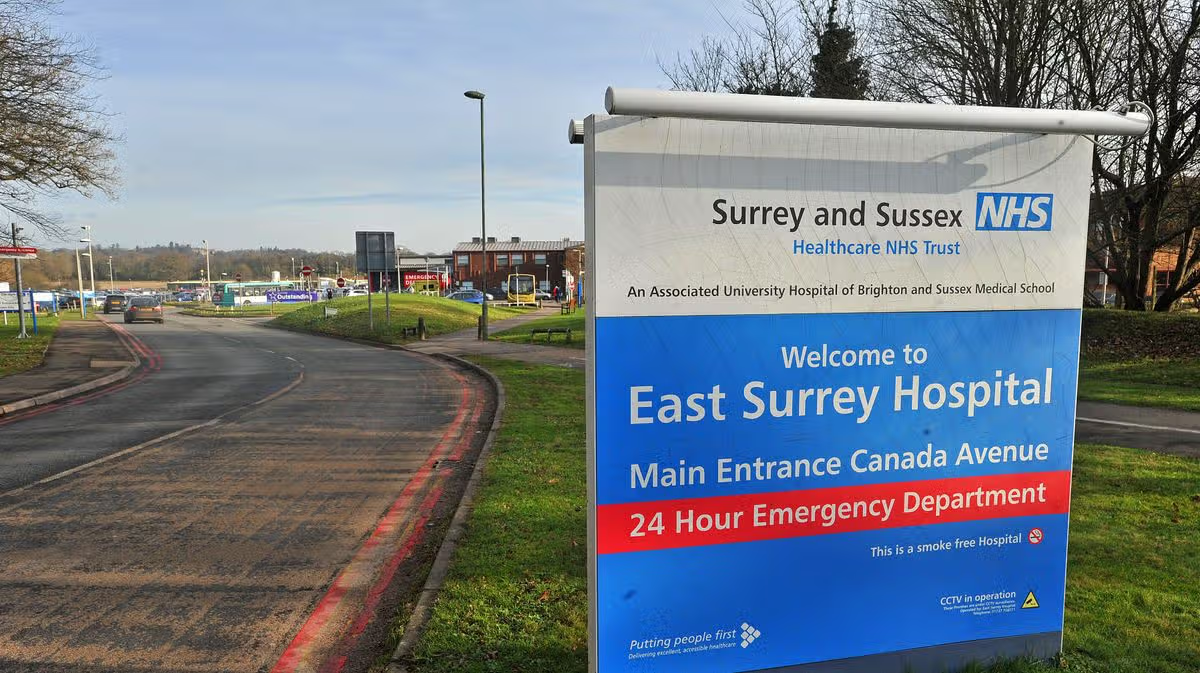
Significant issues were found with the leadership of the Surrey and Sussex Healthcare NHS Trust, which provides healthcare services for around 744,000 people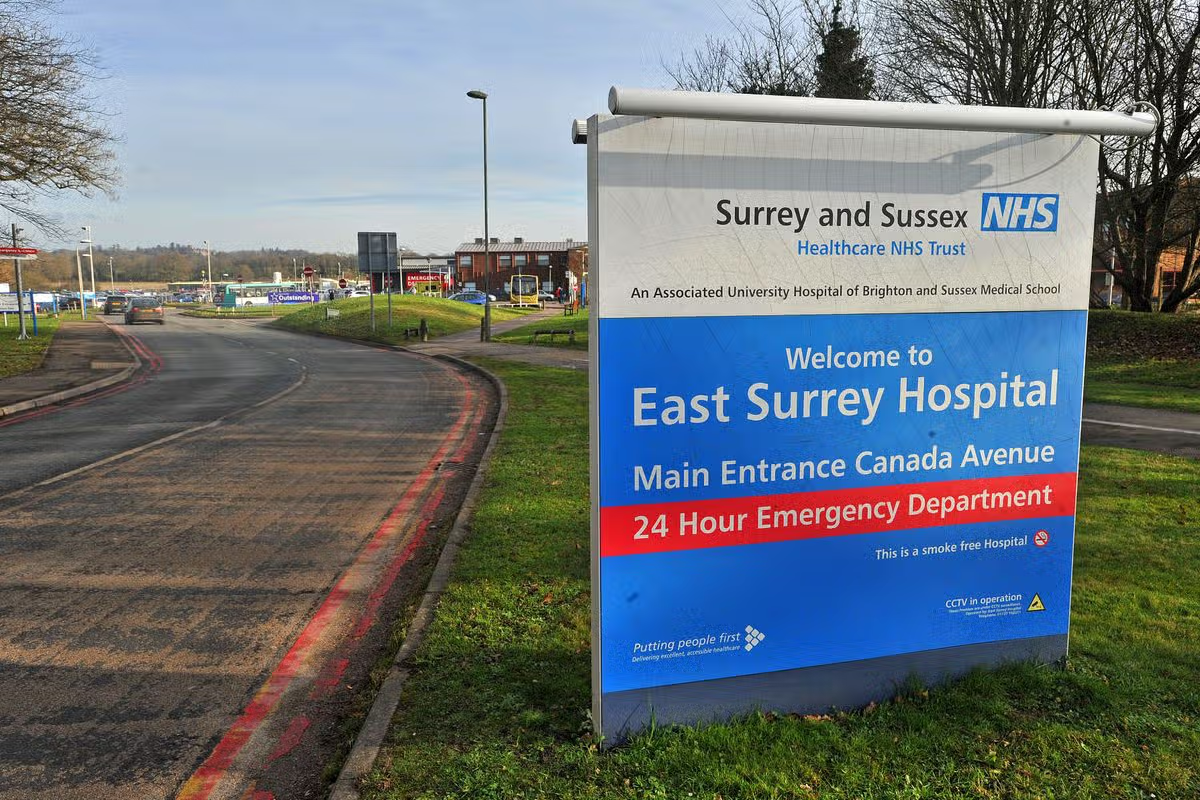
The Surrey and Sussex Healthcare NHS Trust runs East Surrey Hospital in Redhill, with more than 700 beds and provides acute and complex services. (Image: Surrey Mirror)
Inspectors from the Care Quality Commission (CQC) has given a ‘requires improvement rating’ to a hospital trust in Surrey
Significant issues were found with the leadership of the Surrey and Sussex Healthcare NHS Trust, which provides healthcare services for around 744,000 people including in the towns of Crawley, Horsham, Reigate, and Redhill.
The CQC found a breach of the regulations relating to how the trust is managed following an inspection back in November 2025. Due to the level of the concerns, the Trust was issued with a warning notice to focus its attention on making immediate improvements for people using services.
A spokesperson for the Trust said that the organisation had made “major changes” to its executive leadership team and “significant progress across a number of the areas highlighted by the CQC” since the report.
Inspectors found concerning levels of morale with staff, as well as a reluctance to speak out.
Amanda Williams, CQC deputy director of hospitals, secondary and specialist care for Surrey and Sussex, said: “When our inspectors visited Surrey and Sussex Healthcare NHS Trust, we found hard working staff, but a significant gap between the stated ambitions of leaders and the daily reality experienced by its staff and the people who rely on its services.
“What concerned us most was how many staff told us they didn’t feel safe to speak up. Our inspectors heard that raising concerns through formal channels was difficult, that people feared reprisal, and that concerns weren’t always resolved when they were raised. If staff don’t feel they can speak up, risks go unaddressed and that can have real consequences for the people in their care.”
As well as this Amanda said: ““Staff described widespread burnout, feeling undervalued, and a disconnect between frontline teams and leadership. There’d been a significant drop in staff believing care of people was the organisation’s top priority.”
On top of this the CQC report found issues with equality, diversity and inclusion. Amanda said: “We also found that staff from ethnic minority groups, who make up nearly half the workforce, and those with disabilities were having markedly worse experiences than their colleagues, facing higher rates of bullying and harassment, and significantly fewer opportunities to progress. That kind of disparity can’t be ignored.”
Inspectors found that while ethnically diverse representation had grown to 45.9% board diversity remained disproportionately low (-25.9%). Disability representation was 3.3%, well below regional (6.1%) and national (5.7%) averages. Recruitment and progression gaps for disabled staff had also worsened.
Patient data revealed what inspectors deemed “persistent inequities in access and outcomes” with people living in areas of higher deprivation facing longer than average waits.
But, despite the requires improvement rating the CQC found several positives within the trust’s leadership team. Amanda said: “However, our inspectors did see genuine commitment to improvement. The trust had a programme empowering staff to drive real changes including practical improvements that meant people weren’t waiting as long for basic care needs to be met.
“We have shared our findings with the trust’s management, who are aware of the improvements needed, including addressing the organisation’s culture. We will continue to monitor the trust, including through future inspections, to ensure people remain safe while improvements are made.”
The changes made since the inspection include the appointment of a new Chief Nurse, Chief Financial Officer, Chief Operating Officer and Director of Estates and Facilities.
As well as this, work has been done with the Freedom to Speak Up service, which provides support 24 hours a day, and a dedicated Citizens Advice service has been set up for staff.
A dedicated Equality, Diversity and Inclusion group has been established and the Trust is recruiting a Head of EDI.
The Trust also reports improved NHS Staff Survey results, with higher participation rates and improvements in compassionate leadership, recognition and raising concerns.
Andrew Hines, Chief Executive of Surrey and Sussex Healthcare NHS Trust said: “It’s vital that our leadership reflects the experience of both our staff and our patients, and we welcome the CQC’s report into our Trust leadership and culture as they were last November.
“Since then, we have made major changes to our executive leadership team, implemented a comprehensive improvement programme overseen by the Trust Board, and made significant progress across a number of the areas highlighted by the CQC – including on staff support, Freedom to Speak Up, Equality, Diversity and Inclusion, governance and leadership development.
“We are fully committed to becoming an outstanding organisation once again and on delivering the improvements our staff, patients and local communities rightly expect. We know there is much more we need to do but I am confident that we are making positive progress and will continue to build on that in the year ahead.”