
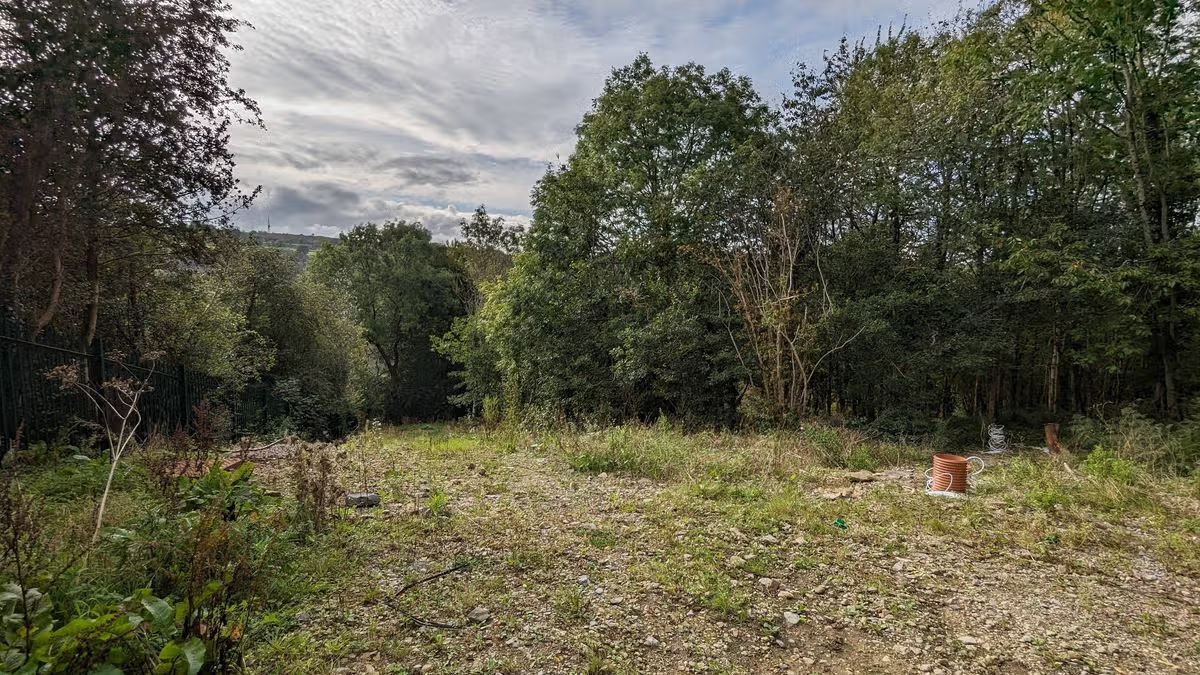
Concerns have long been raised about the site’s impact on human health and the local environment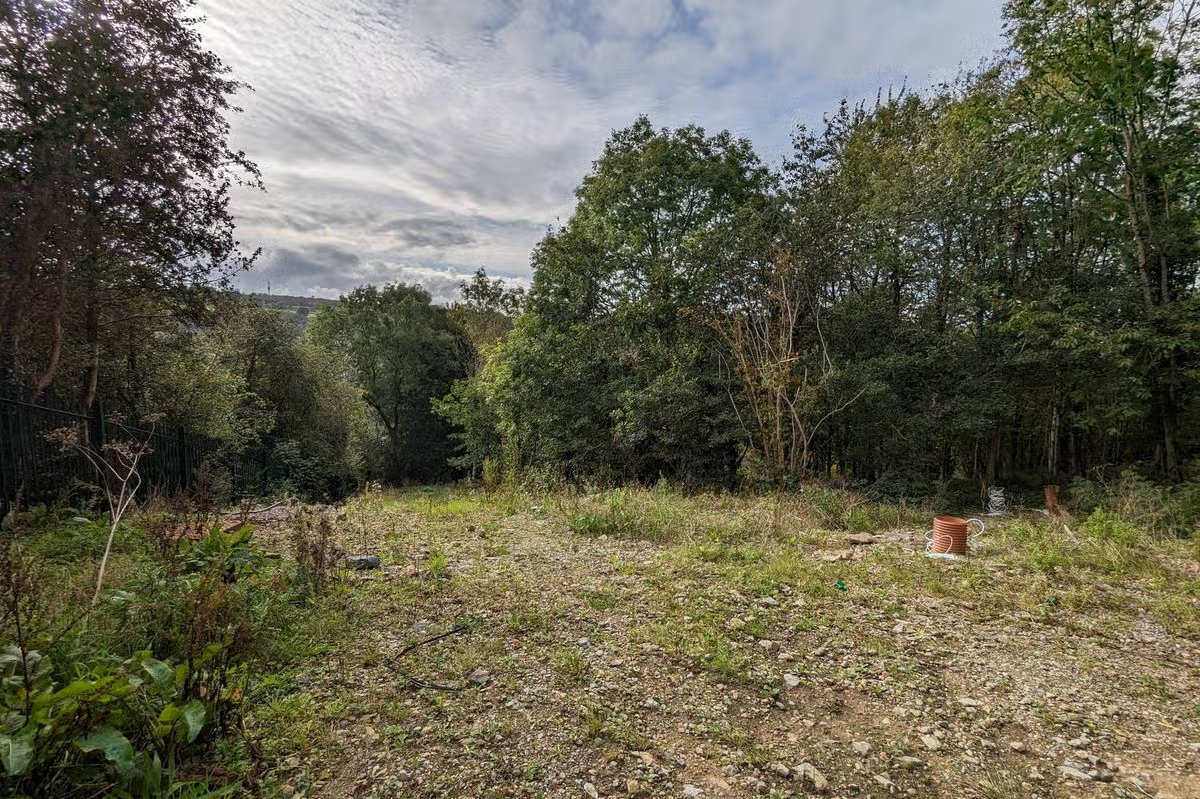
The Ty Llwyd quarry site(Image: Local Democracy Reporting Service)
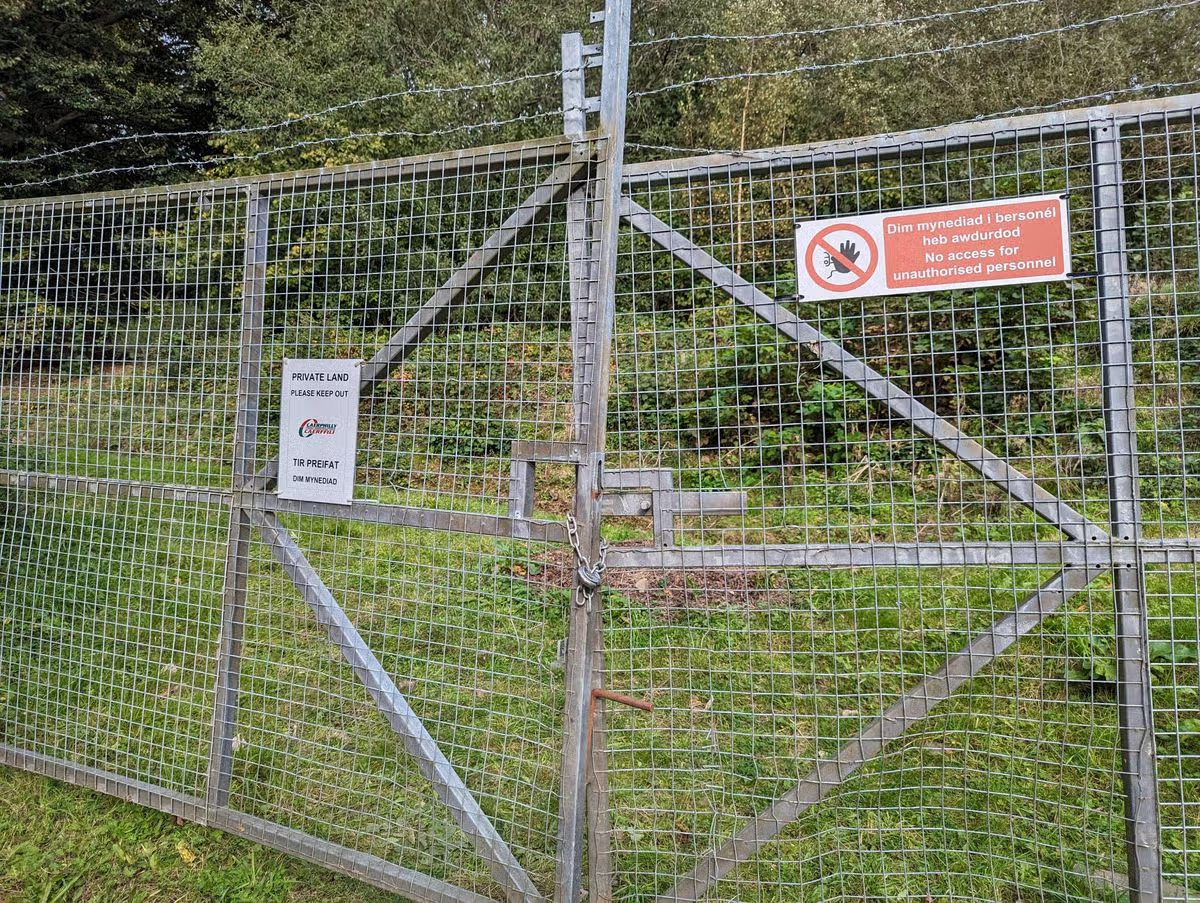
The outcome of an investigation to establish whether a quarry could be contaminated with toxic waste and is harming people’s health has been published. Concerns have long been raised that the Ty Llwyd site near Ynysddu poses a risk to locals due to allegations that chemicals were dumped there years ago.
A draft assessment by Caerphilly County Borough Council (CCBC) previously suggested the land doesn’t fit the legal criterion for contaminated land, but in 2025 national environment and health bodies decided to reassess this stance.
Activists at the time contended that the buried waste includes dangerous polychlorinated biphenyls, linked to cancer and environmental pollution, and said that toxic substances have seeped into an adjacent woodland during inclement weather.
However, as of July 2026 the outcome of the reassessment investigation has concluded that Ty Llwyd Quarry does not meet the legal definition of Contaminated Land under Part 2A of the Environmental Protection Act 1990.
According to the council extensive sampling has been undertaken by its consultants Arcadis and the council’s environmental health team. Boreholes were also drilled to allow a geophysical survey to be undertaken.
The Ty Llwyd quarry site(Image: Local Democracy Reporting Service)
In terms of the concerns about the impact on human health, the council shared: “Soil samples along leachate runoff paths and in the informal woodland play area were screened and the results were below health‑based screening criteria. Outdoor air monitoring tubes showed levels below applicable air criteria and were comparable with background levels.
“Overall, the risk to health from soil, water, contact or vapour is low and does not meet Part 2A thresholds for significant harm/ significant possibility of significant harm (SPOSH).”
In addition, “no significant pollution” was detected in the Sirhowy River, local streams or sampled springs from the landfill. There is also “no significant possibility of significant pollution of controlled water”.
In terms of concerns about risks affecting the local ecology, the council shared: “Sampling showed that river water met environmental quality standards. PCB detections in river sediment sampling undertaken by Natural Resources Wales (NRW) were low, indicating that there was no significant impact from the Ty Llwyd Quarry site.
“Using human‑health criteria as a precautionary substitute (due to no specific animal health criteria being available), no additional risk was identified for domestic animals (e.g. horses, dogs).”
A spokesman for the council said: “Impacts beyond the site are low, localised and do not amount to significant harm or significant pollution.
“Despite the conclusion that the site does not meet the legal definition of contaminated land, CCBC is committed to the continued monitoring of the site, especially in periods of prolonged wet weather.
“CCBC will continue to manage any risk, work with key partners and seek to improve the situation wherever possible.”